








How to Get from Beijing to Tibet in 2026: By Flight, Train or Overland?
Beijing is one of the main gateways for international travelers heading to Tibet. In 2026, you can get there from Beijing by flight, train, or overland.
Flights are the fastest, taking about four hours. The Tibet train takes around 40 hours, treating you to stunning views along the Qinghai-Tibet Railway. Overland travel is slower but perfect for travelers looking for a real adventure.
Before you go, you’ll need a Chinese Visa and a Tibet Travel Permit. The good news: travelers from countries like the UK, Australia, and much of Europe can now enter China visa-free, making this step much easier.
In this guide, we will explain everything you need to know about traveling from Beijing to Tibet in 2026. Read to know the latest schedules, travel duration, ticket prices, permit preparation, best travel seasons, and packing advice for a smooth journey.
Ready to start your journey from Beijing to Tibet? Let’s go!
Traveling from Beijing to Tibet at a Glance:
- Flight: about 4 hours; fastest; convenient for short trips; less scenic; higher cost.
- Train: about 40 hours; scenic and immersive; relatively stable price; more comfortable than overland.
- Overland: about 7–14 days; adventurous; cultural immersion; flexible stops; requires planning for roads, accommodation, and high-altitude preparation.
Contents
 How Far is Beijing from Tibet? Overview on the Distance and Location
Beijing to Tibet by Flight - The Fastest Way to Minimize the Travel Time
Beijing to Tibet by Train - The Scenic Journey along Qinghai-Tibet Railway
Beijing to Tibet by Overland - The Adventurous Route for In-depth Exploration
What are the Essential Travel Documents for Beijing to Tibet?
Useful Tips for Traveling from Beijing to Tibet
Make Your Trip to Tibet Smooth and Worry-Free with Us
How Far is Beijing from Tibet? Overview on the Distance and Location
Beijing, situated in the northeastern part of China, is both the current and historic capital of China. Meanwhile, Tibet, an autonomous region in southwestern China, is famously known as the “Roof of the World” due to its high altitude.
The straight-line distance between Beijing and Lhasa, Tibet’s provincial capital, is roughly 2,100 to 2,500 kilometers. However, the mountainous terrain makes the actual travel distance longer. By road, the journey usually spans 3,000 to 4,000 kilometers, while the railway route covers about 3,757 kilometers.
Tibet’s high-altitude environment makes the journey truly unique. Lhasa sits at about 3,650 meters above sea level. You’ll notice thinner air and cooler temperatures compared to Beijing. Knowing the distance and altitude difference helps you choose the right travel method, prepare for the journey, and enjoy Tibet safely.


Join our most popular Lhasa and EBC tour for a smooth experience!
Beijing to Tibet by Flight - The Fastest Way to Minimize the Travel Time
If you are short on time and want to reach Tibet as quickly as possible, flying is the fastest way from Beijing. The journey takes about four hours only, and allows you to get from Beijing to Tibet within a single day.
Beijing to Lhasa Flight Schedule: 2026 Updates
Currently, there are 3 non-stop flights from Beijing to Lhasa every day. They depart at 7:45 am, 12:55 pm, and 2:55 pm, taking roughly 4 hours and 15–30 minutes to reach Lhasa Gonggar Airport.
Morning flights often provide more flexibility upon arrival in Lhasa, allowing you to settle into the city during daylight hours. Airlines serving this route include Air China and Tibet Airlines.
Flight schedules can vary depending on the season or month, so it is best to check in advance, especially if you are traveling during peak months from May to October, when flights are busier. Planning ahead ensures you can select the most convenient flight and avoid last-minute stress.
| Flight Number | Airline | Departure / Arrival | Duration | Frequency |
|---|---|---|---|---|
| CA4125 | Air China | 07:45 - 12:15 | 4h 30m | Daily |
| CA4123 | Air China | 12:55 - 17:20 | 4h 25m | Daily |
| TV9816 | Tibet Airlines | 14:55 - 19:10 | 4h 15m | Daily |
Beijing to Lhasa Flight Cost and Booking Tips
The flight price from Beijing to Lhasa can vary depending on the season and airline. During peak travel months from May to October, a one-way economy ticket usually starts from $350 per person. In the low season, tickets can drop to around $200 per person.
To save money, you can choose a connecting flight or flight with stops. Indirect flights often stop in Chengdu, Chongqing, or Xining for 1–3 hours, but the prices can be significantly lower.
Booking tips:
- Book at least one month in advance, especially if traveling during high season, to secure the best fares.
- Compare prices across multiple platforms such as Trip.com or Expedia.
- Check different departure dates to find budget-friendly options and avoid sold-out flights during peak months.
Beijing Airport Access for Beijing to Lhasa Flight
Most direct flights from Beijing to Lhasa depart from Beijing Capital International Airport (PEK), Terminal 3, about 25 km from downtown. It’s a large airport, so plan your journey carefully.
Getting there:
- Subway (The Most Reliable Way): Take Metro Line 2 to Sanyuanqiao Station, then Airport Express Line to Terminal 3 (~70 minutes).
- Taxi or Ride-Hailing: Convenient for luggage; ~50–60 minutes from central Beijing.
- Airport Shuttle: Economical option, slower during peak hours.
Some connecting flights also depart from Beijing Daxing International Airport (PKX). To get there, you can take the high-speed Airport Express train or Subway Line 19.
Boarding Tips: Arrive at least two hours before departure to allow time for check-in and security. Confirm your terminal in advance to avoid delays.
 Terminal 3 of Beijing Capital International Airport, the main departure point for flights to Lhasa.
Lhasa Airport Arrival and Downtown Transfer
Lhasa Gonggar Airport (LXA) is about 60 kilometers from the city center. After landing, you can take a taxi, which usually takes around one hour and costs about 200 CNY. A cheaper option is the airport shuttle bus, which costs about 30 CNY per person.
As a better choice, you can enjoy our free shuttle transfer between the airport and downtown, if you have booked your Tibet tour with us. In this way, our local tour guide will meet you at the airport and escort you to your hotel in a comfortable private car, ensuring a stress-free arrival.
High-attitude adaptation tips: Most travelers experience minimal altitude effects when flying to Lhasa. However, it is still recommended to stay hydrated during the flight and rest upon arrival. For detailed tips on preventing altitude sickness, see the Useful Tips section.
Tips for Flying from Beijing to Lhasa in 2026
1. Book Early - Secure your flight at least one month in advance, especially during peak travel months (May–October) or national holidays, to ensure availability and better fares.
2. Consider Morning Flights - Arrive in Lhasa during daylight hours for a smoother first day and easier city navigation.
3. Check Connecting Flights - If you want to save money, consider flights with short stopovers in Chengdu, Chongqing, or Xining.
4. Prepare for High Altitude - Even though flights are fast, rest upon arrival and stay hydrated to reduce the risk of altitude sickness.
5. Choose a Window Seat - Enjoy stunning views of the plateau from above for a memorable first impression of Tibet.
Pros and Cons for Beijing to Lhasa by Flight
Pros:
- Fastest way to reach Tibet - the flight takes about 4 hours, saving you significant travel time.
- Frequent and convenient - multiple daily flights make scheduling flexible
- Flexible for short trips or multi-city travel - ideal if you want to combine Tibet with other destinations in China.
Cons:
- More expensive than train, especially in peak travel season
- Limited scenic experience - you miss the breathtaking views along the Qinghai-Tibet Railway.
- Possible flight delays due to weather conditions in high-altitude regions.
 Our TibetTour.org guide welcomes and picks up guests at Lhasa Gongga Airport (LXA) for a smooth arrival.
Beijing to Tibet by Train - The Scenic Journey along Qinghai-Tibet Railway
Taking the train from Beijing to Lhasa is a memorable journey. It offers breathtaking scenery along the world-famous Qinghai-Tibet Railway. Although the journey is longer than flying, it provides an immersive experience of China’s diverse landscapes and the high plateau.
Beijing to Lhasa Train Route and Schedule: 2026 Updates
The Beijing to Lhasa train runs daily, covering a total distance of 3,757 kilometers. Train Z21 departs from Beijing West Railway Station at 19:53 and arrives at Lhasa Railway Station at 11:36 two days later, taking nearly 40 hours.
In the reverse direction, Train Z22 leaves Lhasa at 15:50 and reaches Beijing at 08:28 two days later.
| Train Number | Departure/Arrival | Duration | Frequency |
|---|---|---|---|
| Z21 Beijing-Lhasa | 19:53 / 11:36 | 39hr, 43min (3,757km) | Daily |
| Z22 Lhasa-Beijing | 15:50 / 08:28 | 40hr, 38min (3,757km) | Daily |
Schedules may vary by season, especially during peak travel months (May–October), so it is recommended to check the latest updates in advance and plan your departure date accordingly.
Beijing to Lhasa Train Ticket Classes and Costs
There are three types of tickets for Beijing to Lhasa train: Soft Sleeper, Hard Sleeper, and Hard Seat.
- Soft Sleeper: From ¥1,144 per person. Most comfortable, with four berths per compartment and a lockable door, offering privacy and rest.
- Hard Sleeper: From ¥720 per person. Six berths per compartment. More cost-effective and better for rest than a seat. Good for meeting fellow travelers.
- Hard Seat: ¥360 per person. Most economical but uncomfortable for long journeys. Not recommended for the full Beijing–Lhasa route.
The Beijing to Lhasa train tickets can be purchased through official platforms such as 12306.com or Trip.com. Sales usually open 15 days before departure, but during peak months and national holidays, tickets can sell out quickly.
But no worries! For travelers booking with our Tibet train tours, soft sleeper tickets are guaranteed. You won’t have to compete online for tickets. We take care of everything so you can arrive in Lhasa relaxed and ready to enjoy your adventure.
 Enjoy a comfortable journey on the Tibet Train soft sleeper to Lhasa, arranged by TibetTour.org.
Beijing to Lhasa Train Onboard Life and Facilities
During the train journey from Beijing to Lhasa, you will spend two nights onboard. Understanding what to expect and how to use the onboard facilities can make your trip more comfortable and smooth.
- Scenic Scenery along Qinghai-Tibet Railway
The main highlight of this wonderful journey is the section from Xining to Lhasa, the start of the Qinghai-Tibet Railway.
After leaving Xining, you can enjoy snow-capped mountains like Tanggula and Kunlun, the Gobi Desert, the Hoh Xil Nature Reserve, turquoise Cuona Lake, and vast grasslands with Tibetan yaks and horses. Take your time to enjoy the changing landscapes through the train windows.
- Oxygen Supply on Beijing to Lhasa Train
The Beijing to Lhasa railway averages an altitude of 3,379 meters. After passing Xining, the train gradually climbs to the highest point, the Tanggula Mountain Pass, at 5,072 meters.
The train is equipped with onboard oxygen, so you don’t need to worry too much about altitude sickness. The system activates near Golmud Railway Station, delivering fresh oxygen into the carriage.
If you feel any symptoms of altitude sickness, you can also use the individual oxygen outlets, which are located near your soft or hard sleeper berth, or along the corridor walls.
- Dining Car and Other facilities
The Tibet train is equipped with a dining car that serves three meals and drinks throughout the journey. You can enjoy a variety of Chinese and Tibetan dishes.
Bathrooms are available on the train, with both Western and Chinese-style toilets. While there are no showers, you can easily wash your face and hands at the sinks. Hot water is also provided, so you can make coffee or prepare instant noodles during the trip.
Beijing to Lhasa Train Station Access and Boarding Tips
- Departure: How to Reach Beijing Train Station?
To take the Beijing to Lhasa train, make sure you head to Beijing West Railway Station. The easiest way is by subway, which is reliable and avoids traffic. Depending on your location, you can take Subway Line 7 or Line 9.
It is recommended to arrive at least one hour before departure. This allows enough time to check your ticket, pass security, and find your platform.
- Arrival: Lhasa Railway Station to Downtown
Lhasa Railway Station is about 5 kilometers from the city center. Taxis are the fastest option, taking around 15–20 minutes. Local buses are cheaper but can be crowded.
For a smoother experience, travelers booking a tour with us can use our free pickup service. Our guide will meet you at the station and escort you to your hotel in a comfortable private car.
Tips for Traveling from Beijing to Tibet by Train in 2026
1. Book Soft Sleeper Tickets Early – Soft sleepers sell out quickly during peak season; booking early ensures a comfortable journey.
2. Use Onboard Oxygen if Needed – Oxygen supplies are available after Xining to help with high-altitude adjustment.
3. Bring Snacks and Instant Food – Train meals can be expensive; carrying your own snacks helps pass the long journey.
4. Plan for Rest – Take advantage of the two nights onboard to adapt gradually to altitude and recover energy.
Pros and Cons of Beijing to Tibet by Train
Pros
- Scenic and immersive journey - see snow-capped mountains, vast grasslands, and high-altitude lakes along the Qinghai-Tibet Railway.
- Guaranteed soft sleeper tickets for our clients
- Reliable and generally punctual – trains are less affected by weather than flights.
- Relatively cheaper with stable prices throughout the year – easier to plan a budget-friendly trip.
Cons
- Long journey – about 40 hours from Beijing to Lhasa.
- Hard seats not recommended for long trips.
- Limited daily departures compared to flights, so scheduling is less flexible.
- Less suitable for travelers short on time.
Expert Tips: Fly to Xining and Then Take the Tibet Train
If the Beijing to Lhasa train journey feels too long but you still want to experience the best part of the railway, consider this option: fly from Beijing to Xining, then take the train from Xining to Lhasa.
Xining has more daily train departures than Beijing. The Xining to Lhasa section also covers most of the highlights along the route. This option reduces train travel time to about 20 hours while still letting you experience the Qinghai-Tibet Railway scenery.
 Enjoy breathtaking landscapes on the train journey from Beijing to Lhasa along the Qinghai-Tibet Railway.
Continue your adventure with our classic Lhasa and Everest Base Camp tour after your Beijing–Lhasa train journey!
Beijing to Tibet by Overland - The Adventurous Route for In-depth Exploration
Traveling overland from Beijing to Lhasa is an adventurous way to explore Tibet. It takes longer than flying or taking the train, but offers a more immersive experience. Along the way, you can see remote regions and experience local life, making the journey truly memorable.
Beijing to Lhasa Overland via Qinghai-Tibet Highway
The main overland route follows National Highway 109, stretching about 3,922 kilometers. The road passes through Hebei, Shanxi, Inner Mongolia, Ningxia, Gansu, and Qinghai, before reaching Tibet.
The final section, from Xining to Lhasa, is the famous Qinghai-Tibet Highway. Running parallel to the Qinghai-Tibet Railway, it is considered the safest and most reliable road to Tibet, making it the preferred choice for many travelers.
The journey usually takes 7 to 9 days, requiring careful planning for accommodation, fuel, and road conditions.
Beijing to Lhasa Overland via G318 Highway
For travelers seeking more natural scenery, the G318 Highway is a classic choice, often called “China’s Most Beautiful Highway.”
Starting from Beijing, you would first head to Chengdu, and then travel west along the G318 Highway. This journey takes you through Ya'an, Kangding, and Litang, crossing multiple mountains and valleys, and ultimately arriving in Lhasa.
This overland route from Chengdu to Lhasa is characterized by its picturesque scenery and includes many famous attractions such as Daocheng Yading, Ranwu Lake, and Midui Glacier.
However, the roads are more complex and require greater driving skills and experience. The overall journey typically takes 10 to 14 days.
Overland Travel Tips and Safety for Beijing to Tibet
1. Plan Accommodation and Fuel – Book hotels or guesthouses in advance, especially in remote areas. Plan fuel stops along the route. Our tour services can help arrange lodgings and meals, letting you focus on the journey.
2. Check Road Conditions – Some high passes may be icy or unpaved. Review road conditions before departure. Our experienced drivers ensure safe navigation through mountains, valleys, and winding roads.
3. Prepare for High Altitude – Bring altitude sickness medication, warm clothing, and drink plenty of water. Allow time to acclimatize. Onboard oxygen is provided in our vehicles when needed.
4. Pack Emergency Gear – Carry GPS, offline maps, spare tires, a first-aid kit, and extra food and water to handle unexpected situations safely.
5. Flexible Schedule – Allow extra time for delays, sightseeing, or cultural stops to experience Tibetan villages, monasteries, and local life at a relaxed pace.
Pros and Cons for Beijing to Tibet by Overland
Pros
- Immersive experience of Tibet – travel through remote regions and interact with local communities.
- Scenic and diverse landscapes – mountains, plateaus, rivers, and grasslands along the route.
- Flexible for adventure travelers – you can stop at towns and attractions along the way.
Cons
- Long travel time – 7 to 14 days depending on the route.
- Challenging road conditions – mountainous terrain, high passes, and sometimes unpaved roads.
- Requires careful planning – accommodations, fuel, and permits need to be arranged in advance.
- Limited comfort compared to flights or trains.
 Beijing to Tibet via Qinghai-Tibet Highway, running parallel to the Qinghai-Tibet Railway.
What are the Essential Travel Documents for Beijing to Tibet?
Before traveling to Tibet from Beijing, you need to secure a few important documents to ensure a smooth journey. The two key permits required are the Chinese Visa and the Tibet Travel Permit.
Fortunately, the process is straightforward. Here’s what you need to know before your 2026 Tibet adventure.
Chinese Visa for Tibet
To visit Tibet, international travelers must first obtain a Chinese Visa, as Tibet is part of China. This visa gives you permission to enter mainland China before heading to Tibet.
Most travelers apply for a Chinese Tourist Visa (L Visa) through the Chinese embassy or consulate in their home country. Make sure your passport is valid for at least six months. Visa fees vary depending on your nationality.
Processing typically takes about four working days. To avoid delays, it’s best to apply one to two months before your planned departure.
Chinese Visa-Free Policies: Good news for Many
In 2026, China has expanded its visa-free policy to many countries, including the UK, Canada, France, Germany, Italy, Spain, the Netherlands, Norway, Switzerland, and Australia.
If you are from one of these countries, you can enter China without a visa for up to 30 days. In this case, you only need the Tibet Travel Permit, making it simpler to visit Tibet.
If you’re unsure whether you need a Chinese Visa for your Tibet trip, feel free to contact us for the latest information.
Tibet Travel Permit: How to Obtain It in 2026
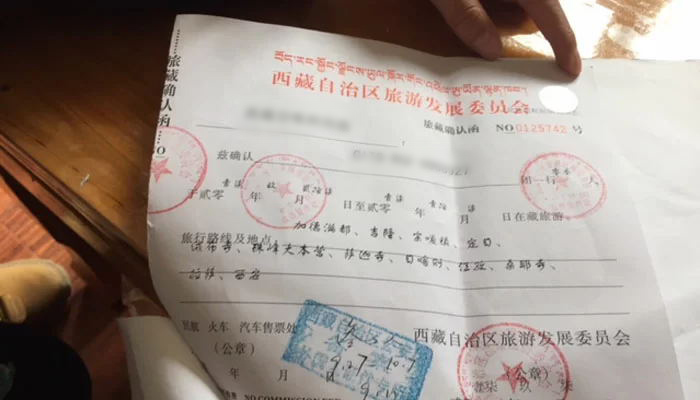
Whether you travel to Tibet from Beijing by train, plane, or overland, the Tibet Travel Permit is essential. Also called a Tibet Visa or Tibet Entry Permit, it is required for all international travelers.
The Tibet Travel Permit cannot be obtained individually. Only licensed travel agencies, like ours, can apply on your behalf. But the process is simple.
Simply book your Tibet tour with us and provide copies of your passport and Chinese Visa (if required). We will then submit your documents to the Tibet Tourism Bureau in Lhasa, and take care of the rest application for you.
The permit is usually issued within 8 to 9 working days. Once ready, we can send it directly to your address or hotel in Beijing before your flight or train to Tibet.
To ensure a smooth process, especially during peak travel season, we recommend contacting us at least 20 days before your Beijing to Tibet trip.
Other Required Documents for Tibet Tour
If you plan to explore remote areas of Tibet after arriving in Lhasa from Beijing, you will need additional permits.
For example, travelers visiting Mount Everest Base Camp must obtain an Alien’s Travel Permit. Those planning a trip to Mount Kailash will also need a Military Permit and a Foreign Affairs Permit.
These additional permits are also handled by your Tibetan travel agency like us. Before you leave Beijing, let us know your travel plans so we can prepare all necessary permits, including the Tibet Travel Permit, in advance. This ensures a smooth Tibet tour.
 The Tibet Travel Permit is required for all international travelers visiting Tibet.
Useful Tips for Traveling from Beijing to Tibet
Traveling from Beijing to Tibet requires careful preparation. High altitude, changing weather, and remote locations make planning essential. These tips will help you enjoy a safe, smooth, and culturally immersive journey.
How to Avoid Altitude Sickness in Tibet
Tibet’s average elevation is above 4,000 meters, and Lhasa sits at about 3,650 meters. Travelers may experience altitude sickness when arriving from low-altitude cities like Beijing (44 meters above sea level).
For those taking the Beijing–Lhasa train, the journey takes about 40 hours. After leaving Xining (2,275 m), the train gradually climbs to Tanggula Pass (5,072 m). Onboard oxygen is available near Golmud to help reduce the effects of high altitude.
To minimize altitude sickness, follow these tips:
- Rest before departure: Avoid strenuous exercise and get plenty of sleep in Beijing for 3–5 days before your trip.
- Take it slow in Lhasa: Spend your first day at a relaxed pace. Rest, avoid heavy physical activity, and give your body time to adapt.
- Stay hydrated: Drink plenty of water. Dehydration can worsen symptoms.
- Use oxygen if needed: Onboard oxygen is available on the train from Beijing. It’s easy to use and helps reduce altitude effects.
- Consider medication: Consult your doctor about preventive medicine, such as Diamox, to help with altitude adjustment.
Choose the Best Time to Go
The best time to travel from Beijing to Tibet is April to October, when weather is generally mild and roads are open.
- Spring (April–June): Moderate temperatures, clear skies, and blooming landscapes. Ideal for sightseeing and trekking, including Mount Everest.
- Summer (July–August): Warmer weather, lush landscape on the plateau and along Qinghai-Tibet Railway. But expect occasional showers, especially in higher altitudes. Summer is popular, so book your flight, train and even accommodations early.
- Autumn (September–October): Cool, dry weather with clear skies. Stunning landscapes with autumn colors and ideal conditions for photography.
- Winter (November–March): Cold and dry, with fewer tourists. Travel costs are lower, making it perfect for budget-conscious travelers. Some high-altitude passes may be icy, so plan accordingly.
Packing List & Clothing Recommendations
The weather in Tibet is largely different from that of Beijing. Temperatures are colder, sunlight is strong, and conditions can change quickly. It is wise to pack accordingly before your departure:
- Warm clothing: Even in summer, temperatures can drop unexpectedly. Bring layers, including a warm jacket, hat, gloves, and scarf.
- Sun protection: High-altitude sun is strong. Pack sunscreen (SPF 30+), sunglasses, and a wide-brimmed hat.
- Comfortable footwear: Sturdy shoes are essential for trekking or city exploration.
- Medications: Bring personal medications, altitude sickness prevention medicine, and a basic first-aid kit.
- Camera: Tibet is incredibly scenic. Don’t forget a camera or smartphone to capture landscapes and cultural experiences.
- Water bottle: Staying hydrated is crucial at high altitudes. Bring a refillable bottle.
- Food and snacks: If traveling by train from Beijing, bring snacks to pass the time. Besides, onboard meals can be expensive.
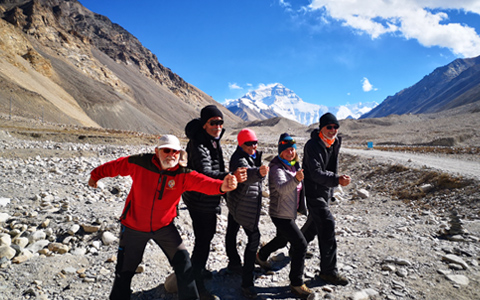
 Spring and Autumn provide clear weather to enjoy full views of Mount Everest at the Tibet Everest Base Camp.
Join our best-selling Kailash Manasarovar tour for a hassle-free journey!
Make Your Trip to Tibet Smooth and Worry-Free with Us
Traveling to Tibet can be complex for first-time visitors. From permits to transportation, planning every detail is crucial. Our services are designed to make your Beijing to Tibet trip smooth, safe, and filled with authentic local experiences.
Join Our Beijing Tibet Tour for a Smooth Experience
All international tourists are required to join a pre-organized tour to visit Tibet, but we make it easy to enjoy a seamless Beijing Tibet travel experience.
With over 30 years of experience handling Tibet tours, we have helped thousands of travelers fulfill their Tibet adventure dreams. Whether you prefer the scenic train route, the convenience of flying, or the adventure of an overland trip, we have you covered.
You can join our small group tours, meeting like-minded travelers while discovering Beijing and Tibet together. Our classic routes cover top attractions in Tibet, including Potala Palace, Yamdrok Lake, and Mount Everest. We also provide opportunities to visit local Tibetan homes, markets, and monasteries, giving you a closer look at everyday Tibetan life.
If you have your own plans or want to explore additional destinations, we can also customize your itinerary so you can experience Tibet in a way that matches your interests and pace.
Enjoy One-Stop, Tourist-Friendly Services from Us
Once you book your Beijing Tibet tour with us, you will enjoy one-stop services from permits to accommodations, local tour guides, and more. We take care of every detail so you can focus on enjoying your journey.
- Tibet Travel Permit included: We take care of the permit application, so you don’t have to worry about the paperwork.
- Soft sleeper tickets guaranteed: Travel comfortably and rest well on the train from Beijing to Lhasa.
- Airport and train station pickup: Our local guides will meet you and escort you to your hotel in Lhasa safely and conveniently.
- Experienced local Tibet guides: Learn about Tibetan culture, traditions, and hidden gems with knowledgeable guides who help you truly connect with local life.
With our support, your Beijing to Tibet journey becomes hassle-free and culturally rich, letting you focus on the stunning landscapes and authentic local experiences that make Tibet unforgettable.
 Our guests visit the turquoise Yamdrok Lake accompanied by our experienced local Tibetan tour guide.
FAQs about Traveling from Beijing to Tibet
1. What is the best way to travel from Beijing to Tibet?
The best way depends on your priorities. Flights are fastest, taking about four hours. Trains offer scenic views along the Qinghai-Tibet Railway and a unique experience of the plateau. Overland travel is adventurous, ideal for those who want to explore remote areas. Most travelers choose flights or trains for comfort and convenience.
2. Can I take a direct flight from Beijing to Lhasa?
Yes. Several airlines operate daily direct flights from Beijing to Lhasa Gonggar Airport, including Air China and Tibet Airlines. Flight time is about four hours.
3. How much does it cost to travel from Beijing to Tibet?
Flight prices vary from $200 to $350 for a one-way economy ticket, depending on season and airline. Train tickets range from ¥360 for hard seats, ¥720 for hard sleepers, to ¥1,144 for soft sleepers. Overland travel costs vary depending on your vehicle, route, and accommodation.
4. How long does it take to travel from Beijing to Tibet?
Flights take about 4 hours. Trains take approximately 40 hours from Beijing to Lhasa. Overland journeys typically last 7 to 14 days, depending on the route and stops along the way.
5. Is it safe to travel by train at high altitude?
Yes. The Qinghai-Tibet Railway is specially built for high-altitude travel. Soft sleeper compartments are comfortable, and onboard oxygen is available. Just remember to rest, stay hydrated, and take it easy on your first days in Lhasa.
6. Will I suffer from altitude sickness when flying to Lhasa from Beijing?
Most travelers feel fine since the flight is quick. To stay comfortable, rest after arrival, drink plenty of water, and avoid strenuous activity. If recommended by your doctor, you can take preventive medication like Diamox.
7. Can I take a bullet train from Beijing to Lhasa?
No. Currently, there is no bullet train between Beijing and Lhasa. The Qinghai-Tibet Railway is a conventional long-distance train route.
8. Can I combine a flight to Xining and a train to Lhasa?
Yes! This is a popular choice for travelers who want to cut down the long train journey. Fly from Beijing to Xining, then take the train to Lhasa. You still get to enjoy the scenic highlights of the railway while saving time.
9. Can I visit Tibet independently, or do I need a tour?
All international visitors must join a pre-arranged tour to visit Tibet. Independent travel is not allowed. A licensed travel agency, like ours, will take care of your Tibet Travel Permit and other arrangements, so you can enjoy your Tibet tour without any worries.
Conclusion
Traveling from Beijing to Tibet in 2026 is convenient and can be an unforgettable adventure. The best travel option depends on your priorities, schedule, and the kind of experience you want.
Flights are the fastest way to reach Lhasa, taking about four hours. Tickets usually range from $200 to $350 for a one-way economy seat, depending on the season. Booking in advance or considering connecting flights can save costs and secure your spot.
Trains offer a scenic and immersive journey along the Qinghai-Tibet Railway. The trip takes about 40 hours, with soft and hard sleeper tickets starting from ¥720. You’ll enjoy stunning views of snow-capped mountains, vast grasslands, and the plateau landscape, while onboard facilities like oxygen supplies and the dining car make the journey comfortable.
Overland trips are ideal for adventurous travelers. Routes via the Qinghai-Tibet Highway or the G318 Highway take 7 to 14 days. This option allows you to explore remote areas, experience local life, and see Tibet up close.
Before you go, make sure you have all essential travel documents, including your Chinese Visa and Tibet Travel Permit. Proper high-altitude preparation, planning the right season, and packing appropriately are key for a smooth trip.
Booking your trip through a licensed travel agency ensures a hassle-free experience. We handle your Tibet Travel Permit, guarantee soft sleeper tickets, and provide airport or train station pickups. Our experienced local guides help you enjoy authentic Tibetan culture and make your journey safe and memorable.
Start planning your Beijing to Tibet journey in 2026 today and book your tour with us now to enjoy a smooth, safe, and truly unforgettable adventure!




Ask a Quick Question