








Tibet vs Nepal: What is the Difference? Which is Better to Visit?
Tibet and Nepal offer two very different Himalayan experiences. On the northern side, Tibet, the “Roof of the World,” impresses with vast plateaus, sacred turquoise lakes, centuries-old Buddhist monasteries, and unobstructed views of Mount Everest.
On the southern slopes, Nepal charms with lush valleys, steep gorges, towering Himalayan peaks, a mix of Hindu and Buddhist traditions, where trekking, adventure, and cultural discovery go hand in hand.
In 2026, both destinations promises spiritual journeys, epic treks, and breathtaking photography opportunities. This guide will help you compare Tibet and Nepal, highlighting their key differences and what makes each destination truly special.
By considering factors like location, landscape, culture, Everest views, best travel seasons, tour costs, and travel style, you’ll be able to decide whether to focus on one or experience the ultimate adventure by visiting both.
Whether you’re drawn to Tibet’s high-altitude serenity or Nepal’s dramatic mountain landscapes, the Himalayas are ready to welcome you.
Contents
 Tibet vs Nepal in Location: North vs South of the Himalayas
Tibet vs Nepal in Landscape: High Plateau vs. Deep Valleys
Tibet vs Nepal in Religion and Culture: Tibetan Buddhism vs. Nepali Hinduism
Tibet vs Nepal in Everest Base Camp: Accessible North vs Trekker’s South
Tibet vs Nepal in Best Travel Time: Weather and Festivals
Tibet vs Nepal in Travel Cost: Premium Comfort vs Budget Backpacking
Tibet vs Nepal in Food and Accommodation: Spiritual Simplicity vs. Exotic Variety
Tibet vs Nepal in Altitude Sickness & Health Safety
Tibet vs Nepal in Travel Style: Guided Tours vs. Solo Travel
Tibet vs Nepal in Travel Documents: Entry Requirements
Why Visiting Both Tibet and Nepal is the Ultimate Choice
Recommended Itinerary: 2026 Suggested Tibet & Nepal Tours
Tibet vs Nepal in Location: North vs South of the Himalayas
Lying on either side of the mighty Himalayas, Tibet and Nepal are close neighbors with a long history of trade and cultural exchange. They share a border of about 1,414 kilometers (879 miles), stretching from Ngari in northwestern Tibet to the southwest of Shigatse Prefecture.
Tibet – Standing on the Roof of the World (the North Side)
Sitting on the northern side of the Himalayas, Tibet occupies the vast Tibetan Plateau. It is an autonomous region in southwest China, bordering India, Nepal, Bhutan, and Myanmar, with Lhasa as its provincial capital.
With an average elevation above 4,000 meters, Tibet is the highest region on Earth, featuring the Himalayas and Mount Everest along its border with Nepal.
The region is vast and open, often described as over three times the size of California or roughly equivalent to the combined area of France and Spain.
Tibet is ideal for travelers seeking high-altitude landscapes, serene lakes, sacred mountains, and spiritual journeys.
Nepal – The Gateway of Vertical Extremes (The South Side)
Nepal lies on the southern slopes of the Himalayas, a small landlocked country between China and India, with Kathmandu as its capital.
Despite being about one-fourth the size of Tibet, Nepal features the greatest altitude changes on Earth—within just 150 kilometers, the land rises from the subtropical Terai plains near sea level to the 8,848-meter summit of Mount Everest.
Nepal is also the only country in the world from which travelers can enter Tibet without going through mainland China. This unique arrangement strengthens ties between the two regions, making a combined Tibet and Nepal journey easier.
With lush valleys, dramatic peaks, and rich cultural traditions, Nepal is perfect for trekkers, nature lovers, and adventure seekers.
 Map illustrating the location of Tibet and Nepal in the Himalayas.

Explore exotic Tibet on this overland journey across the Roof of the World!
Tibet vs Nepal in Landscape: High Plateau vs. Deep Valleys
The Himalayas offer dramatically different landscapes depending on which side you are on. One side stretches like a vast, open ocean of land, while the other climbs steeply through green forests to towering white peaks.
Tibet Landscape – Vast Plains & High Lakes
In Tibet, the land is wide and open. Because you are already on the "Roof of the World," the views stretch for miles without any trees to block your sight.
The "Roof of the World" Vibe: Expect vast golden plains and rugged, high-desert terrain where the sky feels close enough to touch. Because of the high base altitude, the horizons are massive and unobstructed.
Stark, Dramatic Mountain Views: One of Tibet’s signature features is its dramatic peaks rising sharply from the plateau, including the North Face of Mount Everest. These awe-inspiring vistas feel both grand and untamed, perfect for both photographers and travelers.
Turquoise Gems: Tibet is famous for its sacred high-altitude lakes. Lakes like Yamdrok Lake and Namtso are world-renowned for their unreal turquoise colors, which contrast sharply against the surrounding snow-capped peaks.
A Photographer’s Paradise: The thin, dry air in Tibet offers extraordinary visibility. Mountains can appear hundreds of miles away with startling clarity, making it a dream destination for photographers.
Key Highlights: Wide-open vistas, sacred alpine lakes, and the stark, minimalist beauty of the trans-Himalaya, with with dramatic views of Everest’s North Face adding a uniquely spectacular element to the Tibet landscape.
 The turquoise waters of Yamdrok Lake contrast sharply against the surrounding snow-capped peaks.
Nepal Landscape – Green Valleys & Vertical Peaks
Nepal is all about dramatic vertical contrasts. In a single day, you can move from warm, leafy forests to icy glaciers. This land of extremes offers constant variety for adventurers.
From Jungle to Glacier: The landscape transition is legendary. Begin in the subtropical warmth of the Terai or the lush, green hills of Pokhara and Annapurna, and and soon find yourself surrounded by rugged, closely packed Himalayan peaks.
Deep Valleys & Gorges: Unlike Tibet’s flat expanses, Nepal is a maze of deep river valleys and terraced hillsides. Mountains like Machapuchare (Fishtail) rise sharply from low-altitude valleys, creating awe-inspiring vertical panoramas.
Vertical Adventure: Every hike is a journey through changing ecosystems—from dense rhododendron forests and bamboo groves to the rugged rock and ice of the high Himalayas.
Key Highlights: The tranquil lakes of Pokhara, the lush Annapurna foothills, rugged, closely packed Himalayan peaks, and the diverse flora and fauna of Nepal’s southern slopes.
 The tranquil lakes of Pokhara reflect the foothills of Annapurna and the dense Himalayan peaks.
Landscape Comparison at a Glance:
- Tibet is for those who love vastness, sacred lakes, and clear panoramas. It is the land of the "Great Open."
- Nepal is for those who love lush greenery, deep valleys, and dramatic elevation changes. It is the land of the "Vertical Climb."
Tibet vs Nepal in Religion and Culture: Tibetan Buddhism vs. Nepali Hinduism
Both Tibet and Nepal are deeply spiritual places where religion shapes everyday life, but the feel and rhythm of each culture are very different.
Tibet – Tibetan Buddhism in Daily Life
Tibet is a land where Tibetan Buddhism flows through daily life. From the moment you arrive in Lhasa, you can sense a quiet devotion and spiritual presence.
A Living Faith: Spirituality isn't just in the temples; it’s on the streets. You will see pilgrims from all over Tibet performing Kora (walking circles) around the Jokhang Temple, spinning prayer wheels and chanting mantras.
Iconic Landmarks: You can explore the grand Potala Palace, the former home of the Dalai Lama, and visit Great Monasteries like Sera or Drepung to watch monks engage in lively philosophical debates.
Festivals and Traditions: Many Tibetan festivals, such as the Saga Dawa Festival, have religious origins. During various celebrations, you can enjoy Tibetan opera, traditional dances, and local gatherings that showcase the community’s devotion and joy.
Get Closer to Local Culture: The best way to experience Tibet is to follow the rhythm of local life. We can take you to visit traditional Tibetan tea houses, sip sweet butter tea with locals, and observe everyday rituals to connect deeply with Tibetan culture and its people.
Key Highlights: Potala Palace, Jokhang Temple, monastery visits, Tibetan tea houses, and witnessing daily devotional practices.
 Watch monks engage in lively debate at Sera Monastery in Lhasa.
Nepal – A Colorful Mosaic of Hinduism & Buddhism
Nepal is a vibrant mix of Hindu and Buddhist traditions, where multiple faiths coexist side by side.
Hindu Traditions: In Kathmandu, you will see many Hindu temples dedicated to Shiva and Vishnu. One of the most famous sights is Kathmandu Durbar Square, where ancient palaces and temples create a living museum.
The Living Goddess: Nepal is famous for the Kumari, a young girl worshipped as a living goddess. Seeing her at her palace is a highlight for many visitors.
A Mix of Faiths: You will often see Hindu and Buddhist shrines in the same courtyard. The giant white stupas of Boudhanath and Swayambhunath (the Monkey Temple) are centers for the Buddhist community, but are respected by everyone.
Key Highlights: Kathmandu Durbar Square, Kumari, temples and shrines, Hindu-Buddhist festivals, and traditional ceremonies.
 Experience Hindu and Buddhist traditions at Kathmandu Durbar Square.
Quick Comparison in Region and Culture:
- Choose Tibet if: You want to immerse yourself in pure Tibetan Buddhism, see grand monasteries, and experience the quiet, powerful devotion of the local people.
- Choose Nepal if: You want to see a mix of many traditions, explore busy temple squares, and experience a wide variety of religious festivals and rituals.
Tibet vs Nepal in Everest Base Camp: Accessible North vs Trekker’s South
Standing at the base of the world’s highest peak is a dream for many travelers. However, the experience of reaching Everest Base Camp (EBC) differs dramatically depending on whether you go from Tibet in the north or Nepal in the south.
Tibet Everest Base Camp (North): More Accessible & Scenic
The North Side of Everest in Tibet is known as the most tourist-friendly way to experience the mountain.
Drive Directly to the Base: Unlike Nepal, Tibet has well-maintained, fully paved roads to Everest Base Camp, allowing travelers to reach the site by vehicle. This scenic route passes through some of Tibet’s more famous highlights, like Yamdrok Lake, Tashilhunpo Monastery in Shigatse.
The Best View of Everest: The North Face offers a clear, unobstructed view of the Everest summit. It looks like a giant, perfect pyramid standing right in front of you. This makes it the absolute best spot for photographers.
Cultural Highlights: Nearby, you can also visit Rongbuk Monastery, the highest monastery in the world, which offers a stunning backdrop for photos of Everest.
Who It’s For: Because it requires no intense hiking, it is suitable for everyone, including seniors and families. It is the best choice if you want to see the majesty of Everest without the physical strain of a long trek.
Altitude Note: The camp sits at about 5,000 meters. Before you arrive EBC by vehicle, you should spend a few days in Lhasa and Shigatse first to acclimatize.
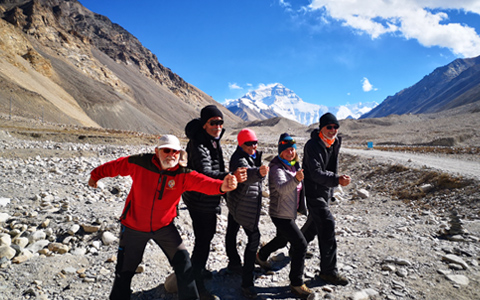
 The Everest Base Camp in Tibetan side can be reached directly by road, and offers clear view of Everest peak.
Nepal Everest Base Camp (South): Classic Trekking Challenge
The South Side of Everest in Nepal offers the legendary trekking experience, but it requires stamina and preparation.
The Famous Trek: There are no roads to the South EBC. To get there, you must take a thrilling flight to Lukla and then complete a multi-day hike (usually 12–14 days) through the mountains.
The Sherpa Culture: Along the way, you walk through famous villages like Namche Bazaar and stay in local teahouses. It is a deeply immersive experience where you live among the mountain people.
The View from the Base: Interestingly, the view of the summit from the South Base Camp is often partially blocked by other nearby peaks. However, you are standing right at the foot of the incredible Khumbu Icefall.
Who It’s For: This is for adventure seekers and fit trekkers who want the challenge of a lifetime and don't mind walking 5–7 hours a day.
Altitude Note: The camp sits at 5,364 meters. The risk of altitude sickness is managed by slowly hiking higher each day.
 Reaching the Everest Base Camp in Nepal requires a multi-day trek.
Quick Comparison of EBC:
- Choose Tibet (North Side): For the perfect photo of Everest, comfortable travel, and scenic road access.
- Choose Nepal (South Side): For a challenging trek, immersive Sherpa culture, and the classic Everest adventure.
Tibet vs Nepal in Best Travel Time: Weather and Festivals
Timing your visit can make a huge difference in your Himalayan experience. Both Tibet and Nepal have distinct seasons that offer the best conditions for sightseeing, trekking, and photography.
Tibet’s Golden Season: April to October
The best time to visit Tibet is generally from April to October, when the weather is most favorable.
Spring and Autumn (April–June & September–October): These months offer stable, mild weather, crisp air, and clear skies, with incredible visibility. It’s the perfect time for photography and trekking, with higher chances of seeing the Mt Everest summit without clouds.
Summer (July–August): Summer is also a good time to visit Tibet. Light rains rarely disrupt travel, and the warmer temperatures, higher oxygen levels, and lush landscapes make it ideal for exploring higher and more remote regions, such as Mount Kailash and Namtso Lake.
2026 Special Event: The Saga Dawa Festival, celebrating the birth and enlightenment of Buddha, is a highlight for 2026 travelers. Thousands of pilgrims gather, creating a vibrant and spiritually charged atmosphere.
Winter Tip (November–March): Winter in Tibet can be surprisingly pleasant. Lhasa enjoys bright, sunny days, fewer crowds, and a unique serene atmosphere, making it an underrated time for travel.
 Potala Palace in winter, with clear skies and fewer visitors, offers a serene experience.
Nepal’s Trekking Windows: Spring & Autumn
Nepal’s best travel periods are strongly influenced by the monsoon season, creating two ideal trekking windows.
Spring (March–May): This is the best season for nature lovers and mountain photography. Rhododendrons bloom, the weather is warm enough for high-altitude trekking, and it’s the peak season for climbers attempting Everest.
Autumn (September–November): The most popular trekking period, autumn brings fresh air, clear skies, and sharp mountain views after the summer rains. Trails are generally safer and the scenery is at its best.
Monsoon Gap (June–August): Heavy rains make many trails slippery, and thick clouds often obscure mountain views. Travelers may face leeches, muddy paths, and less predictable conditions.
Festivals: Autumn also coincides with Dashain and Tihar, Nepal’s largest Hindu festivals, filling Kathmandu with lights, color, and celebration, adding a rich cultural dimension to trekking trips.
 Autumn is the most popular trekking period in Nepal.
Our Tibet and Nepal tours are available year-round, offering flexible departures for your convenience.
Tibet vs Nepal in Travel Cost: Premium Comfort vs Budget Backpacking
Travel costs can vary greatly between Tibet and Nepal, reflecting differences in infrastructure, travel style, and services offered. Understanding the options can help you plan a trip that fits your budget and expectations.
Tibet Tour Cost - Premium & All-Inclusive
Traveling in Tibet generally involves a higher budget, especially if you want comfort and convenience.
- Transportation Costs: Tibet’s remote, high-altitude terrain makes flights and trains more expensive. The cost of transporting goods to the “Roof of the World” also raises the price of accommodations, meals, and everyday items.
- Guided Tours: Travelers are required to join organized tours that include permits, drivers, guides, and meals, ensuring safe, smooth, and comfortable travel.
- Cost-Saving Tips: You can reduce costs by joining small group tours or traveling during the low season in winter, when accommodations and services are more affordable.
Tibet tours are ideal for travelers who value comfort, security, and fully arranged logistics, even if it comes with a higher price tag.
Nepal Tour Cost - Flexible & Budget-Friendly
Nepal offers a wide range of options suitable for all budgets, from backpackers to luxury travelers.
- Accommodation & Dining: You can choose from budget guesthouses, mid-range hotels, to boutique stays, with dining options available for every price range.
- Transportation: Public buses and taxis are affordable and widely available, making independent travel easy.
- Flexibility: Nepal is ideal for low-budget or solo travelers, with the freedom to design your itinerary and manage expenses according to your preferences.
Whether you prefer comfortable, all-inclusive arrangements in Tibet or flexible, budget-friendly travel in Nepal, both destinations offer experiences tailored to your style and means.
 Experience the breathtaking Himalayan scenery while joining our Tibet small group tours for a cost-effective adventure.
Tibet vs Nepal in Food and Accommodation: Spiritual Simplicity vs. Exotic Variety
Food and lodging are an essential part of the Himalayan experience, and Tibet and Nepal offer very different flavors and accommodations reflecting their landscapes and cultures.
Tibet – Hearty Highland Flavors and Modern Comfort
Tibetan cuisine is simple, hearty, and perfectly suited for high-altitude travel. Traditional staples like yak butter tea, momos (dumplings), and tsampa (roasted barley flour) provide energy for trekking and sightseeing.
When it comes to accommodation, in large Tibetan cities like Lhasa, Shigatse, and Nyingchi, you can choose from a wide range of options—from luxury 5-star hotels to budget-friendly hotels. There are also many Tibetan-style hotels for distinctive cultural stays.
However, in remote or high-altitude areas, such as Everest Base Camp or along the Mount Kailash Kora route, accommodation is more basic. Guesthouses are usually the primary option, offering essential facilities like oxygen supply and warming bedding.
- Key Highlights: Traditional Tibetan cuisine, city hotels from luxury to budget, unique Tibetan-style stays, and simple guesthouses in remote regions.
 Our guests enjoy Tibetan hotspot and other food and snacks in Lhasa.
Nepal – Spiced Delights and Cozy Teahouses
Nepalese cuisine is rich, flavorful, and diverse, reflecting the country’s multi-ethnic heritage. Popular dishes include Dal Bhat (lentil and rice), Newari cuisine, and momos, often seasoned with aromatic spices that vary by region.
Accommodations in Nepal range from budget-friendly, charming guesthouses to international luxury hotels, offering excellent value for money. In main cities like Kathmandu and Pokhara, modern amenities are widely available, including reliable power, hot water, and comfortable facilities.
For high-altitude trekking routes, accommodation is simpler and more rustic. Travelers stay in teahouses along the trails, which provide basic meals and warm beds while exploring the mountains and interacting with local communities.
- Key Highlights: Flavorful Nepalese cuisine, city hotels from budget to luxury, and rustic teahouses along trekking routes that offer a true Himalayan experience.
 Traditional Nepalese cuisine consists of dishes made with rice and a variety of seasonings.
Tibet vs Nepal in Altitude Sickness & Health Safety
Tibet – Professional Support and Altitude Safety
Tibet sits on a high plateau with an average elevation above 4,000 meters, and many destinations, including Everest Base Camp, reach around 5,000 meters or higher. At these altitudes, travelers are naturally at risk of altitude sickness.
Fortunately, there are effective ways to prevent and reduce its effects:
- Acclimatization: Spend a few days in Lhasa before heading to higher regions to allow your body to adjust gradually.
- Stay in Oxygen-Supplied Hotels: Many accommodations in Tibet provide supplemental oxygen to help travelers adapt comfortably.
- Gradual Ascent: Plan stops along the route for gradual elevation gain.
- Healthy Habits: Avoid alcohol and smoking, and eat light, carbohydrate-rich meals to maintain energy and hydration.
On our Tibet tours, we provide oxygen-equipped vehicles, and our experienced local guides monitor travelers daily, giving advice and assistance to ensure a safe and smooth high-altitude experience.
Nepal – Gradual Ascent via Trekking
Nepal’s high-altitude trekking routes, including Everest Base Camp and the Annapurna Circuit, reach elevations above 5,000 meters, so careful management of altitude sickness is essential.
- Gradual Acclimatization: Avoid flying directly to high-altitude areas. Spend 1–2 nights in Kathmandu (1,400m) or Pokhara before starting your trek to allow your body to adjust.
- Controlled Ascent: Above 3,000 meters, do not increase your sleeping altitude by more than 300–500 meters per night to minimize the risk of altitude sickness.
- Day Hikes, Lower Sleeping Altitudes: Hike to higher elevations during the day but sleep at lower altitudes at night to aid acclimatization.
If your travel is limited to low-altitude regions, such as Kathmandu, Pokhara, or Chitwan, altitude sickness is generally not a concern, making these destinations accessible to most travelers.
 Many accommodations in Tibet provide supplemental oxygen to help travelers adapt comfortably.
Experience seamless, tourist-friendly service on our Kathmandu to Lhasa overland tour.
Tibet vs Nepal in Travel Style: Guided Tours vs. Solo Travel
Tibet – Guided Tour & Seamless Experience
For all international travelers, visiting Tibet requires joining an organized tour arranged by a local travel agency. During your trip, a local guide is mandatory, ensuring that your journey is worry-free, safe and smooth.
At TibetTour.org, we offer both private and small group tours covering Tibet’s most popular destinations, including Lhasa, Everest Base Camp, Mount Kailash, Namtso, and Yamdrok Lake. Our one-stop service includes Tibet Travel Permits, quality hotels, local transportation, and carefully planned itineraries to make your journey smooth and stress-free.
Our local Tibetan guides have an average of over fifteen years of experience, providing insightful explanations about Tibetan culture, history, and spirituality. They help you connect deeply with local life, making your visit both educational and personally enriching.
Nepal – The Freedom of Independent Discovery
Nepal offers a very different travel style, giving you the freedom to explore at your own pace. Many areas, especially Kathmandu, Pokhara, and the lower-altitude trekking routes, are solo-friendly,allowing you to plan your own itineraries, and move between destinations independently.
For those venturing into the high Himalayas, such as Everest or Annapurna regions, hiring a local guide or porter is recommended to ensure safety, navigate the trails, and provide insight into the Sherpa culture. Even so, the approach remains flexible, letting you customize your journey.
Whether it’s trekking through remote villages, enjoying vibrant city life, or participating in local festivals, Nepal’s travel style emphasizes independence, adventure, and immersion, giving tourists the freedom to shape their own Himalayan experience.
 Join Mount Kailash Kora with our local Tibetan guides.
Tibet vs Nepal in Travel Documents: Entry Requirements
Travel documents are an essential consideration for planning a trip to Tibet or Nepal, and the requirements differ significantly between the two destinations.
Tibet – Travel Documents Smoothly Arranged by Local Travel Agency
Visiting Tibet requires proper documentation, starting with a Chinese visa. You can obtain this visa in your home country or a third country. The good news is that, in 2026, many countries are eligible for visa exemptions, and this makes your travel much simpler.
Before entering Tibet, all international tourists must have a Tibet Travel Permit. And if you plan to visit remote or restricted areas such as Mount Kailash or Everest Base Camp, additional permits are required.
Individual application of these Tibet travel documents are not allowed. But we can help you obtain them efficiently in advance. It is recommended to contact us at least one month early before your trip, to avoid any delays, especially during peak season.
Nepal – Easy Visa-on-Arrival
Traveling to Nepal is generally much simpler. Most international visitors can obtain a visa-on-arrival at Kathmandu, Pokhara, or Tribhuvan Airport, making it flexible and convenient for last-minute travelers. For those planning longer stays or multi-entry trips, online visa applications are also available.
This straightforward process allows travelers to start exploring Nepal quickly, whether for city tours, trekking, or cultural experiences, without extensive preparation in advance.
 Tibet Travel Permit is required for all Tibet tours.
Why Visiting Both Tibet and Nepal is the Ultimate Choice
For travelers seeking the ultimate Himalayan adventure, combining Tibet and Nepal offers an unforgettable blend of landscapes, culture, and experiences.
The Best of Both Worlds:
By visiting both regions, you can witness the “two faces” of Everest—the dramatic North Face in Tibet and the iconic Khumbu Icefall on the South Base Camp in Nepal.
Beyond the mountains, you will experience distinct spiritual cultures, from the serene Tibetan monasteries and high-altitude lakes to Nepal’s vibrant Hindu and Buddhist temples, festivals, and bustling markets.
The Perfect Link:
Traveling between Tibet and Nepal is easier than ever. You can choose a direct flight between Lhasa and Kathmandu for a quick connection, or opt for an overland journey via the Gyirong Port, combining scenic landscapes with cultural encounters along the way.
This flexibility allows you to design a seamless, fully immersive trip across both sides of the Himalayas.
Visiting both Tibet and Nepal allows you to maximize your Himalayan experience, combining adventure, spirituality, and cultural discovery in one extraordinary journey.
 Our guests can choose an overland journey via Gyirong Port between Tibet and Nepal.
Recommended Itinerary: 2026 Suggested Tibet & Nepal Tours
For travelers looking to experience both Tibet and Nepal in one journey, these suggested itineraries provide a balanced mix of scenic views, cultural highlights, and high-altitude adventure.
7-Day Lhasa to Kathmandu Overland (The Most Popular Route)
This 7-day Lhasa to Kathmandu itinerary is perfect for first-time travelers to the Himalayas, offering a gradual ascent and plenty of opportunities to explore Tibet in depth while enjoying breathtaking views of Mount Everest.
The journey begins in Lhasa, where you visit iconic landmarks such as the Potala Palace and Jokhang Temple. From there, travel westward toward Everest Base Camp, stopping at Yamdrok Lake to admire its turquoise waters and the surrounding mountains. At the base camp, enjoy close-up views of Everest’s North Face, one of the most dramatic Himalayan vistas.
Afterward, cross the Gyirong border into Nepal and continue by road to Kathmandu, where you can explore the city’s temples, squares, and vibrant culture, completing a seamless overland adventure across two regions.
8-Day Kathmandu to Lhasa Overland Tour Across Himalayas
This 8-day Kathmandu to Lhasa overland trip is ideal for travelers entering Tibet from Nepal and follows a reverse route of the 7-day trip.
Starting in Kathmandu, travel overland to Gyirong, where you cross the border and spend a day acclimatizing while exploring the lush valley. Continue toward Everest Base Camp on the Tibetan side, then visit Shigatse and the Tashilhunpo Monastery to experience Tibetan culture and history.
The journey concludes in Lhasa, giving you ample time to explore its monasteries, markets, and cultural landmarks, and immerse themselves in local life.
Customize Your Tibet and Nepal Tour with Us
At TibetTour.org, we help you tailor your itinerary according to your interests and pace. Our services include:
- Offices in both Lhasa and Kathmandu for seamless coordination.
- Guaranteed Tibet Travel Permit and visa assistance to ensure hassle-free entry.
- Safe and comfortable border transfer services for overland routes.
- Professional local guides and experienced drivers, providing insightful explanations and a smooth travel experience.
With our support, your Tibet and Nepal journey becomes a fully immersive, stress-free adventure, combining the best of both sides of the Himalayas.
 Join our 7-day Lhasa to Kathmandu overland tour via Gyatsola Pass.
Quick Summary and FAQS about Tibet vs Nepal
Quick Summary
Located on opposite sides of the Himalayas, Tibet and Nepal each offer a distinct travel experience. In Tibet, reaching Everest Base Camp is accessible by vehicle, with unobstructed views of the North Face of Everest. Besides, you can explore the vast Tibetan plateau, sacred turquoise lakes, and centuries-old monasteries, experiencing the richness of Tibetan Buddhist culture.
Nepal, by contrast, offers a more challenging trek to Everest Base Camp, winding through steep valleys, Sherpa villages, and densely packed Himalayan peaks. Beyond the trek, you can enjoy lush green valleys, dramatic gorges, and a vibrant mix of Hindu and Buddhist traditions.
Tibet tends to be more expensive, but it provides fully organized tours, guided support, and professional acclimatization measures, while Nepal is flexible and budget-friendly, allowing independent travel or guided treks at your own pace.
Combining both destinations lets travelers enjoy Tibet’s serene highlands and spiritual depth alongside Nepal’s dramatic landscapes and rich cultural life, creating a truly unforgettable Himalayan journey.
1. Can I combine a Tibet tour with a Nepal trip in 2026?
Yes. Many travelers combine both destinations, either via a direct flight between Lhasa and Kathmandu or an overland route through Gyirong Port, making it possible to experience both regions in one journey.
2. What is the easiest way to travel from Tibet to Nepal?
The easiest option is a direct flight from Lhasa to Kathmandu. For those who prefer scenic travel, an overland journey via Gyirong Port provides stunning landscapes and cultural stops along the route.
3. Do I need a Tibet Travel Permit to enter Tibet from Nepal?
Yes. All international travelers must have a Tibet Travel Permit, even when entering from Nepal. Additional permits are required for remote or restricted areas, such as Mount Kailash or Everest Base Camp.
4. Which side of Everest Base Camp is better for first-time trekkers?
For a more accessible and comfortable experience, the North Base Camp in Tibet is ideal, with fully paved roads and minimal walk. The South Base Camp in Nepal offers the classic trekking experience, better suited for adventure seekers and fit trekkers.
5. What is the best time to visit Tibet and Nepal together?
The golden travel seasons are spring (April–June) and autumn (September–October).Tibet offers clear skies, mild weather, and cultural festivals, while Nepal has excellent trekking conditions and vibrant autumn festivals.
6. Are guided tours necessary for Tibet or Nepal?
In Tibet, organized tours with local guides are mandatory for international visitors, covering permits and cultural guidance. In Nepal, travel is generally more flexible, and guided tours are optional but recommended for high-altitude treks.
7. How do I prevent altitude sickness in Tibet and Nepal?
In Tibet, acclimatization, oxygen-supplied hotels, gradual ascent, and guidance from experienced local guides help prevent altitude sickness. In Nepal, gradual trekking, controlled sleeping elevations, and staying at lower altitudes at night are key strategies. Low-altitude areas in Nepal rarely cause high-altitude sickness.
8. What types of accommodation are available in Tibet vs Nepal?
In Tibet, cities like Lhasa and Shigatse offer luxury 5-star hotels, Tibetan-style boutique hotels, and budget guesthouses, while remote regions rely on basic guesthouses. In Nepal, accommodation ranges from budget-friendly guesthouses and teahouses to international luxury hotels, offering flexibility for all budgets.
9. How expensive is traveling in Tibet compared to Nepal?
Tibet is generally more expensive, especially for guided tours, high-altitude transport, and city hotels. Nepal is more budget-friendly, with affordable accommodations, meals, and public transportation, making it suitable for solo travelers or low-budget trips.
10. Can I freely take photographs in Tibet and Nepal?
Photography is generally allowed in most public areas and landscapes. However, some temples, monasteries, and sacred sites may have restrictions, so always ask for permission and respect local customs.
Join our Tibet and Nepal overland tour for a smooth adventure!
Conclusion: Which Himalayan Legend is Calling You?
Tibet and Nepal each offer unique ways to experience the Himalayas, and and both promise memories that will last a lifetime.
Tibet draws travelers with its vast high-altitude plateaus, sacred turquoise lakes, dramatic North Face of Everest, and centuries-old monasteries, offering a peaceful and spiritual journey across the “Roof of the World.”
Nepal, on the other hand, enchants with lush valleys, steep gorges, densely packed peaks, Sherpa villages, and vibrant Hindu-Buddhist culture, providing adventure, trekking, and immersive cultural experiences.
For those seeking the ultimate Himalayan adventure, combining both destinations creates the perfect mix of serenity, exploration, and cultural richness.
Still undecided? We’re here to help you design your dream journey, handling permits, guides, transport, and accommodations for a smooth, worry-free adventure. Contact us today and start planning an unforgettable Himalayan experience.




Ask a Quick Question