







Kathmandu to Lhasa Overland Tour 2026: The Ultimate Guide for Your Nepal to Tibet Overland Adventure
Kathmandu to Lhasa Overland Tour 2026: The Ultimate Guide for Your Nepal to Tibet Overland Adventure
 Why Choose to Take the Overland Tour from Kathmandu to Lhasa?
Best Time to Travel Overland from Kathmandu to Lhasa: A Complete Guide
Recommended Itinerary: 8-Day Kathmandu to Lhasa Road Trip via EBC
Highlights of the Kathmandu to Lhasa Overland Tour
How to Prepare for Your Kathmandu to Lhasa Overland Tour?
Food and Dining: What to Eat on the Kathmandu to Lhasa Road Trip?
Accommodation: Where to Stay on the Kathmandu to Lhasa Overland Tour?
Road Conditions: What to Expect on the Kathmandu to Lhasa Overland Route?
Join Our Kathmandu to Lhasa Tour for a Smooth Travel Experience
The Kathmandu to Lhasa Overland Tour is one of Tibet’s most iconic journeys and the best way to travel from Nepal to Tibet. Spanning about 1,100 kilometers, this adventure takes you through stunning sites like Mount Everest and Yamdrok Lake, while immersing you in Tibetan culture.
For the best experience, we recommend the 8-day itinerary via Gyirong Port, which lets you explore the most famous highlights at a comfortable pace. To enjoy ideal weather, plan your trip between April to June or September to November.
This guide provides everything you need for a smooth journey - best travel times, road conditions, necessary documents, top sights, where to eat and stay, and essential packing tips. Get ready for a safe, comfortable, and unforgettable adventure!
Why Choose to Take the Overland Tour from Kathmandu to Lhasa?
Every year, countless travelers take the route from Kathmandu to Lhasa to discover the wonders of Tibet. After reading the reasons below, you'll be inspired to join them on this unforgettable journey:
Overland Travel Offers Immersive Experiences over Flying
Traveling overland from Kathmandu to Lhasa provides a unique, immersive experience that flights simply cannot offer. You’ll connect closely with the Himalayan landscapes and Tibetan culture, passing through remote villages, temples, and sacred lakes.
Unlike flying, overland travel allows you to engage with your surroundings at a slower pace, creating a truly authentic adventure.
Unique Travel Experience of Natural Wonders and Cultural Encounters
The overland route from Kathmandu to Lhasa is filled with breathtaking sights. Along the way, you’ll see Mount Everest, the highest peak on Earth, and Yamdrok Lake, one of Tibet's most sacred lakes.
You’ll also visit Tibetan monasteries, immersing yourself in the spiritual atmosphere of the region. These encounters make the journey more than just a scenic drive - it’s an enriching cultural experience.
Adventure and Challenge: A Sense of Accomplishment
The Kathmandu to Lhasa overland journey is as much about the adventure as it is about the destination. The route takes you through high-altitude terrain (average 4,000 meters), crossing the Himalayas, winding mountain roads, and mountain passes.
The physical challenge adds to the thrill and reward of completing the journey. By the time you reach Lhasa, you’ll feel a sense of accomplishment that only such an adventurous Nepal Tibet tour can provide.
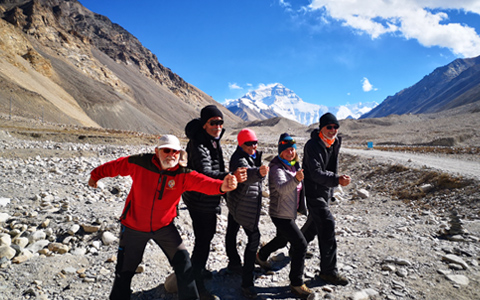
 You can visit Visit Mount Everest during your Kathmandu to Lhasa overland tour.

Join our most popular Kathmandu to Lhasa tour for a smooth experience!
Best Time to Travel Overland from Kathmandu to Lhasa: A Complete Guide
The best time to travel from Kathmandu to Lhasa depends on your preferences for weather, road conditions, and crowd levels. Here’s an overview of the seasons to help you choose the ideal time for your overland adventure:
Best Months are April to June & September to November
The best time to travel from Kathmandu to Lhasa is April to June and September to November. These months offer mild weather, clear skies, and minimal rainfall, making the journey much more pleasant.
Daytime highs typically range from 15°C to 20°C (59°F to 68°F), while nighttime temperatures drop to -5°C to 5°C (23°F to 41°F). The road conditions are also stable, providing a safer and smoother overland experience.
With good visibility, you'll enjoy clear views of Mount Everest and other Tibetan landscapes, without the heavy rainfall or fog often seen in the summer months.
In addition, these months also see fewer tourists compared to the peak season, allowing you to enjoy a relatively peaceful journey and more reasonable prices for your Tibet tour.
 You can get clear views of Mount Everest in autumn.
Summer: The Peak Season for Kathmandu to Lhasa Overland Tour
July and August are the peak season for the Kathmandu to Lhasa Overland Tour, but it’s also the rainy season. Daytime temperatures can reach 20°C to 25°C (68°F to 77°F), while nighttime temperatures remain mild at 5°C to 10°C (41°F to 50°F).
The good news is that rain typically falls in the late afternoon or night, leaving the mornings and early afternoons clear for travel. While summer is warm with lush landscapes, it also brings higher tourist traffic, which means higher prices for accommodation and services.
This is also the time for Tibetan festivals, like the Horse Racing Festival (June to July) and Shoton Festival (August), offering a vibrant and lively experience with welcoming locals and celebrations.
 Summer is also a good time for Tibetan festivalas like the Horse Racing Festival.
Winter: Ideal Time for Budget Travelers on the Kathmandu to Lhasa Route
Winter (December to March) is the low season for the Kathmandu to Lhasa Overland Tour, making it the best time for budget travelers. While the daytime highs range from 5°C to 10°C (41°F to 50°F), nighttime temperatures can drop to -10°C to -15°C (14°F to 5°F), particularly in high-altitude areas.
Although it’s colder, winter brings fewer tourists and lower prices for flights, hotels, and even attraction admissions. You can enjoy a quiet and peaceful atmosphere in Tibetan monasteries and appreciate the stunning snow-covered landscapes along the route.
However, winter travel presents challenges, such as closed roads and snowstorms that may block mountain passes, especially in western Tibet. If you're planning to travel during winter, it’s it’s important to check weather conditions in advance and be well-prepared for the cold.
Recommended Itinerary: 8-Day Kathmandu to Lhasa Road Trip via EBC
The overland journey from Kathmandu to Lhasa spans about 1,300 kilometers. Our classic 8-day Kathmandu to Lhasa overland tour is the most popular itinerary, taking you to Tibet’s Everest Base Camp (EBC) and giving you 3 full days to explore Lhasa after you arrive.
Taking this route, you’ll experience all the best sights of Tibet, while allowing you to gradually adjust to the high altitude for a smoother, more enjoyable adventure.
Day 1: Kathmandu to Rasuwa Gadi (1,983m)
- Start your drive from Kathmandu and arrive at Rasuwa Gadi, the border town.
- Enjoy stunning views of the Nepalese Himalayas along the way, including Langtang National Park.
- Overnight in Rasuwa Gadi, preparing for your journey across Tibet.
Day 2: Rasuwa Gadi to Gyirong (2,774m)
- Cross the border into Tibet and head to Gyirong.
- Spend the day acclimatizing while exploring Gyirong Valley and visiting the meditation cave of Master Tsongkhapa and Paba Monastery.
- Overnight in Gyirong, soaking in the peaceful atmosphere.
Day 3: Gyirong to Everest Base Camp (5,150m) to Tingri (4,348m)
- Drive to Everest Base Camp, passing Shishapangma Peak (8,027m) and Lake Paiku Tso.
- Stop at Gawula Pass (5,198m) to view five Himalayan peaks over 8,000m.
- Reach EBC, take in the views of Mount Everest, and visit Rongbuk Monastery.
- Overnight in Tingri (4,348m).
Day 4: Tingri to Shigatse (3,900m)
- Drive from Tingri to Shigatse (3,900m) via Lhatse.
- Visit the 5000m G318 National Highway Milestone along the way.
- Explore Tashilhunpo Monastery, the seat of the Panchen Lama.
- Overnight in Shigatse.
Day 5: Shigatse to Lhasa (3,656m) via Gyantse
- Continue the journey to Lhasa (3,656m), passing the ancient city of Gyantse and Perklor Monastery.
- Enjoy views of the Korola Glacier, and visit Yamdrok Lake (4,400m).
- Stop to visit a local family in the village.
- Arrive in Lhasa and rest for the evening.
Day 6: Lhasa Tour - Drepung Monastery and Sera Monastery
- Visit Drepung Monastery, the largest in Tibet, and explore the daily life of Tibetan monks.
- In the afternoon, watch the famous Tibetan monks’ debate at Sera Monastery, a lively intellectual tradition.
- Overnight in Lhasa.
Day 7: Lhasa Tour - Potala Palace, Jokhang Temple, Barkhor Street
- Visit Potala Palace, the iconic residence of the Dalai Lama.
- Explore Jokhang Temple, the heart of Tibetan Buddhism, and wander around Barkhor Street, where pilgrims walk the sacred path.
- In the evening, enjoy a farewell dinner with your group.
Day 8: Depart from Lhasa by Flight or Tibet Train
- Enjoy your last moments in Lhasa before departing by flight or Tibet train, concluding your adventure.
 You can visit Lhasa's landmarks like the Potala Palace after arrival.
Route Summary
This 8-day itinerary takes you from Nepal to Tibet, visiting iconic landmarks such as Mount Everest, Yamdrok Lake, and Potala Palace. The route is perfect for travelers looking to experience the best sights of Tibet in a well-paced manner.
If you’re looking for a different adventure, you can also cycle or travel by motorbike along this route, which takes about 16 days by bike or 12 days by motorbike. This is a thrilling option for those seeking a more adventurous journey.
Customize Your Itinerary With Us
If the 8-day trip isn’t quite what you’re looking for, we can help you create a personalized itinerary tailored to your needs and travel pace. Whatever option you choose, we’ll ensure a smooth and stress-free journey, handling all logistics, permits, and local guidance so you can focus on enjoying your adventure.
Join our classic Kathmandu to Lhasa overland tour for a smooth adventure!
Highlights of the Kathmandu to Lhasa Overland Tour
The overland trip from Kathmandu to Lhasa goes through central Tibet, and boasts some of the world’s most spectacular natural scenery, as well as brilliant cultural heritage.
Natural Attractions: Mount Everest and More
Mount Everest: The world’s highest peak. The Everest Base Camp on the Tibetan side offers the best close-up view of Mount Everest, with stunning views of sunrise, sunset, and starry nights.
Yamdrok Lake: One of Tibet’s sacred Three Holy Lakes, this stunning turquoise lake is surrounded by snow-capped mountains, providing an ethereal backdrop for the journey.
Gyirong Valley: A picturesque, peaceful valley known for its rich Tibetan culture and scenic beauty, offering the perfect start to your Tibetan adventure.
Gawula Pass: At 5,198m, this pass offers panoramic views of five Himalayan peaks over 8,000 meters, making it a memorable spot for breathtaking photography.
Karola Glacier: One of Tibet’s largest glaciers, it offers visitors a chance to marvel at the frozen landscape and surrounding snow-covered peaks.
Shishapangma Peak: Towering at 8,027m, this majestic peak is visible along the journey, offering a dramatic contrast to the serene Pelku Lake at its foot.
 The Karola Glacier is a natural highlight during the Kathmandu to Lhasa overland tour.
Cultural Landmarks: Potala Palace and Tibetan Monasteries
Potala Palace: A majestic structure that served as the winter residence of the Dalai Lama, offering incredible views of Lhasa and insight into Tibet’s spiritual and political history.
Jokhang Temple: The spiritual heart of Tibetan Buddhism, where pilgrims from all over the world gather to pay homage to the revered statue of Buddha Sakyamuni.
Drepung Monastery: Once the largest monastery in Tibet, it is home to thousands of monks and offers a fascinating glimpse into Tibetan Buddhist monastic life.
Sera Monastery: Famous for its lively monks' debates, this monastery offers a unique opportunity to witness the intellectual rigor of Tibetan Buddhist teachings.
Tashilhunpo Monastery: The seat of the Panchen Lama, this important religious site is known for its stunning architecture and rich history.
Rongbuk Monastery: The world’s highest monastery, located near Everest Base Camp, offering breathtaking views of Mount Everest.
Gyantse Kumbum Stupa: A magnificent multi-story pilgrimage site in Gyantse, known for its detailed murals and ancient Buddhist artifacts.
 Jokhang Temple is the spiritual heart of Tibetan Buddhism.
How to Prepare for Your Kathmandu to Lhasa Overland Tour?
After choosing your travel season and itinerary, it’s important to prepare by organizing your documents, packing the right clothes, and getting ready for high-altitude travel. Here’s how to get ready:
Necessary Documents for Kathmandu to Lhasa Overland Travel
To travel from Kathmandu to Lhasa, you’ll need a few essential documents. Here’s a simple overview:
Tibet Travel Permit: This is the most important document for entering Tibet, and it must be arranged through a licensed travel agency like ours.
Chinese Visa: Most travelers need to apply for a Chinese Visa on their own. If your country enjoys visa-free entry to China, then you can skip this step.
Passport: Ensure your passport is valid for at least six months beyond your planned departure date.
Aliens’ Travel Permit: Needed for visiting Everest Base Camp and the border areas along the overland route from Kathmandu to Lhasa.
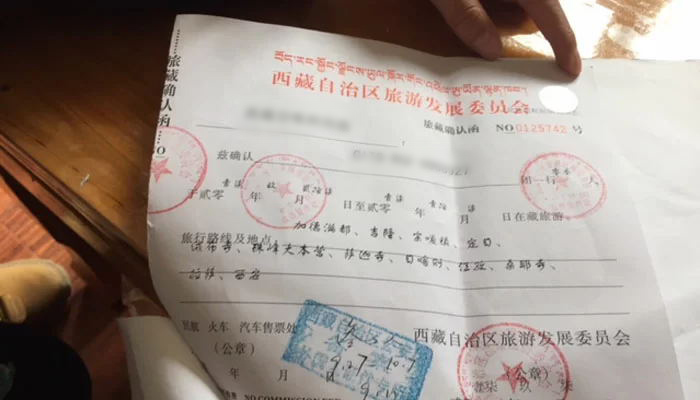
And the good news? We’ll handle all the Tibet travel documents for you, including the Tibet Travel Permit, so there’s no need to worry about complicated paperwork. Simply contact us at least 20 days in advance to avoid any delay.
 A sample of Tibet Travel Permit we have obtained for our clients.
Packing for the Kathmandu to Lhasa Overland Tour
Packing wisely is key to ensuring your comfort during this high-altitude journey. Here are a few essentials to pack:
Warm clothing: Even during summer, temperatures in Tibet can drop significantly, especially at night. Pack layers, including a warm jacket, fleece, and thermal wear.
Comfortable shoes: You’ll be walking on varied terrain, so sturdy hiking boots or comfortable walking shoes are recommended.
Sun protection: The sun is strong on the plateau, so high-SPF sunscreen and sunglasses are essential.
Wind protection: To cope with the harsh wind and dry air, bring lip balm, skin moisturizer, a scarf, or a face mask.
Personal items: Don’t forget your toiletries, medications, and camera to capture the stunning scenery.
Water bottle: Staying hydrated is crucial, so carry a refillable water bottle with you.
We also recommend packing lightly for a more comfortable overland experience.
Physical Preparation for High Altitude
Traveling through high-altitude terrain (average elevation of 4,000 meters) requires some physical preparation. Here’s how you can get ready:
Acclimatization: Spend a day in Gyirong, which sits at a moderate altitude, to help your body adjust before ascending to Everest Base Camp.
Hydration: Drink plenty of water to stay hydrated. Dehydration is common at high altitudes, and staying hydrated will help reduce the risk of altitude sickness.
Consult a doctor: If you have any concerns about traveling at high altitudes, consult with a healthcare provider before your trip.
Proper preparation will help you adjust to the altitude more easily and enjoy the journey.
 Staying hydrated is essential when touring Tibet.
Food and Dining: What to Eat on the Kathmandu to Lhasa Road Trip?
During your Kathmandu to Lhasa overland tour, you can enjoy a variety of dining experiences — from international cuisine in major cities to authentic Tibetan food in remote towns. Here’s what to expect along the route:
In Larger Cities like Kathmandu and Lhasa (Various Choices)
In bigger cities such as Kathmandu and Lhasa, you’ll find plenty of food choices to suit any traveler.
Kathmandu offers a wide range of Nepali, Indian, Western, and Asian cuisines. While Lhasa combines traditional Tibetan dishes with Chinese and international restaurants. There are even vegetarian restaurants.
These cities are perfect for enjoying diverse cuisines before and after your overland journey.
In Remote Areas Along the Route (Mainly Local Tibtan Food)
In remote towns like Gyirong and Tingri, you’ll enjoy authentic Tibetan food such as:
Tsampa: A staple made from roasted barley, mixed with butter tea, offering warmth and energy.
Thukpa: Tibetan noodles served with vegetables, diced beef, and scallions.
Momo: Tibetan dumplings filled with meat or vegetables, either steamed or fried.
Tibetan Butter Tea: A traditional tea made with yak butter, providing warmth and nourishment at high altitudes.
These dishes are the perfect comfort food, keeping you energized as you travel through Tibet.
Special Dining Experiences With Us (Weclome Dinner, Farmhouse Lunch, etc)
To make your journey even more memorable, our Kathmandu to Lhasa tour includes several unique dining experiences:
Welcome Dinner in Gyirong: Celebrate your arrival in Tibet with a warm welcome dinner after crossing the border.
Farmhouse Lunch by Yamdrok Lake: Enjoy a home-cooked Tibetan meal with a local family right beside one of Tibet’s most beautiful lakes.
Farewell Dinner in Lhasa: Before your tour ends, we invite you to a farewell dinner so you can share your travel memories with the group.
These experiences allow you to connect with local culture while enjoying authentic Tibetan hospitality.
 We offer a farmhouse Lunch in a locl faimly at the lakeside of Yamdrok Lake.
Accommodation: Where to Stay on the Kathmandu to Lhasa Overland Tour?
Accommodation options along the Kathmandu to Lhasa overland route vary from basic guesthouses in remote areas to comfortable hotels in major Tibetan cities. You'll find clean rooms, warm bedding, and reliable heating at higher altitudes. Here’s a breakdown of where to stay at key stops on your journey.
Gyirong Hotels – Simple but Comfortable for Your First Night in Tibet
Gyirong, located just after entering Tibet from Nepal, offers mainly 2–3 star local hotels. Rooms are basic but warm, with private bathrooms in most places.
Recommended Hotels:
- QoMoLangZong Hotel Kayrung: A top choice in the area, offering clean and comfortable rooms with easy access to local restaurants, cafes, and nearby attractions.
Good to Know: Gyirong sits at a lower altitude (2,800m), making it the most comfortable place to acclimatize before heading to higher regions.
Tingri Hotels – Basic Facilities at High Altitude
Tingri sits above 4,300m, and accommodations here are simple but sufficient for an overnight stay. Expect basic rooms, limited hot water, and essential heating — enough to rest before continuing toward Shigatse or Everest Base Camp.
Recommended Hotels:
- Zhufeng Hotel: Just 100 kilometers from Everest Base Camp, this hotel offers newly renovated rooms, including king, twin, and family options, all equipped with oxygen supply facilities.
 Mount Everest-view room at Rongbuk Monastery Guesthouse
Shigatse Hotels – Comfortable Mid-Range to High-End Options
As Tibet’s second-largest city, Shigatse offers a wider range of accommodations, from reliable three-star hotels to well-equipped four- and five-star properties. Most hotels come with private bathrooms, stable hot water, heating, and a higher standard of service compared with remote towns.
Recommended Hotels:
- Shiga Yangcha Grand Hotel (3★): Conveniently located near Tashilhunpo Monastery, with local cuisine available at the on-site restaurant.
- Qomo Langzong Hotel (4★): A luxury hotel close to major attractions, the railway station, and Shigatse Peace Airport (54km away), praised for its excellent service.
- Rikaze Mulunlazong Hotel (4★): Recently renovated, this hotel offers spacious, comfortable rooms and convenient transportation options.
Lhasa Hotels – From Comfortable Three-Star to Luxury Resorts
Lhasa provides some of the best hotel options, with a wide range of choices depending on your budget. From budget-friendly options to luxury hotels, all hotels in Lhasa are equipped with reliable hot water, heating, and excellent service.
Recommended Hotels:
- Xinding Hotel (3★): Newly opened, 10 minutes’ drive from Potala Palace, with 132 guestrooms.
- Jixiang Baoma Hotel (3★): 9km from Lhasa Railway Station, close to Potala Palace Square and Jokhang Temple.
- Gang-Gyan Hotel (4★): Prime location, offering both European and Tibetan-style suites, with panoramic views of Potala Palace.
- Thangka Hotel (4★): Tibetan-style decor, located near Jokhang Temple Square, with a panoramic restaurant and oxygen supply.
 The clean and well-equipped Tangka Hotel in Lhasa
Quality Hotels by Us - Three-Star or Upgrades
Our standard Tibet tour includes comfortable 3-star accommodations, with the option to upgrade to a more luxurious package. Additionally, On our winter tours, you can enjoy a free upgrade to 4-star accommodations in Lhasa and Shigatse.
Road Conditions: What to Expect on the Kathmandu to Lhasa Overland Route?
The road conditions from Kathmandu to Lhasa are generally good, and can be divided into two distinct sections: Kathmandu to Gyirong Border and Gyirong Border to Lhasa. Here's what you can expect on each leg of the journey.
Kathmandu to Gyirong Border: Challenging Mountain Roads
The first part of your journey, from Kathmandu to the Gyirong Border, takes you through rugged mountain roads in Nepal. These roads are bumpy and often impacted by landslides and mudslides, especially during the rainy season. Road repairs are frequent due to these natural occurrences, which may slow down your travel.
Though the distance is only about 130 kilometers, expect the journey to take 6 to 8 hours. Despite the rough roads, this section offers dramatic views of the Nepalese mountains, making it an adventurous start to your Tibet overland experience.
Gyirong to Lhasa: Smooth and Scenic Ride
Once you cross into Tibet, road conditions improve significantly. The Gyirong to Lhasa section follows the well-maintained G318 national highway, which is mostly paved with asphalt. This makes for a smooth, comfortable ride with only a few dirt sections along the way.
Even the road to Everest Base Camp is now paved, making the journey to the iconic site much easier than in the past. As you continue towards Lhasa, you’ll enjoy a scenic and smooth drive through the Tibetan plateau, with breathtaking views of the Himalayas.
 The road conditions from Gyirong to Lhasa via Everest Base Camp are quite good.
Join Our Kathmandu to Lhasa Tour for a Smooth Travel Experience
To visit Tibet, all international tourists must join a pre-arranged tour, as required by local regulations. The best way to explore the Kathmandu to Lhasa route is through our carefully organized tours, ensuring a smooth, seamless, and hassle-free experience.
As one of the leading tour operators with over 30 years of experience, we are headquartered in Lhasa and have offices in Kathmandu. We provide comprehensive services, including Tibet Travel Permits, visas, border transfers, quality local hotels, meal arrangements, and all the logistical support you need.
Our professional local Tibetan guides are not only fluent in English but also offer deep cultural insights and personal stories, giving you an authentic Tibetan experience. In addition, our experienced drivers are well-versed in the route, ensuring a safe and smooth journey across the Tibetan plateau.
With over 50,000 satisfied travelers and a 99% five-star satisfaction rate, our classic Kathmandu to Lhasa tour has built a solid reputation for quality and service.
You can join our small group tours, with a maximum group size of just 12 travelers, ensuring a more personalized experience. Alternatively, we can customize a private tour tailored to your preferences and needs. With our one-stop, tourist-friendly services, you’ll enjoy a smooth, worry-free, and enriching journey to Tibet.
 Join our Kathmandu to Lhasa overland small group tour for the best service!
More FAQs about Nepal to Tibet Overland Tour
1. Can I Travel from Kathmandu to Lhasa Without Flying?
Yes, you can travel overland from Kathmandu to Lhasa by road. The Kathmandu to Lhasa overland route is one of the most scenic and adventurous journeys, passing through Nepal, Gyirong, and Tibet. You will cross the Gyirong Border into Tibet and follow the well-paved G318 road all the way to Lhasa.
2. What is the Distance from Kathmandu to Lhasa by Road?
The distance from Kathmandu to Lhasa by road is approximately 1,300 kilometers (810 miles). The journey typically takes around 7 to 8 days, depending on the stops along the way and weather conditions.
3. Is it Safe to Travel Overland from Kathmandu to Lhasa?
Yes, traveling overland from Kathmandu to Lhasa is generally safe, especially when traveling with a reputable tour operator. While road conditions in Nepal can be challenging, the route from Gyirong to Lhasa is smooth and well-maintained. We provide professional local guides and experienced drivers to ensure a safe and comfortable journey.
4. How to Travel from Kathmandu to Lhasa by Road?
The most common route is to travel from Kathmandu to Gyirong by road, then cross the Gyirong Border into Tibet. From there, you will continue your journey on the G318 highway, which is well-paved and offers stunning views of the Tibetan plateau, all the way to Lhasa.
5. What are the Costs of the Kathmandu to Lhasa Overland Journey via Gyirong Port?
A classic 8-day Kathmandu to Lhasa tour with Everest Base Camp (EBC) starts at US$1019 per person. This price generally includes transportation, Tibet Travel Permits, accommodation, meals, and guided tours.
For a more budget-friendly option, the 7-day Lhasa to Kathmandu overland tour, following the reverse route and visiting the same popular attractions, starts at US$989.
Overall, prices may vary based on group size and customization. If you're looking for a more personalized experience or a private tour, the cost may be higher.
6. What Documents Do I Need to Cross the Nepal-Tibet Border?
To cross the Nepal-Tibet border, you will need the following documents:
Valid passport (at least 6 months validity)
Chinese visa (can be arranged by your own)
Tibet Travel Permit (required for all foreign tourists traveling to Tibet)
All these Tibet travel documents can be well arranged by us as long as you book your Tibet tour with us.
7. How to Prevent Altitude Sickness on the Kathmandu to Lhasa Overland Journey?
Altitude sickness can be a concern when traveling to high-altitude areas like Tibet. To prevent it, we recommend the following tips:
Acclimate slowly: Take your time at Gyirong (2,800m) to adjust to the altitude before heading to higher elevations.
Stay hydrated: Drink plenty of water to help your body adjust.
Avoid overexertion: Take it easy in the first few days of your trip.
Consider medication: Consult with your doctor about altitude sickness medication if necessary.
8. What is the Best Time to Travel Overland from Kathmandu to Lhasa?
The best time to travel from Kathmandu to Lhasa is during the spring (April to June) and autumn (September to November) months. These seasons offer mild weather, clear skies, and stunning views of the mountains.
9. What is the Road Condition Like from Kathmandu to Gyirong Port?
The road from Kathmandu to Gyirong Port is mostly bumpy, with winding mountain roads and some rough sections. There may also be occasional landslides or mudslides due to the natural landscape. Despite these challenges, the road offers beautiful views of the Nepalese mountains, and the journey is an adventure in itself.
10. Can I Travel from Kathmandu to Lhasa Overland via Zhangmu Port?
Yes, the Zhangmu Port has now reopened to international tourists, offering a convenient crossing site for overland travelers. However, border policies may change depending on weather or road conditions. We will keep you informed of any updates to ensure a safe and smooth journey.
Join our classic Kathmandu to Lhasa overland tour for a smooth adventure!
Conclusion
The Kathmandu to Lhasa overland tour is an amazing adventure, offering the chance to experience the stunning beauty of the Himalayas and the Tibetan Plateau. You’ll travel from Kathmandu to Lhasa, cross the Gyirong Border, and enjoy the smooth G318 highway, with highlights like Everest Base Camp and deep cultural experiences along the way.
The best time to go is during spring (April to June) or autumn (September to November) when the weather is mild, and the roads are at their best. Our 8-day itinerary is a perfect balance of sightseeing and time to acclimatize, making sure you have a relaxed and enjoyable journey.
To get ready, just make sure you have your passport, Chinese visa, and Tibet Travel Permit sorted. Pack layers for varying temperatures and comfortable shoes, and be sure to stay hydrated to help with altitude sickness.
You’ll stay in cozy, local hotels and enjoy delicious Tibetan food along the way. We offer small group tours at great prices for a more social and shared experience, or you can opt for a private tour if you’re looking for a more personalized and flexible journey.
Excited to begin this unforgettable journey? Book your Kathmandu to Lhasa overland tour today, or contact us if you have any questions. We’ll handle all the details, making your trip smooth and unforgettable.




Ask a Quick Question