








Tibetan Culture: Know These 9 Key Aspects for an Enriching Tibet Trip
Tibet is a place unlike anywhere else in the world. Its unique culture has been shaped by Tibetan Buddhism, the dramatic landscapes of the Tibetan Plateau, and centuries of tradition. From ancient monasteries and colorful festivals to local food, clothing, and daily customs, Tibetan culture is deeply woven into everyday life.
For travelers, understanding Tibetan culture can greatly enrich your journey. It helps you visit sacred sites with confidence, interact more comfortably with local people, and better understand what you see along the way.
Whether you are planning your first trip or considering a Tibetan culture tour, knowing a bit about local traditions makes the experience more enjoyable and meaningful.
In this guide, you will discover the key aspects of Tibetan culture, including religion, language, architecture, festivals, daily life, and traditional customs. With this background, you can explore Tibet not just as a visitor, but as someone who truly appreciates the spirit of this remarkable destination.
Contents
 Tibetan Religion: How Tibetan Buddhism Shapes Tibetan Culture
Tibetan Language: The Spiritual and Cultural Identity of Tibetans
Tibetan Architecture: Sacred Monasteries and Symbols of Tibetan Culture
Tibetan Arts: Thangkas, Murals, and Carvings in Tibetan Culture
Tibetan Festivals: Living Traditions in Tibetan Culture Throughout the Year
Tibetan Music and Dance: Expressions of Faith and Daily Life
Tibetan Cuisine: How Tibetan Food Adapts to High-Altitude Life
Tibetan Clothing: Traditional Dress and Practical Wisdom of Tibetan Culture
Tibetan Medicine: Ancient Healing Wisdom Rooted in Tibetan Culture
Cultural Souvenirs to Take Home from Tibet
Frequent Asked Questions (FAQs) about Tibetan Culture
Conclusion: Understanding Tibetan Culture for a More Meaningful Tibet Journey
Tibetan Religion: How Tibetan Buddhism Shapes Tibetan Culture
Tibetan Buddhism as the Spiritual Foundation of Tibetan Culture
Just as Catholicism is central to Vatican City, Tibetan Buddhism is the heart of Tibetan culture. It influences nearly every aspect of life in Tibet, from daily routines to festivals, art, and architecture.
Tibetan Buddhism teaches the importance of compassion, wisdom, and the journey toward enlightenment. Therefore, most Tibetans, who practice Tibetan Buddhism, are known for their humility and kindness.
Monasteries are scattered throughout Tibet, and religious landmarks like the Potala Palace and Jokhang Temple in Lhasa are world-famous Buddhist sites. Visiting these sacred places offers you a unique opportunity to experience the spiritual essence of Tibetan Buddhism.
How Tibetan Religion Influences Daily Life in Tibet
Tibetan Buddhism influences daily life in many visible ways. From the foods people eat to the way they interact with others, the teachings of Buddhism guide many actions. Tibetans believe that karma - the principle of cause and effect - affects their lives, and they strive to live in a way that promotes peace and balance.
In daily life, it is common to see Tibetans turning prayer wheels, offering incense, or making offerings at temples. These simple acts of devotion are part of everyday routines and reflect a deep connection to faith.
For many Tibetans, religious practice also extends beyond daily rituals to pilgrimage. Traveling to sacred sites is believed to help purify the mind and accumulate merit. Sacred mountains and lakes such as Mount Kailash, Lake Manasarovar, and Yamdrok Lake hold special meaning, and pilgrims often walk long distances or perform prostrations as an expression of faith.
Through these practices, religion becomes an ongoing presence in daily life, shaping not only personal beliefs but also how Tibetans relate to nature, community, and the wider world.
Religious Etiquette Travelers Should Know in Tibet
When visiting Tibet, it’s important to respect the local religious customs and practices. Here are some key points of religious etiquette you should be aware of:
- Clockwise Direction: Tibetans walk around sacred sites and objects (like stupas and prayer wheels) in a clockwise direction, and it’s respectful for travelers to do the same.
- Respectful Behavior in Monasteries: When visiting temples or monasteries, it’s important to dress modestly, and remain quiet to maintain the peaceful atmosphere.
- Avoid Touching Sacred Objects: It is respectful not to touch religious statues or holy books unless invited to do so.
- Personal Space: Tibetans value their personal space, so be mindful not to crowd or interrupt prayer rituals.
- Photography: Never take photos without permission, especially in Tibetan monasteries or sacred places. Always ask before photographing monks, religious objects, or ceremonies.
By following these simple guidelines, you will show respect for the Tibetan people and their way of life, making your experience more meaningful and culturally immersive.
 Many local Tibetans do kora around Barkhor Street every day.

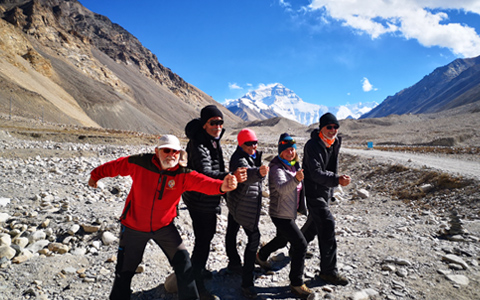
Join our most popular Lhasa and EBC tour with visits to iconic religious sites!
Tibetan Language: The Spiritual and Cultural Identity of Tibetans
The Tibetan Language and Its Writing System
The Tibetan language belongs to the Tibeto-Burman branch of the Sino-Tibetan language family and is an essential part of Tibetan culture. It is not only a tool for communication, but also the carrier of Tibetan religious texts, history, and traditional knowledge.
Today, Tibetan is widely spoken in the Tibet Autonomous Region and other Tibetan-inhabited areas of western China. Some people from Bhutan, India, Nepal, and Pakistan also speak Tibetan.
Major Tibetan Dialects You May Hear in Tibet
There are three main Tibetan dialects, which developed due to the vast geography of the Tibetan Plateau:
- Lhasa Dialect (Standard Tibetan):
Spoken in Lhasa and central Tibet, this is the dialect most travelers will hear during their visit.
- Kham Dialect:
Common in eastern Tibet, including parts of Sichuan Province, Yunnan Province, and Qamdo Prefecture.
- Amdo Dialect:
Spoken mainly in northern Tibetan regions such as Qinghai Province.
While dialects differ in pronunciation, Tibetans can usually communicate with each other through the shared written language.
Useful Tibetan Phrases Travelers Can Learn
Learning a few simple Tibetan words and phrases can greatly enhance your travel experience and help you connect with local people. A common greeting you’ll often hear is:
- “Tashi Delek” - meaning “hello” or “good luck”
- “Tujay Chay” - meaning “Thank you”
- “Yag-po” - meaning “Good”
Using simple greetings shows respect for local culture and often brings warm smiles from Tibetans, making your cultural experience more meaningful.
 You can learn some simple Tibetan language to better connect with locals.
Tibetan Architecture: Sacred Monasteries and Symbols of Tibetan Culture
Tibetan Monasteries and Temples: The Most Iconic Tibetan Architecture
Tibetan architecture is among the most distinctive building styles in the world, with monasteries and temples being its most representative examples. These sacred buildings are not only religious centers but also important cultural landmarks that reflect Tibetan spirituality and daily life.
When traveling in Tibet, you will find Tibetan monasteries and temples almost everywhere, from the bustling streets of Lhasa to remote mountain valleys. Some of the most famous Tibetan monasteries include Jokhang Temple and Drepung Monastery in Lhasa, as well as Tashilhunpo Monastery in Shigatse.
For travelers, these monasteries are more than architectural highlights. They offer valuable insight into Tibetan religion, history, and the central role monasteries play in Tibetan society.
Key Features of Traditional Tibetan Religious Architecture
Traditional Tibetan temples are usually built with stone, earth, and wood, materials well suited to the harsh conditions of the Tibetan Plateau. These materials are durable and help buildings adapt to the cold, high-altitude climate.
Thick walls help retain heat during long winters, while flat roofs make it easier to clear snow. The exteriors are often brightly colored and crowned with golden roofs, which stand out against the surrounding mountains and symbolize a connection between the earthly world and the spiritual realm.
Religious elements such as prayer wheels, pagodas, and murals are common features of Tibetan temples. Many murals depict Buddhist teachings, historical stories, and sacred figures, adding spiritual meaning to the architectural space.
Set within dramatic mountain landscapes, Tibetan temples appear both powerful and harmonious, reflecting how religious belief, architecture, and nature are closely intertwined in Tibetan culture.
Tibetan Houses and Nomadic Homes Across Different Regions
Beyond temples, traditional Tibetan homes also reflect local lifestyles and adaptation to the plateau environment. Housing styles vary across Tibet, with clear differences between settled homes and nomadic dwellings.
In central Tibet, many houses are two stories high. The lower floor is usually used for livestock and storage, while the upper floor serves as the family’s living space. This layout helps make efficient use of space and keeps living areas warmer.
Flat rooftops are common, often decorated with prayer flags that symbolize prayers and blessings. These rooftops are also practical, making it easier to store items and clear snow during winter.
In northern Tibet, nomadic families live in portable tents that can be easily moved as they travel with their herds. Designed to protect against strong winds and cold weather, these tents reflect a lifestyle closely tied to nature.
Whether permanent or mobile, Tibetan homes are shaped by the plateau’s harsh conditions and reveal how daily life is adapted to both environment and tradition.
If you join our Tibet tour, you may have a chance to visit a local Tibetan family and witness their way of life firsthand.
 The golden-roofed Jokhang Temple is a symbol of Tibetan architecture.
Explore grand Tibetan temples and monasteries on our small group tour!
Tibetan Arts: Thangkas, Murals, and Carvings in Tibetan Culture
Tibetan art has a rich history that spans over 5,000 years, beginning with rock paintings in the early days and flourishing during the Tubo Kingdom. With the introduction of Buddhism, Tibetan art took on even greater significance, incorporating both religious and ethnic elements.
Today, Tibetan art can be experienced through murals, Thangkas, carvings, and more. These art forms offer a window into Tibetan history, religion, and culture.
Tibetan Murals: A Reflection of Tibetan Life
Tibetan murals vividly portray different aspects of Tibetan society. Through images of religious stories, historical figures, daily activities, and traditional entertainment, murals record how Tibetans understand the world around them.
Many of the most impressive murals can be found in places such as the Potala Palace and Jokhang Temple in Lhasa.
For visitors, these murals offer more than artistic beauty. They provide a visual introduction to Tibetan beliefs, values, and everyday life, often telling stories that have been passed down for generations.
Thangka: The Sacred Art of Tibetan Buddhism
Thangka painting is one of the most important art forms in Tibetan Buddhism. Painted on silk, cloth, or paper and framed with colorful fabric, Thangkas are used as objects of devotion and teaching rather than simple decoration.
Thangkas usually depict Buddhist deities, important teachers, or key religious stories, helping believers understand complex spiritual ideas through images.
If you visit Tibet in summer, the Shoton Festival offers a rare opportunity to see giant Thangkas displayed during special unveiling ceremonies, creating a powerful religious and cultural scene.
Tibetan Carvings: A Miniature Representation of Tibetan Culture
Tibetan carvings represent a more everyday expression of art and belief. Carved into stone, rock, or wood, these works can be found not only in temples but also along roads, near villages, and in remote mountain areas.
These carvings often feature Buddhist symbols, prayers, or simple scenes from daily life. For travelers, discovering them along the way creates a direct and personal connection with Tibetan culture, showing how art, faith, and daily life are closely linked.
 A grand Thangka unveiling ceremony is held during the Shoton Festival.
Tibetan Festivals: Living Traditions in Tibetan Culture Throughout the Year
Why Tibetan Festivals Are Deeply Religious and Cultural
Tibetan festivals are a vibrant mix of religion and culture. Rooted in Tibetan Buddhism, they celebrate spiritual events like the Buddha’s birth and enlightenment, while also being a time for family gatherings, traditional food, music, and dance.
If you want to experience Tibetan culture and get a glimpse of local Tibetan life, one great way is to attend the traditional Tibetan festivals here. You’ll enjoy vibrant celebrations and experience the warmth and hospitality of the Tibetan people.
Major Tibetan Festivals Worth Experiencing for Travelers
Tibet hosts big and small festivals every month. Some of the most worthwhile experiences are the Tibetan New Year, Saga Dawa Festival, Shoton Festival.
- Tibetan New Year
Also known as Losar, Tibetan New Year is the most important annual event in Tibet. It takes place at the start of the Tibetan calendar (Feb. 18, 2026). During this time, monasteries and homes are illuminated with butter lamps, and people dress in their finest traditional clothes, visit family and friends, and worship at local monasteries.
- Saga Dawa Festival
Celebrated in the fourth month of the Tibetan lunar calendar (falling on May 31, 2026), Saga Dawa commemorates the Buddha’s birth, enlightenment, and passing. During this time, many people make pilgrimages, offer prayers, and perform religious rituals.
It is also the time when many pilgrims begin the sacred kora around Mount Kailash, which is the highlight of the festival and is believed to bring extra spiritual merit.
- Shoton Festival
Shoton Festival (Yogurt Festival) is a lively summer event (Aug 24, 2026), featuring music, dance and sports. Highlights include the unveiling of a giant Thangka at Drepung Monastery and picnics in Norbulingka Park, where locals gather to celebrate.
What Travelers Should Know When Visiting Tibet During Festivals
If you're planning to visit Tibet during a festival, there are a few important things to keep in mind:
- Crowds and High Demand:
Festivals, especially Saga Dawa in 2026, will attract thousands of Tibetans and tourists alike. Accommodations and transport can get booked up quickly, so it’s best to plan ahead and make reservations in advance.
- Respect for Religious Practices:
Many of the festivals are deeply spiritual, and visitors should be mindful of the religious significance behind them. Always ask before taking photos during religious ceremonies, and dress modestly when attending temple or monastery events.
- Join in the Celebration:
Tibetan festivals are a time for community and participation. Don’t hesitate to join in the festivities, whether it’s by trying traditional foods, participating in dances, or learning about the spiritual practices. Your engagement will be appreciated by the local people and offer you a deeper connection to Tibetan culture.
 Mount Kailash is one of the important sites to celebrate the Saga Dawa Festival.
Join our best-selling Kailash Manasarovar tour during festival dates!
Tibetan Music and Dance: Expressions of Faith and Daily Life
The Role of Music in Tibetan Religious and Social Life
Tibet is a land full of songs and dances, where music plays a central role in both religious rituals and daily life. Tibetan music is closely tied to spiritual practices, with chants and traditional instruments like the dungchen used in monasteries to create a sacred atmosphere.
Music is also a key part of social life. On the vast grasslands, shepherds sing to express their emotions and practice their voices. In the lively marketplaces, you’ll hear cheerful songs that reflect the joy and energy of daily Tibetan life.
Traditional Tibetan Dances and When You’ll See Them
Tibetan dance is a vibrant expression of the region’s traditions, religion, and history. During festivals and religious events, dancers perform to the rhythm of traditional music, telling stories through movement.
Cham dance, a sacred dance performed by monks, is one of the most famous, often involving masks and costumes representing deities and mythical figures.
Another unique form of performance is Tibetan opera, which combines singing, dancing, and storytelling. It shares Buddhist teachings, historical events, and folk tales through colorful costumes, masks, and dramatic performances.
For tourists, you can see Tibetan opera during major festivals like Losar and Shoton Festival, where lively and vivid performances bring Tibetan culture to life.
 During the Shoton Festival, Tibetan opera performances bring the culture to life.
Tibetan Cuisine: How Tibetan Food Adapts to High-Altitude Life
Why Tibetan Food Is High-Calorie and Warming
Tibetan food is designed to help people survive and thrive in the harsh conditions of the Tibetan Plateau, where the climate is cold and the altitude is high. To stay warm and energized, Tibetan food is typically high in calories and warming, providing the necessary nutrients for daily activities and maintaining body heat.
Dishes like butter tea and momo (dumplings) are rich in fats and proteins, which help combat the cold. These foods are designed to provide long-lasting energy and are ideal for the extreme weather conditions of Tibet.
Popular Traditional Tibetan Food in Daily Life
Tibetan daily food is simple, hearty, and closely tied to life on the high plateau. Many dishes are designed to be filling, warming, and easy to prepare in a cold, high-altitude environment. Some of the most popular Tibetan foods you’ll commonly see include:
- Tsampa: A type of roasted barley flour, often mixed with butter tea or water. It’s the most traditional food in Tibet and is eaten daily by many Tibetans.
- Momo: Tibetan dumplings filled with meat or vegetables, often served with spicy sauces. They’re perfect for social gatherings and festivals.
- Butter Tea: Made from tea, yak butter, and salt, butter tea is a popular drink that provides warmth and energy, and is commonly served to guests.
- Yak Meat: An important source of protein, yak meat is usually dried, stewed, or cooked in soups, especially in colder regions.
- Thukpa: A warm noodle soup that is widely eaten in daily life, especially during cold weather or in the evening.
These foods reflect how Tibetans have adapted their diet to the plateau environment, combining practicality with long-standing tradition.
Tips for Enjoying Tibetan Food during Your Tibet Tour
Tibetan food can be quite different from what many travelers are used to, especially because of the high altitude and cold climate. Taking a gradual and flexible approach will help you enjoy local food more comfortably.
In the first few days, it’s a good idea to choose lighter meals and avoid overeating. Warm soups and simple dishes are usually easier to digest and help your body adapt to the plateau environment. Drinking warm water and avoiding cold drinks can also make a noticeable difference.
Some Tibetan dishes may taste salty or rich at first. Start with small portions and give yourself time to adjust. If you’re sensitive to strong flavors or spices, don’t hesitate to ask for milder options.
One of the best ways to enjoy authentic Tibetan food is to eat where locals do. Local Tibetan restaurants usually serve traditional dishes in a relaxed and lively atmosphere. Tibetan tea houses are also excellent places to enjoy Tibetan food and snacks, while observing the daily life of locals.
Most importantly, keep an open mind. Tibetan food is closely connected to local life and culture, and trying it in a relaxed way. Whether at a family-run restaurant or during a local meal, tasting Tibetan food can be a memorable part of your Tibet tour.
 Local Tibetan tea houses are great places to enjoy authentic Tibetan food.
Tibetan Clothing: Traditional Dress and Practical Wisdom of Tibetan Culture
Traditional Tibetan Clothing and Its Cultural Meaning
Traditional Tibetan clothing is best represented by the robe known as the chuba, which is both practical and visually distinctive. Designed to cope with Tibet’s cold climate and large temperature differences, the robe reflects the wisdom of adapting to life on the plateau.
In farming areas, Tibetan robes are often made from wool or cotton, while in nomadic regions, thicker materials such as leather are commonly used for warmth during winter. The loose design allows flexibility in daily activities and helps retain body heat in harsh weather conditions.
Tibetan Clothing in Daily Life and Festivals Today
In daily life, many Tibetans today wear modern clothing such as jackets and trousers. However, traditional dress remains an important part of cultural identity and is commonly worn during festivals, weddings, and religious ceremonies.
Most Tibetans keep at least two sets of traditional clothing: one for everyday use and another, more elaborate version reserved for special occasions. During major festivals, these colorful garments add to the vibrant atmosphere and highlight the beauty of Tibetan culture.
For tourists, it is an interesting and memorable experience to wear traditional Tibetan clothing. You can take photos in beautiful Tibetan dress at famous attractions like Potala Palace Square and Barkhor Street.
If you tour Tibet with us, we also offer services of Tibetan clothing rental and photography, to make your experience more special.
 Our clients took beautiful photos in traditional Tibetan clothing.
Tibetan Medicine: Ancient Healing Wisdom Rooted in Tibetan Culture
The Philosophy and Origins of Tibetan Medicine
Tibetan medicine is one of the world’s oldest holistic healing systems, with a history of over two thousand years. Deeply rooted in Tibetan culture, it emphasizes balance between the human body, the natural environment, and mental well-being.
Rather than focusing solely on treating symptoms, Tibetan medicine views health as a state of harmony. It combines herbal remedies, dietary guidance, and lifestyle practices, reflecting the interconnectedness of medicine, environment, and spirituality.
For many Tibetans, this holistic approach is a way of life, guiding not just physical health but also mental and spiritual wellness.
Tibetan Medicine in Daily Life and What Travelers Should Know
Traditional Tibetan medicine continues to play an important role in daily life, especially for maintaining general health and wellness.
Tibetan doctors rely on methods such as visual inspection, pulse reading, and questioning to understand a patient’s condition, combining ancient wisdom with modern observational techniques. This approach emphasizes prevention and balance, rather than simply treating illness.
Many travelers may be curious about well-known Tibetan medicinal products, such as cordyceps, saffron, and snow lotus, which are often sold in local markets. These products are highly regarded for their health benefits in Tibetan medicine. However, it is important to be cautious when purchasing these items to ensure they are of good quality and not simply souvenirs.
 Tibetan medicinal products, such as cordyceps, saffron, and snow lotus, are often sold in local markets.
Cultural Souvenirs to Take Home from Tibet
For many travelers on a Tibetan culture tour, bringing home meaningful souvenirs is a way to remember the cultural experiences encountered along the journey. Many traditional Tibetan souvenirs are closely connected to religion, daily life, and local craftsmanship, making them more than simple decorative items.
- Thangka Paintings:
These sacred paintings depict Buddhist deities, historical events, and spiritual teachings. Thangkas are often framed and used for prayer, making them both a spiritual and cultural memento.
- Tibetan Jewelry:
Jewelry such as silver earrings, necklaces, and bracelets are often handmade with intricate designs inspired by Tibetan symbolism, making them a beautiful reflection of local craftsmanship.
- Prayer Wheels:
A common religious item in Tibet, prayer wheels are used by Tibetans as part of their daily spiritual practice. They can also be a meaningful and thoughtful souvenir for those interested in Tibetan Buddhism.
- Tibetan Rugs and Carpets:
Handmade rugs and carpets are known for their vibrant colors and traditional patterns, which often tell stories of Tibetan life and religion. These are a wonderful way to bring the warmth and spirit of Tibet into your home.
- Tibetan Tea:
Tibetans drink butter tea daily, but you can also bring home black tea or other traditional blends. Many local markets offer packaged tea leaves that are perfect for making your own Tibetan-style tea.
Remember, when purchasing souvenirs, it’s important to choose items that are authentic and support local artisans. Always ask for guidance on the cultural significance of the item to ensure you're respecting local traditions.
 Various types of Tibetan jewelry make great souvenirs to take home from Tibet.
Frequent Asked Questions (FAQs) about Tibetan Culture
1. What are the most important Tibetan festivals to know before traveling to Tibet?
Some of the most important Tibetan festivals include Losar (Tibetan New Year), Saga Dawa Festival, and Shoton Festival.
Losar is the largest celebration of the year, marked by family gatherings and traditional rituals. Saga Dawa is one of the holiest festivals, commemorating key events in the life of the Buddha. Shoton Festival is well known for its grand Thangka unveiling and Tibetan opera performances. Visiting Tibet during these festivals offers a deeper and more vivid cultural experience.
2. How does Tibetan Buddhism influence daily life and customs in Tibet?
Tibetan Buddhism shapes many aspects of daily life in Tibet, from personal values to everyday customs.
Practices such as prayer, pilgrimage, and turning prayer wheels are part of daily routines for many Tibetans. Buddhist teachings also influence social behavior, encouraging compassion, respect, and kindness toward others. This spiritual foundation is reflected in festivals, architecture, art, and daily interactions.
3. Why is Tibetan cuisine suitable for high-altitude environments?
Tibetan cuisine is adapted to the challenges of high altitude and cold weather. Many dishes are high-calorie and warming, helping people maintain energy and body heat on the plateau. Barley-based foods, soups, and butter tea provide long-lasting energy and are easy to digest, making them well suited to Tibet’s natural conditions.
4. Why is understanding Tibetan culture important for travelers to Tibet?
Understanding Tibetan culture helps travelers experience Tibet in a more respectful and meaningful way.
Knowing local customs, religious practices, and daily traditions allows visitors to connect more naturally with local people and avoid cultural misunderstandings. It also adds depth to the journey, turning sightseeing into a richer cultural experience.
5. Is it okay for travelers to visit monasteries and temples in Tibet?
Yes, travelers are welcome to visit monasteries and temples in Tibet, as long as they respect local customs. Dressing modestly, speaking quietly, and following religious rules are important. In some places, photography may be restricted, so it is best to ask for permission before taking photos.
6. Can travelers participate in Tibetan festivals and cultural activities?
In most cases, travelers are welcome to observe and sometimes participate in Tibetan festivals and cultural events. Showing respect, following local guidance, and understanding the religious meaning behind activities will help visitors enjoy these experiences appropriately.
7. Do Tibetans still follow traditional customs in modern daily life?
Yes, many traditional customs remain part of daily life in Tibet. While modern clothing and lifestyles are common, traditions related to religion, festivals, food, and family life are still widely respected and practiced, especially during important occasions.
8. What is the best way to experience Tibetan culture during a trip?
The best way to experience Tibetan culture is by observing daily life, visiting monasteries, attending festivals when possible, and interacting respectfully with local people. Taking time to learn basic customs and cultural meanings can greatly enrich the overall travel experience.
9. When is the best time to visit Tibet for a cultural experience?
The best time to visit Tibet for a cultural experience is generally from April to October, when the weather is more comfortable and many traditional festivals take place.
During this period, travelers have better opportunities to visit monasteries, attend festivals, and observe daily life. If you want to experience major cultural events such as Saga Dawa Festival or Shoton Festival, planning your trip around festival dates can offer a deeper and more memorable cultural experience.
Join our most popular Lhasa and EBC tour for a smooth experience!
Conclusion: Understanding Tibetan Culture for a More Meaningful Tibet Journey
Tibetan culture is not shaped by a single tradition, but by the deep connection between religion, daily life, and the natural environment of the Tibetan Plateau. From Tibetan Buddhism and sacred monasteries to festivals, food, clothing, and music, each aspect reflects how Tibetans live in harmony with their beliefs and surroundings.
For travelers, understanding Tibetan culture goes far beyond sightseeing. It helps you approach sacred places with respect, connect more naturally with local people, and recognize the deeper meaning behind everyday moments. Whether you are walking through an ancient monastery, sharing a cup of butter tea, or witnessing a traditional festival, cultural awareness adds depth and warmth to the journey.
By learning about Tibetan culture before and during your trip, you can turn a visit to Tibet into a more respectful, immersive, and memorable experience that stays with you long after the journey ends.
As a pioneer Tibetan tour expert, we design cultural travel experiences that help travelers explore Tibetan traditions, daily life, and spiritual heritage in a thoughtful and meaningful way. If you would like to learn more, feel free to contact us. Our experienced travel team is always happy to assist you in planning a journey that truly reflects the spirit of this unique and sacred land.




Ask a Quick Question