








Xining to Lhasa Overland 2026/2027: The Ultimate Guide for Your Qinghai to Tibet Road Trip
Xining to Lhasa Overland 2026/2027: The Ultimate Guide for Your Qinghai to Tibet Road Trip
 Why Choose to Travel Overland from Xining to Lhasa?
When is the Best Time to Travel Overland from Xining to Lhasa?
Classic Itinerary: 11-Day Xining to Lhasa Overland Route (via Qinghai-Tibet Highway)
What are the Highlights of Xining to Lhasa Overland Tour?
What to Pack for Xining to Lhasa Overland Tour?
How is the Road Condition from Xining to Lhasa?
What to Eat on the Xining to Lhasa Road Trip?
Where to Stay along the Xining to Lhasa Road Trip?
Join Our Xining to Lhasa Tour for the Best Experience
Travel Tips for a Smooth Overland Trip from Xining to Lhasa
The Xining to Lhasa overland tour follows the scenic Qinghai-Tibet Highway, the shortest and safest road to Tibet. Stretching about 1,900 kilometers, the journey leads you past stunning landscapes like Qinghai Lake, the Kunlun Mountains, Namtso Lake, and more.
For the best experience, we recommend an 11-day itinerary, including three full days in Lhasa. This pace allows you to explore the major highlights while gradually adapting to the plateau’s high altitude.
The ideal travel season is May to October, when the weather is stable and the scenery is at its best. Before you set off, remember to prepare Tibet Travel Permit and warm layered clothing for a smooth journey.
To help you make the most of this incredible road trip, this guide provides everything you need — best travel times, itinerary suggestions, top sights, packing advice, food and accommodation tips, road conditions, and more.
Ready to explore Tibet by road? Let’s dive in!
Why Choose to Travel Overland from Xining to Lhasa?
1. Breathtaking Scenery along Qinghai-Tibet Highway
The Xining to Lhasa road trip follows the famous Qinghai–Tibet Highway, one of the most scenic routes to Tibet.
Along the way, you’ll pass vast grasslands, turquoise lakes, snow-capped mountains, and stretches of Gobi desert.
Some of the highlights include Qinghai Lake, Chaka Salt Lake, the Kunlun Mountains, and the Tanggula Pass. You may even spot wildlife such as Tibetan antelopes and wild donkeys along the way.
With such diverse landscapes, every hour on the road offers a new and unforgettable view.
 Qinghai-Tibet Highway is one of the most scenic routes to Tibet.
2. Better Altitude Acclimatization Starting from Xining
Xining is located at a moderate altitude of 2,275 meters, offering a gentle start before heading to the higher regions of the Qinghai-Tibet Plateau (which averages over 4,000 meters).
Spending a couple of days in Xining to acclimate is a great way to ease your body into the high altitude. As you travel, the elevation gradually increases, allowing your body to adjust at a comfortable pace.
Compared to flying directly to Lhasa, the overland journey provides more time for altitude acclimatization.
3. Deep Cultural Immersion along the Way
The road trip allows for a deeper cultural immersion into Tibetan and Amdo life. In Xining, you can visit the Kumbum Monastery, one of the region’s most significant religious sites.
As you continue along the highway, you’ll pass through nomadic areas where herders live in traditional tents and graze yaks on the open grasslands.
You’ll also encounter small towns that offer a glimpse into local life, providing a more authentic understanding of the culture.
Compared to flying, the overland route gives you more opportunities to meet locals, try regional food, and experience daily life on the plateau.
 You can visit the historically significant Kumbum Monastery in Xining.
Who is Suitable for Xining to Lhasa Overland Trip?
| Best For | Not Ideal For |
|---|---|
| Travelers who want gradual altitude acclimatization | Those who dislike long road journeys |
| Nature lovers who enjoy lakes, salt fields & grasslands | Travelers extremely sensitive to high altitude |
| Cultural travelers who want deeper local interactions | Those who prefer fast, direct travel with minimal stops |
| Photographers seeking diverse plateau landscapes | Travelers expecting luxury hotels throughout the route |
When is the Best Time to Travel Overland from Xining to Lhasa?
Best Time to Travel: May to October
The best months for the Xining to Lhasa overland journey are May to October. These months offer stable weather and the most beautiful landscapes, with lush grasslands and clear skies.
Why it matters:
Choosing the right season ensures safer road conditions and allows you to enjoy Tibet’s scenery at its finest.
Spring: May to June – The Plateau Comes Alive
From May to June, the snow melts, and temperatures begin to rise, turning the plateau a vibrant green. Wildflowers bloom along the roadside, adding color to the scenery.
The mild weather makes this an excellent time for outdoor activities, allowing you to fully enjoy natural sights like the Kunlun Mountains and Qinghai Lake.
This season offers the best opportunity to experience the beauty and serenity of the plateau.
 Spring is one of the best seasons to visit Qinghai Lake along Xining-Lhasa road route.
Summer: July to August – Rainy, But Still Scenic
Although July to August is the rainy season, the Xining to Lhasa route remains in good condition.
The risk of landslides and mudslides is much lower here compared to other routes like the Sichuan–Tibet Highway or Xinjiang–Tibet Highway.
Rainfall is possible, but it rarely impacts road safety. As long as temperatures stay above freezing and the road is clear of snow or ice, the journey remains safe—and the scenery just as stunning.
Autumn: September to October – A Perfect Time to See Autumn Colors
From September to October, the Xining to Lhasa overland journey reaches its peak with the stunning autumn colors along the way.
After the summer rains, the skies are clear and blue, and the temperature is just right. The snow-capped mountains appear even more majestic against the backdrop of vibrant autumn colors.
The grasslands are filled with rich hues, making this an ideal time for photography and enjoying the tranquility of the plateau, away from the summer crowds.
 The scenery along Xining to Lhasa road route reaches its peak in autumn.
Winter: November to March – Harsh Conditions
From November to March, winter brings rain and snow to the Qinghai-Tibet Highway, often causing snow accumulation and icy roads, which can make travel hazardous.
Due to these harsh conditions, it is generally not recommended to take the Xining to Lhasa overland journey during the winter months.
Best Travel Seasons (Month-by-Month Comparison)
| Month | Weather | Scenery | Recommendation |
|---|---|---|---|
| May–June | Mild, windy | Plateau turning green | ★★★★☆ Recommended |
| July–August | Rainy season | Lush grasslands | ★★★★☆ Good, but expect rain |
| September–October | Clear & dry | Best visibility, autumn colors | ★★★★★Highly recommended |
| November–March | Cold, icy | Sparse scenery, road closures possible | ★☆☆☆☆ Not recommended |
Classic Itinerary: 11-Day Xining to Lhasa Overland Route (via Qinghai-Tibet Highway)
If you're planning a Xining to Lhasa overland itinerary, the 11-day route is the most recommended option.
The journey spans 1,937 km across the Qinghai–Tibet Plateau, and offers ample time for altitude adaptation, breathtaking scenery, and rich cultural experiences — ending with three full days to explore Lhasa.
Route:
Xining → Qinghai Lake → Chaka Salt Lake → Golmud → Kunlun Pass → Tuotuoheyan → Nagqu → Damxung → Lhasa
Day 1: Arrive in Xining (2,275m)
• Arrive in Xining, meet your guide, and transfer to your hotel.
• Leisure time for rest or explore the city.
• Overnight in Xining.
Day 2: Xining to Kumbum Monastery & Qinghai Lake (159km)
•• Visit Kumbum Monastery, the birthplace of Tsongkhapa. • Drive to Qinghai Lake for a scenic walk or bike ride around the lake. • Overnight in Xining.
Day 3: Xining to Chaka (200km)
• Travel to Chaka Salt Lake, known for its mirror-like reflections.
• Walk on the lake and capture stunning photos.
• Overnight in Chaka.
Day 4: Chaka to Golmud (515.5km)
• Drive through the Qaidam Basin, passing oases and desert landscapes.
• Arrive in Golmud for an overnight stay.
Day 5: Golmud to Tuotuoheyan (420km)
• Drive to Kunlun Pass (4,837m) and cross the Qaidam Basin.
• Stop at Tuotuoheyan, located at the headwaters of the Yangtze River.
• Overnight in Tuotuoheyan.
Day 6: Tuotuoheyan to Nagqu (430km)
• Continue south along the Tanggula Mountains and pass through grasslands with grazing yaks.
• Arrive in Nagqu for an overnight stay.
Day 7: Nagqu to Namtso Lake to Damxung (540km)
• Visit the Qiangtang Grassland, interact with Tibetan nomads, and enjoy yak milk.
• Explore Namtso Lake, a sacred high-altitude lake.
• Drive to Damxung for an overnight stay.
Day 8: Damxung to Lhasa (170km)
• Drive to Lhasa, passing through stunning landscapes.
• Relax with a Tibetan medical spa experience.
• Free time in the afternoon to explore Lhasa.
• Overnight in Lhasa.
Day 9: Lhasa Day Tour – Drepung Monastery & Sera Monastery
• Visit Drepung Monastery, the largest monastery in Tibet.
• Explore Sera Monastery and observe the famous monk debates.
• Overnight in Lhasa.
Day 10: Lhasa Day Tour – Potala Palace, Jokhang Temple & Barkhor Street
• Tour the iconic Potala Palace and Jokhang Temple.
• Walk around Barkhor Street and join locals on their kora.
• Overnight in Lhasa.
Day 11: Depart from Lhasa
• Transfer to the airport or train station for your departure.
• Tour ends.
 Visit Lhasa's landmarks like the Potala Palace at the end of your Xining to Lhasa overland tour.
Route Summary
This 11-day Xining to Lhasa overland itinerary follows the Qinghai-Tibet Highway route, visiting iconic destinations such as Qinghai Lake, Hoh Xil, Tanggula Pass, Namtso Lake, Potala Palace.
It is ideal for travelers seeking a smooth-paced journey that balances nature, culture, and altitude adaptation.
Customize Your Xining to Lhasa Tour
If you want a shorter, longer, or more personalized version of this itinerary, we can tailor the journey to your travel pace and interests. We handle all logistics, so you can simply enjoy your adventure.
What are the Highlights of Xining to Lhasa Overland Tour?
1. Natural Wonders: Tangula Mountains, Namtso Lake & More
Qinghai Lake
China’s largest inland saltwater lake, known for its clear blue waters and beautiful scenery. It’s a great place for cycling, walking, and birdwatching during migration season.
Chaka Salt Lake
Nicknamed the “Mirror of the Sky,” this salt lake creates stunning reflections of the sky and mountains. Walking on the white salt flats is a surreal experience.
Kunlun Mountains
This vast mountain range offers dramatic views, with Kunlun Pass (4,837m) being one of the highest and most scenic points along the route.
Hoh Xil
A UNESCO World Heritage Site and one of China’s largest wilderness areas. It’s home to Tibetan antelopes and offers untouched plateau landscapes.
Tanggula Pass
At over 5,200 meters, Tanggula Pass is the highest point on the Xining to Lhasa journey. Its sweeping mountain views make it a major highlight.
Qiangtang Grassland
A vast, quiet grassland where you can see nomads, yaks, and sheep living in harmony with nature—showing the traditional pastoral life of northern Tibet.
Namtso Lake
One of Tibet’s three holy lakes, sitting above 4,700 meters. Surrounded by snow-capped peaks, it offers peaceful lakeside walks and stunning high-altitude views.
 You may see Tibetan antelopes in Hoh Xil during the Xining to Lhasa overland tour.
2. Cultural Attractions: Kumbum Monastery, Potala Palace, etc
Ta’er Monastery (Kumbum Monastery)
Near Xining, this important monastery is the birthplace of Tsongkhapa. Its beautiful murals and sacred halls make it a key cultural stop.
Potala Palace
Lhasa’s iconic landmark and former residence of the Dalai Lama. This UNESCO site showcases Tibetan history, religion, and spectacular architecture.
Jokhang Temple
The spiritual heart of Tibet, Jokhang Temple is home to the revered 12-year-old Shakyamuni Buddha statue. Pilgrims from across Tibet come here to pray and walk the kora.
Drepung Monastery
Once the largest monastery in Tibet, Drepung Monastery is home to thousands of monks. Visitors can explore its main halls and learn about Buddhist teachings and monastic life.
Sera Monastery
Sera Monastery is famous for its lively monk debates, offering an engaging look at Tibetan Buddhist education and philosophy.
 Jokhang Temple is a cultural highlight in Lhasa.
What to Pack for Xining to Lhasa Overland Tour?
1. Necessary Documents: Tibet Travel Permit and Visas
To ensure smooth travel, it’s important to have the necessary documents when traveling to Tibet:
Chinese Visa: Most travelers need to apply for a Chinese Visa on their own. If your country enjoys visa-free entry to China, then you can skip this step.
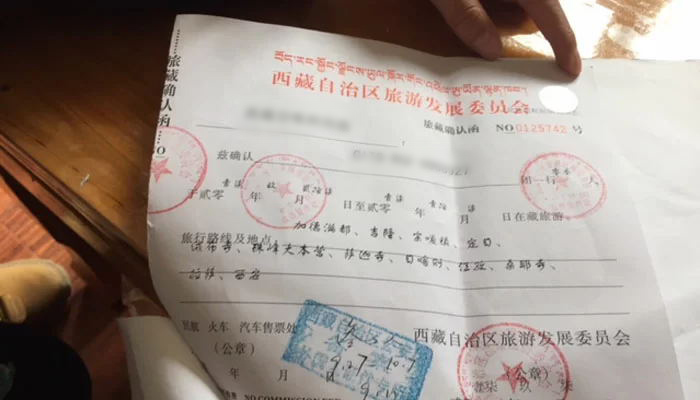
Tibet Travel Permit: This permit is a must-have to enter Tibet. It’s essential for all travelers and can only be obtained after booking your Xining to Lhasa overland tour with a licensed agency.
Alien’s Travel Permit: If you plan to travel further to Everest Base Camp from Lhasa, an Alien’s Travel Permit is also required.
Military Permit: For those wishing to visit Mount Kailash, a Military Permit is needed, which is also arranged through the tour agency.
Don’t Worry! We’ll handle all the Tibet travel documents for you, including the Tibet Travel Permit, ensuring you a smooth journey. Simply contact us at least 20 days in advance!
 Getting your Tibet Travel Permit before entering Tibet is required.
2. Clothing: Layering is Essential
The weather on the Tibetan Plateau can vary greatly, and layering is key to staying comfortable during your Xining to Lhasa road trip.
Layered Clothing: Pack light, moisture-wicking base layers, an insulating mid-layer, and a warm, waterproof outer layer to stay comfortable in both cold and milder temperatures.
Warm Jackets: A high-quality insulated jacket is crucial for chilly mornings and evenings, especially at high-altitude spots like Namtso Lake and Tanggula Pass.
Comfortable Shoes: Bring sturdy, comfortable walking shoes or hiking boots for exploring monasteries and natural sights. Waterproof shoes are recommended.
Sun Protection: Due to Tibet’s high altitude, the sun can be intense. Pack a wide-brimmed hat, sunglasses, and high SPF sunscreen to protect your skin from UV exposure.
Wind Protection: The dry air and harsh winds can be tough, so bring lip balm, skin moisturizer, and a scarf or face mask to protect yourself.
We also recommend packing lightly for a more comfortable overland experience.
3. Health and Safety Essentials
Traveling to high-altitude regions requires special attention to your health and safety. The Xining to Lhasa overland tour crosses several high passes, so proper preparation is essential.
Altitude Medication: The Xining to Lhasa overland tour takes you through high-altitude regions. It’s advisable to bring medications for altitude sickness, such as Diamox, and consult your doctor before the trip.
First-Aid Kit: Pack a basic first-aid kit with band-aids, antiseptic, pain relievers, and any personal medications you might need.
Reusable Water Bottle: Staying hydrated is important at high altitudes, so bring a reusable water bottle to refill throughout the day.
Toiletries: Wipes, hand sanitizer, and other personal items should be packed for hygiene, especially during long road stretches where facilities may be limited.
To help ease altitude-related discomfort, we also provide oxygen backup in our tour vehicle, ensuring clients have convenient access to oxygen whenever needed.
 There are some medications you may need for the Xining to Lhasa overland tour.
4. Electronic Gear
Power Bank: Long travel days can drain your phone or camera battery quickly. A power bank will keep your devices charged.
Camera and Memory Cards: Bring a camera with extra memory cards to capture the stunning landscapes of Tibet.
Navigation Tools: While your guide will assist with navigation, a GPS or offline maps on your phone can be helpful for extra peace of mind.
Universal Travel Adapter: Tibet uses the Type A, C, and I plugs. Bring a universal travel adapter to ensure you can charge your devices.
5. Miscellaneous Items
Snacks: The long drives and remote locations make it a good idea to pack energy bars or dried fruits for a quick energy boost along the way.
Cash: While most places along the route accept cards, it’s advisable to carry some cash for small purchases, especially in more rural or remote areas.
Travel Pillow: The long hours on the road can be tiring, so a travel pillow will make your journey more comfortable and help you rest during the ride.
Packing Checklist (Essential vs Recommended)
| Packing Checklist (Essential vs Recommended) | Recommended Items |
|---|---|
| Passport & Tibet Travel Permit | Small portable oxygen canisters |
| Layered warm clothing (base layers, fleece, outer shell) | Extra camera batteries |
| Sunscreen, sunglasses, wide-brim hat | Snacks for long drives |
| Moisturizing cream & lip balm | Neck pillow or sleeping mask |
| Anti-altitude medication | Travel-size humidifier |
| Reusable water bottle | Hand warmers |


Join our most popular Xining to Tibet tour for a smooth experience!
How is the Road Condition from Xining to Lhasa?
When checking the Xining to Lhasa highway conditions, you'll find that the Qinghai-Tibet Highway (G109) is one of the safest and best-maintained routes into Tibet.
The road condition is generally very good, offering travelers a reliable and scenic route into Tibet. However, due to the high altitudes and changable weather, extra caution is necessary.
1. Road Conditions: Generally Smooth and Well-Maintained
Most sections of the Qinghai-Tibet Highway are fully paved with asphalt, providing a smooth and comfortable ride.
Why it matters:
Good road conditions help ensure a safe, comfortable overland tour, even over long distances and high altitudes.
2. Gradual Altitude Ascent for Easy Adjustment
The Xining to Tibet altitude acclimatization advantage is one of the biggest reasons travelers choose this route.
The elevation increases gradually from Xining (2,275m) to Lhasa (3,650m), crossing the highest point at Tanggula Pass (5,231m).
Why it matters:
A gradual ascent reduces the risk of altitude sickness and makes the journey safer and more comfortable for travelers.

3. High-Altitude Sections and Special Considerations
While most of the road is in excellent condition, some sections pose unique challenges:
Speical Sections: Golmud to Kunlun Mountains
The stretch from Golmud to Kunlun Mountains (approximately 160 km) features steep slopes and winding turns, requiring drivers to reduce speed and stay alert.
Permafrost Zones
The high-altitude permafrost, spanning over 200 kilometers from Kunlun Pass to Amdo County, causes potholes and bumpy roads due to thawing and freezing.
While regularly maintained, travelers should remain cautious when passing through these stretches.
Winter Travel: Snow and Ice Hazards
From November to March, snow and ice can affect road conditions, especially at the Tanggula and Kunlun mountain passes, leading to potential closures or traffic controls.
It’s best to avoid winter travel unless accompanied by an experienced local guide familiar with the conditions.
4. Vehicle Preparation for the Journey
Given the high-altitude environment and occasional rough stretches, vehicle preparation is essential for a smooth and safe journey:
Thorough Vehicle Inspection: Ensure your vehicle is in top condition before departure.
Fuel and Emergency Tools: Carry enough fuel, as well as emergency tools such as tire repair kits, a spare tire, and a first-aid kit.
Recommended Vehicle Type: For optimal safety, off-road vehicles or SUVs are much more suited for the road conditions compared to sedans.
Road Conditions by Segment
| Route Segment | Difficulty | Features | Important Notes |
|---|---|---|---|
| Xining → Qinghai Lake | ★☆☆ | Smooth, well-paved | Strong winds at times |
| Golmud → Kunlun Mountains | ★★★ | Steep slopes, curves | Drive slowly; altitude rising |
| Kunlun Pass → Amdo (Permafrost Zone) | ★★★★ | Bumpy sections, potholes | Beware of road damage caused by thawing |
| Nagqu → Lhasa | ★☆☆ | Improved highways | Easy and comfortable |
What to Eat on the Xining to Lhasa Road Trip?
When traveling from Xining to Lhasa, the meals are mostly simple, warm, and perfect for the high-altitude environment.
Chinese cuisine dominates the route, with Sichuan and Tibetan dishes being the most common.
While you'll have fewer Western food options until you reach Lhasa, the local dishes are sure to satisfy and fuel your journey.
1. Local Dishes in Xining: A Great Start
Before heading into the plateau, Xining offers a variety of delicious dishes to start your adventure:
- Lanzhou-style beef noodles
- Qinghai yogurt
- Mutton stew and hand-pulled lamb
- Barley bread and pastries
It’s the perfect spot to indulge in diverse flavors before continuing your journey where food options are more limited.
 Hand-pulled lamb is a delicious local dish in Xining.
2. Meals Along the Highway: Simple and Hearty
As you head further into Tibet, meals get simpler, but they’re still hearty and comforting. Expect a lot of Chinese dishes with a touch of Sichuan spice, such as:
- Fried rice or fried noodles
- Simple stir-fries
- Instant noodles
- Boiled eggs and steamed buns
- Hot soups to keep you warm
In remote areas like Tuotuoheyan and Amdo, meals are basic but filling — great for keeping your energy up during the journey.
3. Dive Into Tibetan Cuisine
Once you enter Tibet, you’ll start enjoying authentic Tibetan cuisine, especially in areas like Nagqu and Damxung. Some must-tries include:
- Tibetan noodles (thenthuk or thukpa)
- Yak meat dishes
- Tsampa (roasted barley flour)
- Tibetan butter tea or Tibetan sweet tea
- Tibetan yogurt
These dishes are perfect for sustaining you in the high-altitude climate and keeping you energized as you explore Tibet.
 Our guests enjoy Tibetan noodles and Tibetan sweet butter tea in a local teahouse.
4. Food Options in Lhasa: Wide Variety
Finally, once you reach Lhasa, you’ll be treated to a wider selection of food choices, from Tibetan to Chinese, Nepali, Indian, and even Western dishes. Some of the local favorites include:
- Yak steak
- Shabhaley (Tibetan fried meat pies)
- Momos (Tibetan dumplings)
It’s the perfect place to relax and enjoy a wider variety of meals after days on the road.
5. Recommended Snacks to Bring
To make your journey more comfortable, it’s a good idea to bring some snacks for the long stretches between towns or when options are limited. Great travel snacks include:
- Energy bars or nuts
- Chocolate
- Dried fruit
- Biscuits or crackers
- A thermos for hot water
These will come in handy during the trip, especially in the more remote parts of the journey.
What to Eat on the Xining to Lhasa Road Trip?
| Region | Local Specialties | Description |
|---|---|---|
| Xining | Lanzhou-style Beef Noodles, Qinghai Yogurt, Mutton Stew | Flavorful noodles, rich yogurt, and hearty lamb dishes. |
| Qinghai Lake | Barley Bread, Local Pastries | Freshly baked bread and traditional pastries with a local twist. |
| Tibetan Plateau | Yak Meat Dishes, Tsampa, Butter Tea | Savor hearty yak dishes, roasted barley flour, and Tibetan butter tea. |
| Lhasa | Yak Steak, Shabhaley, Momos | Tender yak steak, fried meat pies, and traditional Tibetan dumplings. |
Where to Stay along the Xining to Lhasa Road Trip?
Accommodations along the Xining to Lhasa overland route vary from comfortable lakeside hotels to basic high-altitude guesthouses and finally to well-equipped hotels once you reach Lhasa.
Here’s what to expect along each part of the journey.
1. Quality Stays from Xining to Golmud
The first section of the journey—Xining → Qinghai Lake → Chaka → Golmud—offers the most comfortable and diverse accommodation options, with plenty of choices for a relaxing stay.
Qinghai Lake Area: Hotels around the lake offer beautiful views, with some located along the lakeside ring road. Recommended hotels include Qinghai Lake Hotel, Sunshine Hotel, etc.
Chaka Town (Near Chaka Salt Lake): A great option if you want to stay close to the “Mirror of the Sky.” Recommended hotels: Chaka Vienna Hotel, Chaka Wanfeng Hotel.
Golmud City: As the largest city before entering the highlands, Golmud offers a variety of accommodations for different budgets.
Recommended hotels include: Hanting Hotel (budget-friendly), Ji Hotel (stylish), Atour Hotel (luxurious).
 Qinghai Lake Hotel offers stunning lake views along the lakeside.
2. Simple but Cozy Guesthouses from Golmud to Nagqu
The stretch from Golmud → Tuotuoheyan → Nagqu covers about 900 km through remote, high-altitude terrain. While accommodation is more basic, you'll find warm and safe places to stay.
Tuotuoheyan Town: Located between Golmud and Amdo, this small town offers basic guesthouses with electric blankets and simple rooms.
Nagqu: Once you reach Nagqu, hotel standards improve significantly. Recommended hotels include Yuntian Zhouji Hotel (with oxygen supply), Naqu Fandian Hotel (near the municipal hall), etc.
3. Better Hotel Choices from Nagqu to Lhasa
The final stretch—Nagqu → Damxung → Lhasa (about 700 km)—takes two days, and once you arrive in Lhasa, the accommodation options improve significantly.
Damxung: Accommodation here varies from older, basic hotels (e.g., Pema Hotel) to newer, more comfortable options with oxygen supply, such as Intercontinental Wanhui, Shenyang Manor.
Lhasa: You’ll find a wide range of hotels in Lhasa, from budget to luxury. Most offer modern amenities like private bathrooms, hot water, heating, and comfortable rooms.
Recommended hotels in Lhasa:
• Xinding Hotel (3★): New hotel, located 10 minutes from Potala Palace, with 132 rooms.
• Jixiang Baoma Hotel (3★): Close to Potala Palace Square and Jokhang Temple.
• Gang-Gyan Hotel (4★): Offering both European and Tibetan-style suites, with panoramic views of Potala Palace.
• Thangka Hotel (4★): Tibetan-style decor, near Jokhang Temple Square, with a panoramic restaurant and oxygen supply.
 You can view the Potala Palace from some rooms of Gang Gyan Hotel.
Join Our Xining to Lhasa Tour for the Best Experience
The easiest and most reliable way to explore the Xining to Lhasa route is with our professionally organized Tibet tours, designed to keep your journey smooth, safe, and stress-free.
With over 30 years of experience, we've helped thousands of international travelers complete their dream overland trip, backed by 2,000+ TripAdvisor reviews and a 99% 5-star rating.
Expert Local Guides for a Deeper Cultural Experience
Our English-speaking Tibetan guides offer not only professional service but also rich cultural knowledge and personal stories.
Their insights help you better understand Tibetan history, religion, and daily life, making your journey more meaningful.
Skilled Drivers for a Safe and Smooth Journey
Our experienced drivers are highly familiar with the Qinghai-Tibet Highway and plateau road conditions.
They ensure safe driving through mountain passes, grasslands, and winding sections, allowing you to fully enjoy the scenery without worry.
Comfortable Travel Vehicles with Full Support
We use upgraded tourist vehicles featuring spacious, comfortable seats (one seat per person guaranteed). We also provide oxygen supplies and bottled water throughout the journey.
Small Group or Private Tours — Your Choice
You may join our small group tours, limited to just 12 travelers for a more personalized experience. If you prefer flexibility, we can also arrange a customized private tour tailored to your schedule and interests.
One-Stop Travel Services
From arranging your Tibet Travel Permit, to booking comfortable accommodations, meals, and handling all logistics along the way, we take care of every detail.
With our full support, you can enjoy a seamless and worry-free journey across the Tibetan Plateau.
 Join our Xining to Lhasa overland samll group tour for the best experience
Travel Tips for a Smooth Overland Trip from Xining to Lhasa
Here are some valuable tips from our travel experts to help you enjoy a smooth and enjoyable Xining to Lhasa overland journey:
1. Acclimatization to the High Altitude
As you’ll be traveling through high-altitude regions, acclimatization is key to avoiding altitude sickness. Here’s what you can do:
Start slow: Spend a couple of days in Xining to acclimatize before heading out.
Stay hydrated: Drink plenty of water to help your body adjust.
Avoid heavy meals and alcohol: These can increase the risk of altitude sickness.
Oxygen supply: Some hotels and vehicles provide oxygen generators, especially in higher-altitude areas, which can help you adjust more comfortably.
Remember, listen to your body. If you feel unwell, take it slow and seek assistance from a guide or medical professional if necessary.
2. Stay Connected
While the Xining to Lhasa route is incredibly scenic, connectivity can be limited in remote areas. Here are some tips to stay connected:
SIM Cards & Internet: China Mobile or China Unicom offer reliable coverage across most of the route. Consider purchasing a local SIM card for data, especially once you’re in Xining.
Offline Maps: Since some areas may have weak network signals, download offline maps and travel apps ahead of time.
Wi-Fi Availability: Hotels in Xining and Lhasa typically offer good Wi-Fi, but be prepared for limited or no Wi-Fi in remote towns.
3. Money and Payment
Cash is king in some remote areas, and while credit cards are widely accepted in Lhasa, here’s what to keep in mind:
Carry cash: Stock up on cash before entering more remote regions, especially in towns like Tuotuoheyan, where ATM access may be limited.
Payment Apps: Mobile payment apps like Alipay and WeChat Pay are commonly used throughout China, including in Xining and Lhasa. Download them in advance.
Currency exchange: You can exchange money in Xining or Lhasa, but it’s advisable to have enough cash for the first few days.
4. Protect the Environment
The Qinghai-Tibet Plateau is one of the most pristine natural environments in the world. Respect the environment by following these tips:
Leave no trace: Avoid littering, and always dispose of waste responsibly. There are few garbage disposal facilities in remote areas, so pack out any trash.
Respect local wildlife: Be mindful of wildlife, especially in places like Hoh Xil, and avoid disturbing animals.
Avoid plastic: Use reusable water bottles and containers to reduce plastic waste.
Support eco-friendly businesses: Stay at hotels and support businesses that promote sustainability and environmentally-friendly practices.
By being mindful of your environmental impact, you’ll help preserve the beauty of the Tibetan Plateau for future travelers.
 Ascend gradually along your Xining to Lhasa overland trip
More FAQs about Xining to Tibet Overland Tour
1. Can I travel from Xining to Lhasa by road?
Yes, you can travel from Xining to Lhasa by road, but international tourists are required to join a pre-arranged tour. The journey follows the Qinghai-Tibet Highway (G109), one of the most scenic routes to Tibet.
2. What is the Distance from Xining to Lhasa by Road?
The distance from Xining to Lhasa is approximately 1,937 kilometers (about 1,200 miles). The drive covers diverse landscapes, including lakes, grasslands, mountains, and Tibetan plateaus.
3. Is the Road from Xining to Lhasa Safe?
Yes, the road is generally safe. The Qinghai-Tibet Highway is well-maintained, but extra caution is needed in high-altitude areas or snowy conditions may occur in winter.
4. How Long Does It Take to Travel from Xining to Lhasa?
The journey typically takes 7 to 10 days, depending on stops, sightseeing, and acclimatization. Be sure to include rest stops for altitude adjustment.
5. What Documents Do I Need to Travel Overland from Xining to Tibet?
To travel to Tibet, you will need a Tibet Travel Permit. If you plan to visit Everest Base Camp or Mount Kailash, you will also need an Alien’s Travel Permit and Military permit.
No worries - we handle all the necessary documentation when you book with us.
6. Will I Suffer from Altitude Sickness during a Xining to Tibet Road Trip?
Altitude sickness is a concern due to the high elevation along the route, especially when crossing Tanggula Pass (5,231 meters).
To minimize the risk, it's essential to acclimatize gradually, drink plenty of water, avoid alcohol, and take it slow in high-altitude areas. We also provide oxygen supplies in our vehicles for your comfort.
7. Is Xining a better starting point than Chengdu or Xi’an?
It depends on your travel goals: Xining is an ideal starting point for overland travel to Tibet, whether by road or train. At 2,275 meters, it allows for gradual acclimatization before entering the plateau.
Chengdu, however, is the most convenient city for flights to Tibet, with direct flights that take about 2 hours and depart over 20 times a day.
If you’re interested in experiencing ancient Chinese culture before transitioning to Tibetan culture, Xi'an offers a rich historical backdrop, making it a great starting point for cultural exploration.
8. How is the food and accommodation on a Xining to Lhasa overland trip?
In Xining and Lhasa, you’ll find a wide range of options from local Tibetan cuisine to international fare.
On the way, you’ll encounter simpler, local Tibetan-style meals and basic guesthouses or small hotels. While these may not offer luxury, they provide necessary comfort for a safe stay.
We ensure that all accommodations are clean, warm, and safe, with oxygen supplies available at higher-altitude stops.
9. Will I Encounter Wildlife along the Qinghai-Tibet Highway?
Probably yes. The Qinghai-Tibet Highway passes through Hoh Xil and remote areas, whereyou may encounter wildlife, including Tibetan antelopes, wild yaks, and marmots.
10. How Much Does the Xining to Lhasa Road Trip Cost?
The cost of the Xining to Lhasa road trip varies depending on factors such as the season, tour type, tour duration, and accommodation preferences.
In general, July and August are peak travel months, when prices tend to be higher due to increased demand.
11. Do I need a guide for the Xining to Lhasa overland trip?
Yes, a licensed guide is required for traveling in Tibet. Our tours include an experienced local guide who will accompany you throughout the journey, providing valuable cultural insights, ensuring your safety.
12. Are there other ways to travel from Xining to Lhasa?
Yes, besides traveling by road, you can take a train from Xining to Lhasa. The train takes about 20 hours and offers scenic views along the Qinghai-Tibet Railway.
Ready to start your Xining to Lhasa adventure? Get a free quote here.
Join our classic Xining to Lhasa overland tour for a smooth experience!
Conclusion
The Xining to Lhasa overland journey is one of the most rewarding ways to explore the Qinghai–Tibet Plateau. Along the way, you’ll witness stunning highlights such as Qinghai Lake, Chaka Salt Lake, Namtso Lake, Kumbum Monastery, and the Potala Palace.
The route follows the best and safest road to Tibet. Just take extra care in high-altitude areas like Tanggula Pass, and avoid winter travel when heavy snow can affect driving conditions.
During the journey, you’ll enjoy local food, cozy hotels. By the time you reach Lhasa, you’ll already have experienced the essence of Tibetan culture and landscape.
With our team handling your permits, accommodations, transportation, and safety, your trip becomes easy and stress-free. All that's left for you is to relax and enjoy the ride.
If you have questions or need help planning, feel free to contact us. We look forward to helping you enjoy a smooth and unforgettable journey in Tibet!




Ask a Quick Question