








Samye Monastery in Tibet: A Complete Travel Guide to the First Buddhist Monastery
Samye Monastery is one of the most important and fascinating religious sites in Tibet. As the first Buddhist monastery ever built in Tibet, it marks the beginning of Buddhism’s deep roots in the region. If you are interested in Tibetan culture, history, and spirituality, Samye Monastery will definitely be a rewarding place to visit.
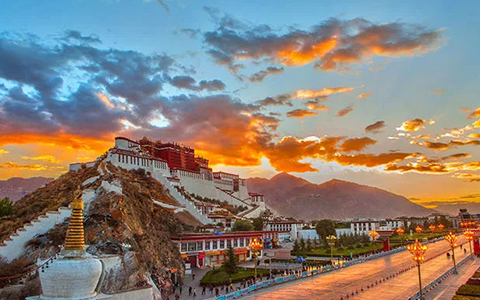
Unlike the iconic Potala Palace or the bustling Jokhang Temple, Samye Monastery offers a quieter and more immersive experience. Here, you can explore ancient architecture, learn about the origins of Tibetan Buddhism, and observe religious practices that date back over a thousand years.
This guide will walk you through everything you need to know about Samye Monastery, including its location, history, travel tips, and suggested itineraries. Read on to discover more about it!
Quick Facts about Samye Monastery:
- Location: Samye Town, Zhanang County, Shannan Prefecture of the Tibet Autonomous Region
- Built: 8th century
- Significance: First Buddhist monastery in Tibet
- Architectural Style: Mandala layout
- Distance from Lhasa: ~65 km (about 1-hour drive)
- Best Visit Time: April–October
Contents
 Where is Samye Monastery and How Can You Get There?
Why Visit Samye Monastery? History and Cultural Significance
Unique Architecture: A Mandala-Inspired Monastery Design
What Can You See at Samye Monastery?
What Can You Experience at Samye Monastery?
When Is the Best Time to Visit Samye Monastery?
Suggested Itinerary: How to Visit Samye Monastery from Lhasa
Travel Permits for Visiting Samye Monastery
Travel Tips for Visiting Samye Monastery
Where is Samye Monastery and How Can You Get There?
Samye Monastery is located on the north bank of the Yarlung Tsangpo River in Samye Town, Zhanang County, Shannan Prefecture. It sits in the historic Yarlung Valley, often referred to as the cradle of Tibetan civilization. Located only 65 kilometers south of Lhasa, Samye Monastery is easy to reach.
The most convenient way to get to Samye Monastery is by private car or by joining an organized tour. Thanks to the newly opened expressways in 2024, visiting Samye Monastery is now much easier than before. You can reach it from Lhasa in about one hour via the G4218 Yaye Expressway and S5 Laze Expressway.
Public transportation is also available from downtown Lhasa to Samye Monastery. Buses typically depart early in the morning from areas near Jokhang Temple. The trip takes about 1.5 hours and costs around 50 CNY per person. The route passes through modern tunnels and scenic valleys, making the journey smooth and enjoyable.
 Samye Monastery is located in Samye Town, Zhanang County, Shannan Prefecture.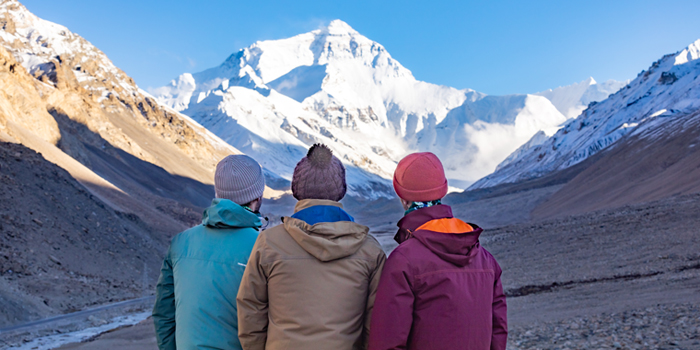

Join our most popular Lhasa and EBC tour for a smooth experience!
Why Visit Samye Monastery? History and Cultural Significance
Samye Monastery is not just a religious site — it is the birthplace of Tibetan Buddhism. It was founded in the 8th century under the patronage of King Trisong Detsen, one of Tibet’s greatest rulers. He invited the Indian scholar Shantarakshita and the tantric master Padmasambhava (Guru Rinpoche) to establish Buddhism in Tibet.
It is said that during the early stages of construction, King Trisong Detsen was eager to see the finished monastery, so Guru Padmasambhava magically created a vision of it in the palm of his hand. Amazed, the king exclaimed “Samye,” meaning “unexpected” or “inconceivable,” and this exclamation later became the name of the monastery.
One of the most famous events in Samye’s history is the Samye Debate, a philosophical discussion between Indian and Chinese Buddhist traditions. In the end, the Indian Buddhist tradition prevailed and was established as the orthodox form of Buddhism in Tibet.
Beyond religion, Samye is a symbol of cultural integration. Its architecture blends Indian, Chinese, and Tibetan styles, reflecting the cross-cultural exchange that influenced the early development of Tibetan Buddhism.
 The architecture of Samye Monastery blends Indian, Chinese, and Tibetan styles.
Unique Architecture: A Mandala-Inspired Monastery Design
What makes Samye Monastery truly unique is its mandala-inspired design, which symbolizes the Buddhist universe. At the center stands the main temple, symbolizing Mount Meru, the sacred cosmic mountain. Surrounding it are smaller temples representing continents and oceans.
This careful design is not only visually impressive but also deeply meaningful. Walking through the monastery feels like entering a symbolic universe, creating a strong sense of spiritual harmony.
Samye Monastery is also known as the “Three-Style Monastery” for its unique blend of architectural styles. The Indian influence is reflected in its mandala layout, while Tibetan elements appear in the structure and interior of the central hall, and Chinese features can be seen in the curved roofs of some buildings.
 The Utse Hall of Samye Monastery symbolizes Mount Meru, the sacred cosmic mountain in the Buddhist universe.
What Can You See at Samye Monastery?
Key Halls and Chapels
The central Utse Hall is the highlight of the monastery. Inside, you will find statues of Buddha, Guru Rinpoche, and other important figures. Surrounding it in the four cardinal directions are four main temples, representing the four continents. Near each of these are two smaller temples, symbolizing the eight sub-continents.
Flanking the main hall are two additional chapels that represent the sun and the moon. At the four corners of the central complex stand four stupas in red, green, black, and white, believed to subdue evil forces and protect against natural disasters and misfortune.
 The striking black and white stupas of Samye Monastery stand against the clear blue sky and distant mountains.
Important Statues and Murals
Samye Monastery is home to a rich collection of statues and murals, including images of Guru Rinpoche, Shakyamuni Buddha, King Trisong Detsen, and Shantarakshita. Its murals depict Buddhist teachings, historical events, and symbolic themes, offering visitors a deeper insight into Tibetan religious art and history
Sacred Relics and Scriptures
As Tibet’s first monastery, Samye preserves precious religious relics and ancient scriptures, including handwritten texts and ritual objects used in religious ceremonies. These items are highly respected by local pilgrims and offer a glimpse into the spiritual life of Tibetan Buddhism.
 The vivid, time-honored murals of Samye Monastery bring Tibetan Buddhist history to life.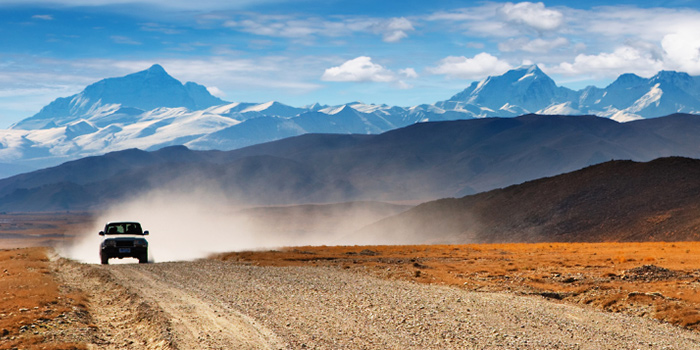
Explore exotic Tibet on this overland journey across the Roof of the World!
What Can You Experience at Samye Monastery?
Observing Monks’ Daily Life and Rituals
Samye Monastery is still an active religious center with more than 50 monks, so you have the chance to observe their daily routines. This may include chanting, studying scriptures, or participating in rituals. These moments offer a rare glimpse into traditional monastic life.
Joining a Traditional Kora
You can also join a kora, or ritual circumambulation, around Samye Monastery. Walking clockwise along the path, often alongside local pilgrims, is a traditional practice in Tibetan Buddhism. You can choose from an inner circuit around the main Utse Hall, a middle circuit passing the main temples and stupas, and a longer outer circuit along the monastery wall.
Performing a kora is believed to bring merit, purify negative karma, and express devotion. While the kora at Samye is relatively quiet compared to more famous pilgrimages in Tibet, it offers a peaceful and meaningful cultural experience.
 You can take part in the traditional kora via the outer circuit along the monastery wall.
When Is the Best Time to Visit Samye Monastery?
Samye Monastery is a year-round destination, but the best time to visit is from April to October, when the weather is mild and the roads are in good condition. During these months, the surrounding landscape is also at its most vibrant.
Spring and autumn are especially pleasant, offering comfortable temperatures and clear skies. These conditions make photography and outdoor activities particularly enjoyable. Winter visits are possible but can be colder and less convenient due to weather conditions.
 Visiting Samye Monastery in spring and autumn brings clear skies and stunning natural landscapes.
Suggested Itinerary: How to Visit Samye Monastery from Lhasa
Thanks to its proximity to Lhasa, a visit to Samye Monastery can easily be included in a one-day trip. You can depart in the morning, reach the monastery within an hour, explore the site, and return to Lhasa in the afternoon.
However, we highly recommend extending your trip for a few more days, combining Samye with other attractions for a more relaxed pace and a richer cultural experience. For example, during a 7-Day Lhasa and Tsedang Cultural Discovery Tour, you can experience the heart of Tibet’s spiritual and historical heritage.
You’ll begin in Lhasa, visiting iconic sites like the Potala Palace and Jokhang Temple. Then, travel to Tsedang and explore ancient landmarks such as Yumbulakhang, Tradruk Monastery, and Samye Monastery. This itinerary blends cultural discovery with stunning scenery and is ideal for culture lovers.
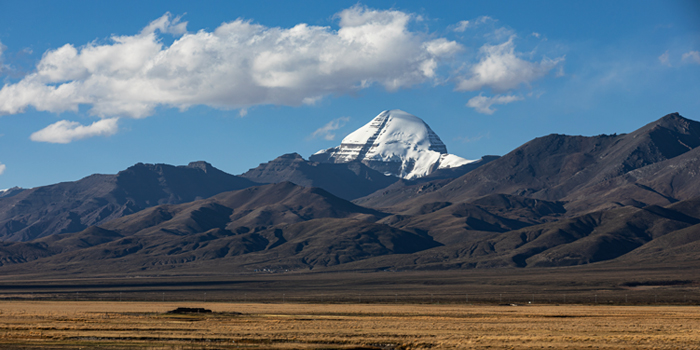
Join our best-selling Kailash Manasarovar tour for a hassle-free journey!
Travel Permits for Visiting Samye Monastery
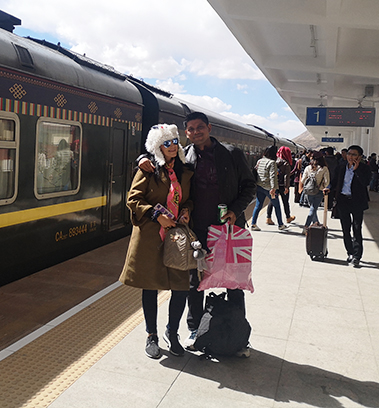
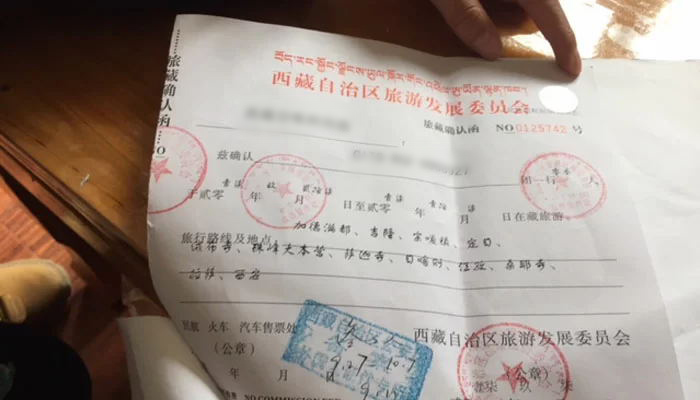
Foreign travelers must obtain a Tibet Travel Permit to visit Samye Monastery. Without it, you cannot board a flight or train to Lhasa. Additionally, this permit cannot be obtained independently — you must arrange it through a registered Tibet travel agency.
If you join any of our Tibet tours, we offer a one-stop service that includes permit application, ticket booking, hotel pickup, and customized itineraries. Simply contact us about one month prior to your departure date so that we can process your application and have your permit ready in time.
 Foreign travelers must obtain a Tibet Travel Permit to visit Samye Monastery.
Travel Tips for Visiting Samye Monastery
Respect Religious Customs
Samye Monastery is an active place of worship, not just a tourist site. Always walk clockwise around religious sites, speak quietly, avoid touching religious objects or interrupting ongoing ceremonies, and follow instructions from monks or guides.
Dress Appropriately
Wear modest clothing that covers shoulders and knees. Loose, comfortable clothes are ideal for walking and show respect for the sacred environment. Avoid revealing or overly casual outfits.
Photography Etiquette
Always ask for permission before taking photos of monks, murals, or statues. Photography may be restricted inside temple halls. Even when photography is allowed, remember to turn off your flash, as it may damage ancient artworks or relics.
Altitude Considerations
Samye Monastery sits at an altitude of about 3,580 meters. Although it is slightly lower than Lhasa, it is still essential to take time to acclimatize. Walk slowly, drink plenty of water, avoid alcohol and strong coffee, and rest whenever you feel any symptoms of altitude sickness, such as headaches or shortness of breath.
Summary and FAQs About Samye Monastery
Quick Summary
Samye Monastery, located about 65 km from Lhasa, is the first Buddhist monastery in Tibet and a key site for understanding the origins of Tibetan Buddhism. With its unique mandala-inspired layout and blend of Indian, Tibetan, and Chinese architectural styles, it offers both historical depth and cultural richness.
Thanks to its proximity to Lhasa, Samye Monastery can be easily included in a deeper Lhasa–Tsedang itinerary, together with other key cultural and religious sites. You can explore ancient halls, admire murals and statues, observe monks’ daily rituals, and join a traditional kora.
Q1: Why is Samye Monastery famous?
It is the first Buddhist monastery in Tibet and played a key role in establishing Tibetan Buddhism. Its unique mandala layout also makes it architecturally distinctive.
Q2: Where is Samye Monastery and how far is it from Lhasa
Samye Monastery is located in Shannan Prefecture, about 65 km from Lhasa, and can be reached in around one hour by car.
Q3: Can foreign tourists visit Samye Monastery?
Yes, but you must obtain a Tibet Travel Permit and travel with a licensed agency.
Q4: Do I need to buy a ticket to visit Samye Monastery?
Entry to most of the monastery area is free, but you need to buy a ticket (40 CNY per person) to visit the main Utse Hall.
Q5: How long should I spend when visiting Samye Monastery?
Most visitors spend 2–3 hours exploring the main halls and walking a kora route. For a deeper exploration, it may take half a day.
Q6: Are there accommodations near Samye Monastery?
Yes, simple guesthouses and hotels are available in Samye Town.
Conclusion
Samye Monastery is a must-visit destination for anyone interested in Tibetan culture, history, and spirituality. As the first monastery in Tibet, it offers a unique opportunity to explore the origins of Tibetan Buddhism in a peaceful and authentic setting.
With its convenient location near Lhasa and improved transportation, visiting Samye has never been easier. If you have any other questions regarding Samye Monastery or need assistance planning your visit, do not hesitate to contact us — we are happy to help!



Ask a Quick Question