











Shigatse Travel Guide: Explore Tibet’s Second-Largest City and the Gateway to Mount Everest
Shigatse is the second-largest city in Tibet and the cultural and spiritual center of western Tibet. Located about 260 kilometers west of Lhasa, it is best known as the main gateway to Mount Everest (north side) and as the home of Tashilhunpo Monastery, one of Tibet’s most important religious sites.
For many travelers, Shigatse is more than just a stopover. The city combines dramatic Himalayan landscapes, deep-rooted Tibetan Buddhist culture, and convenient access to Everest Base Camp, making it a key destination on classic Tibet travel routes.
This travel guide provides a comprehensive overview of Shigatse, Tibet, explaining why it is worth visiting, what to see and do, how to get there, and the best time to visit. You will also find practical information on recommended itineraries, accommodation options, and essential travel tips, including permits, packing advice, and altitude considerations.
Whether you are planning a journey to Mount Everest or exploring western Tibet in depth, this guide will help you prepare for a smooth and rewarding trip to one of Tibet’s most important destinations.
Quick Facts About Shigatse
- Chinese Name: 日喀则 Rìkāzé
- Location: Southwestern Tibet Autonomous Region, China
- Altitude: Approx. 3,840 meters (12,600 feet)
- Distance from Lhasa: About 260 km (161 miles)
- Significance: Second-largest city of Tibet
- Famous for: Mount Everest, Tashilhunpo Monastery
- Best Travel Time: Spring and Autumn
- Airport: Shigatse Peace Airport
- Railway Station: Shigatse Railway Station
Contents
 Where is Shigatse in Tibet? Is Shigatse Worth Visiting?
What are the Top Attractions in Shigatse, Tibet? Mt. Everest Ranks First
How to Get to Shigatse, Tibet? Easily Accessible from Lhasa, Nepal, and Mainland China
When is the Best Time to Visit Shigatse? April to June and September to November
What Are the Important Tibetan Festivals in Shigatse?
Recommended Itineraries to Visit Shigatse
Accommodation in Shigatse: Best Hotels and Where to Stay
Practical Travel Tips for Visiting Shigatse
Frequently Asked Questions (FAQs) About Shigatse
Conclusion: Why Shigatse Should Be on Your Tibet Travel List
Where is Shigatse in Tibet? Is Shigatse Worth Visiting?
Where is Shigatse in Tibet? Location Explained
Shigatse is located in the southwestern part of the Tibet Autonomous Region, approximately 260 kilometers west of Lhasa. It sits at the confluence of the Nianchu and Brahmaputra Rivers, at an average altitude of 4,000 meters.
As Tibet’s second-largest city, Shigatse lies along the Friendship Highway, a major overland route connecting Lhasa, Gyantse, Tingri, and the Mount Everest region. This strategic location makes Shigatse a vital transportation and cultural hub in western Tibet.
Is Shigatse Worth Visiting?
Yes, Shigatse is definitely worth visiting, especially for travelers interested in Tibetan Buddhism, Himalayan landscapes, and Everest-related journeys.
Shigatse serves as the main gateway to Mount Everest, located 343 kilometers (213 miles) east of Everest Base Camp, and is an essential stop on the classic Lhasa to Kathmandu overland route.
In addition, Shigatse is home to the renowned Tashilhunpo Monastery, an important center of Tibetan Buddhism. The city offers a unique blend of spirituality, local customs, and breathtaking landscapes, making it an unforgettable experience for visitors.
Compared to Lhasa, Shigatse offers a quieter, more authentic Tibetan atmosphere, allowing visitors to immerse themselves in daily Tibetan life with fewer crowds.
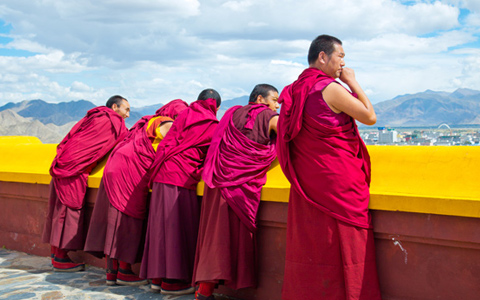
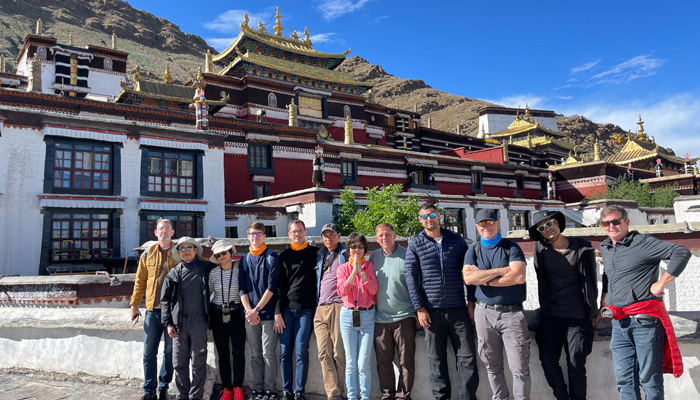 Shigatse boasts the magnificent Tashilhunpo Monastery and other highlights.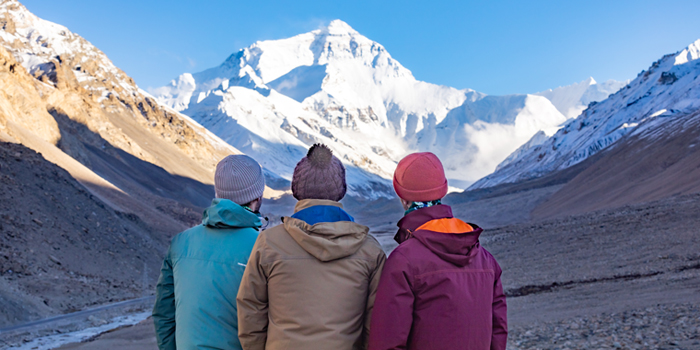

Join our most popular Lhasa and EBC tour for a smooth experience!
What are the Top Attractions in Shigatse, Tibet? Mt. Everest Ranks First
Most travelers visit Shigatse as the gateway to Mount Everest, while also exploring its rich Buddhist heritage and Himalayan landscapes. The city offers a unique blend of natural beauty and cultural depth, making it a must-visit destination in Tibet.
1. Mount Everest is the Top Attraction in Shigatse
No trip to Shigatse is complete without venturing to Mount Everest. The city acts as a jumping-off point for the trip to Everest Base Camp (EBC), located around 350 kilometers away.
The route to EBC takes you through the breathtaking Gawula Pass, where, on a clear day, you can see five of the world’s tallest peaks.
Reaching EBC from the Tibetan side provides a more expansive view of Everest’s towering north face, making it a unique experience compared to the southern approach from Nepal.
 Mount Everest is the top attraction to visit in Shigatse.
2. Shigatse Monastery: Tashilhunpo Monastery is a Must-See
Founded in 1447 by the 1st Dalai Lama, Tashilhunpo Monastery is the spiritual heart of Shigatse and the traditional seat of the Panchen Lama. It is one of the largest and most influential monasteries in Tibet and an important center of Gelug (Yellow Hat) Buddhism.
The monastery features assembly halls, chapels, and sacred stupas adorned with intricate murals and golden statues. Its most famous landmark is the 26-meter-high Maitreya Buddha statue, the largest gilded Jampa statue in the world.
Walking through Tashilhunpo, you can observe monks in their daily practice and feel an atmosphere of deep devotion, offering valuable insight into the living traditions of Tibetan Buddhism.
3. Three Himalayan Treks in Shigatse
Shigatse and its surrounding areas offer several well-known Himalayan trekking routes, from cultural monastery walks to demanding high-altitude expeditions near Mount Everest.
- Shalu to Nartang Trek
The Shalu to Nartang trek is a short cultural route linking Shalu Monastery and Nartang Monastery. It passes through quiet valleys and Tibetan villages and is suitable for travelers looking for a light trek combined with history and local life.
- Tingri to Everest Base Camp Trek
The Tingri to Everest Base Camp trek is a classic high-altitude route on the north side of Mount Everest. Starting in Tingri, the trek offers close-up views of Everest and surrounding Himalayan peaks and is ideal for experienced trekkers.
- Gama Valley Trek
The Gama Valley trek is one of the most scenic routes near Mount Everest, known for its pristine landscapes, glaciers, and alpine forests. It is more remote and physically demanding, best suited for seasoned trekkers seeking a wilderness experience.
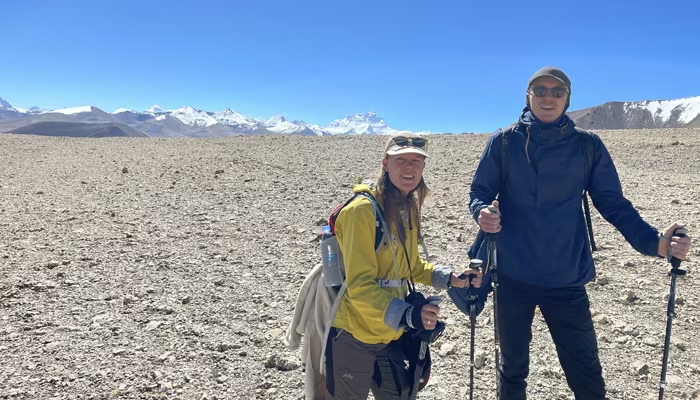 You can enjoy some Himalayan treks in Shigatse.
How to Get to Shigatse, Tibet? Easily Accessible from Lhasa, Nepal, and Mainland China
Shigatse is well connected with Lhasa, the Mount Everest region, and neighboring countries. You can reach the city by overland routes, train, or flights, depending on your itinerary and entry point into Tibet.
Lhasa to Shigatse by Overland (The Most Popular Way)
Traveling overland from Lhasa to Shigatse is the most common and rewarding option for tourists. The journey covers about 360 kilometers and usually takes 6 to 8 hours, offering some of the most scenic landscapes in central Tibet.
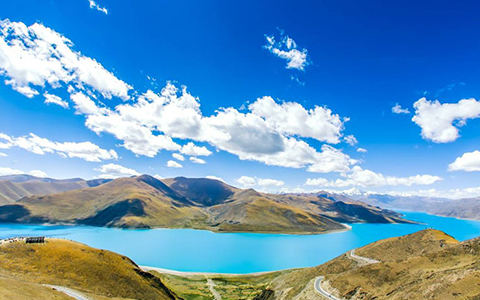
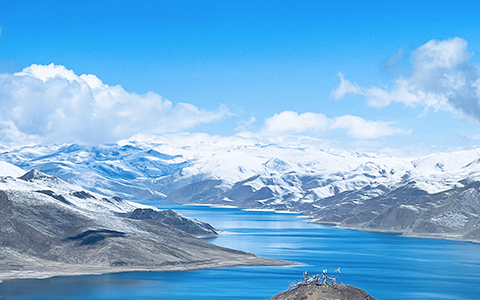
Departing from Lhasa, the drive first takes you to Yamdrok Lake, one of Tibet’s three holiest lakes, famous for its striking turquoise waters and surrounding snow-capped mountains.
From there, the route continues past Karola Glacier and Manla Reservoir before arriving in the historic town of Gyantse, home to the impressive Kumbum Stupa.
After Gyantse, the road continues toward Shigatse, passing through fertile valleys and traditional farming areas. In summer, the barley fields appear lush and green, while in autumn they turn a beautiful golden color.
Overall, the journey from Lhasa to Shigatse by road can be comfortably completed in one day, making it both scenic and enjoyable.
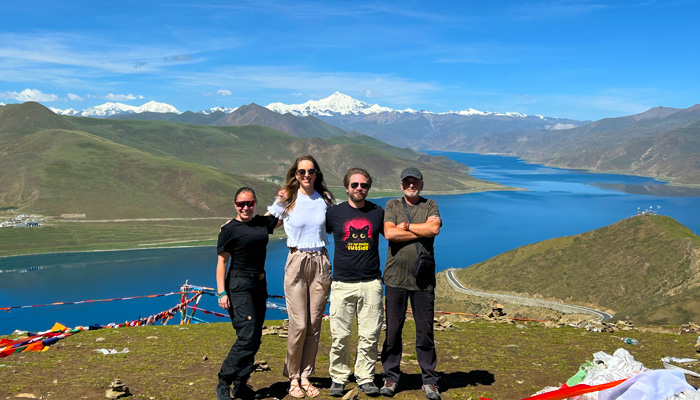 Our guests explored Yamdrok Lake during the Lhasa–Shigatse overland journey.
Lhasa to Shigatse by Bullet Train (A Relaxing Way)
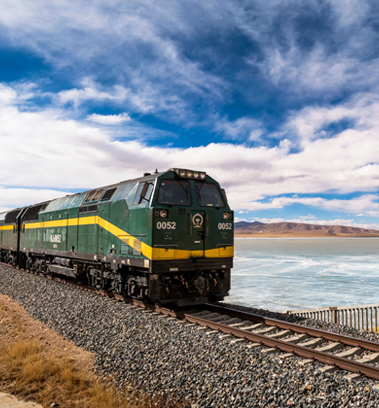
For a more relaxed journey, you can travel to Shigatse from Lhasa by train. There are three trains departing from Lhasa to Shigatse every day, taking about 2 hours and 20 minutes to reach Shigatse Railway Station. As an extension of the Qinghai-Tibet Railway, the train route passes through Tibetan villages and beautiful landscapes of the plateau.
Compared with the overland route, the train from Lhasa to Shigatse is much quicker and more time-saving. It is ideal for those who want to visit Shigatse and Mount Everest in a limited amount of time.
However, you may miss attractions like Yamdrok Lake along the way. For first-time visitors to Tibet, a great option is to travel from Lhasa to Shigatse by car and return by train, ensuring you get the best of both experiences.
Schedule of Lhasa to Shigatse Train
| Train No. | Dep./Arr. | Duration |
|---|---|---|
| C4381 Lhasa-Shigatse | 09:00/11:17 | 2h 17m |
| C4383 Lhasa-Shigatse | 15:05/17:35 | 2h 30m |
| C4385 Lhasa-Shigatse | 16:25/18:42 | 2h 17m |
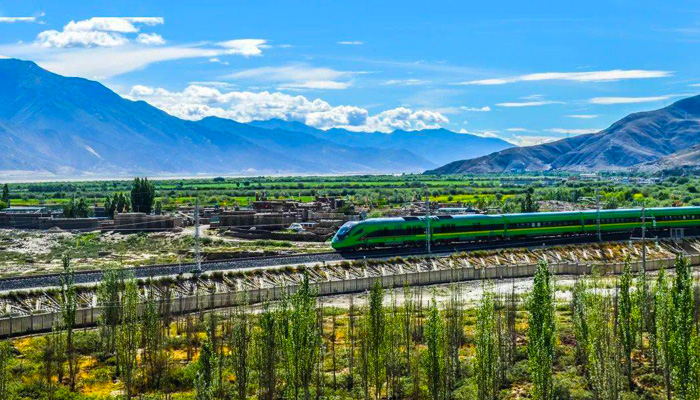 The High-speed train from Lhasa to Shigatse is faster and time-saving.
Kathmandu to Shigatse by Road (Popular for Entering Tibet from Nepal)
If you start your journey from Kathmandu, Nepal, you can travel overland to Shigatse via the Gyirong Border, one of the most popular entry points into Tibet.
Following sections of the Friendship Highway, the journey covers about 635 kilometers. To allow for altitude acclimatization and sightseeing along the way, travelers usually take around 4 days to travel from Kathmandu to Shigatse.
The trip begins with a drive of about 170 kilometers from Kathmandu to the Gyirong Border, along relatively rough roads on the Nepal side. After entering Tibet, travelers typically spend one night in Gyirong for rest, sightseeing, and gradual acclimatization.
From Gyirong, the routes often include a detour to Mount Everest Base Camp, where you can see the summit of the world’s highest peak, before continuing through Tingri and onward to Shigatse.
This route is commonly used on Kathmandu to Lhasa overland itineraries and is favored for its dramatic Himalayan scenery and the smooth cultural transition from Nepal to Tibet.
 You can travel overland from Kathmandu to Shigatse via the Gyirong border.
Get to Shigatse from Mainland China: Flights Available
Shigatse is served by Shigatse Peace Airport, which operates flights from several cities in mainland China, including Chengdu, Xi’an and Chongqing.
Currently, there is a daily non-stop flight from Chengdu to Shigatse, taking around 3 hours, as well as a daily flight from Xi’an to Shigatse, with a flight time of about 3.5 hours. Additionally, there are flights from Chongqing to Shigatse on Tuesdays, Thursdays, and Saturdays, taking approximately 3 hours and 10 minutes.
Flying is the quickest way to reach Shigatse but does not provide the gradual acclimatization that overland travel offers. If you're short on time and prefer a faster journey, flying is a good option. However, it’s still advisable to allow for some time to acclimatize upon arrival.
Schedule of Flights to Shigatse from Mainland China
| Route | Dep. – Arr. | Flight No. | Airlines | Frequency | Price |
|---|---|---|---|---|---|
| Chengdu-Shigatse | 06:35 – 09:40 | TV9976 | Tibet Airlines | Every Day | From $255 |
| Xi’an-Shigatse | 06:40 - 10:10 | TV6059 | Tibet Airlines | Every Day | From $100 |
| Chongqing-Shigatse | 06:25- 09:35 | TV9761 | Tibet Airlines | Tue, Thu, Sat | From $108 |
How to Get to Shigatse: Key Takeaways
- Overland travel from Lhasa is the most popular option, combining scenic highlights such as Yamdrok Lake in a one-day journey.
- High-speed trains from Lhasa offer a fast and comfortable alternative for travelers with limited time.
- The Kathmandu–Gyirong–Shigatse route is the main overland entry from Nepal and is often combined with Mount Everest Base Camp visits.
- Flights from Mainland China are the fastest way to reach Shigatse, though extra time for altitude acclimatization is recommended.
Join our most popular Tibet Everest Base Camp tour with a visit to Shigatse city!
When is the Best Time to Visit Shigatse? April to June and September to November
Shigatse is a wonderful year-round destination, and you can visit at any time of the year. Thanks to its dry plateau climate and abundant sunshine, each season offers a different travel experience.
That said, spring and autumn are widely regarded as the best seasons to visit Shigatse, thanks to stable weather and favorable travel conditions.
Spring and Autumn are Best Seasons for Scenic Views and Outdoor Activities
Spring and autumn are the most favorable seasons to visit Shigatse, offering stable weather, clear skies, and ideal conditions for outdoor activities such as trekking, sightseeing, and photography.
- Spring (April to June)
Spring brings gradually warmer days and fresh colors to the landscape, with wildflowers blooming across valleys and hills.
While nights can still be cold, with temperatures dropping to 0 to –5°C, daytime conditions are more comfortable, thanks to bright sunshine and average temperatures of 5 to 10°C.
This is an excellent time to visit monasteries, explore surrounding valleys, and enjoy light trekking in the Shigatse region.
- Autumn (September to November)
Autumn offers crisp air and some of the clearest views of the Himalayas, including Mount Everest. As summer rainfall decreases, sunny days and blue skies become more frequent.
Daytime temperatures remain mild, usually ranging from 12 to 17°C, making it a perfect season for landscape viewing and photography, especially when barley fields turn golden against snow-capped peaks.
Summer is the Peak Season (July to August)
Summer (July to August) is the peak tourist season in Shigatse, as many travelers visit Tibet during this period for their holidays.
During summer, Shigatse experiences the warmest temperatures of around 15–20°C in the daytime, with occasional short showers. Despite the rain, travel generally remains comfortable, and the landscapes are at their greenest. The higher oxygen content at this time of year also makes altitude adaptation easier for many travelers.
Summer is also an ideal time to experience authentic Tibetan festivals. Important events, such as the Tashilhunpo Thangka Display, take place during this season and are widely celebrated in Shigatse.
That said, if you plan to visit Shigatse in summer for Mount Everest views, it is advisable to check the weather forecast in advance to increase your chances of clear visibility.
Winter is the Budget-friendly and Quiet Season (December to February)
Winter (December to February) offers a quieter and more budget-friendly travel experience in Shigatse, making it an excellent choice for a Tibet winter trip, with fewer tourists and lower hotel and flight rates.
Temperatures are colder, usually ranging from –10°C to 5°C (14°F to 41°F), but the weather is generally dry and clear. While winter may not be ideal for trekking, it is a great time for travelers seeking peace and solitude on a Tibet winter tour to explore Shigatse and its spiritual sites without crowds.
Everest Base Camp is also accessible during the winter months. Thanks to the clear air and minimal cloud cover, winter is one of the best times to enjoy clear views of Mount Everest. On clear nights, the dark skies at high altitude may even offer a chance to see the Milky Way from the Everest region.
Best Time to Visit Shigatse: Key Takeaways
- Shigatse can be visited in every season.
- Spring (April - June) and autumn (September - November) offer the most comfortable weather, ideal for sightseeing, trekking, and enjoying clear views of Mount Everest.
- Summer (July - August) is the peak season, with greener landscapes and major Tibetan festivals.
- Winter (December - February) is the quietest and most budget-friendly time.
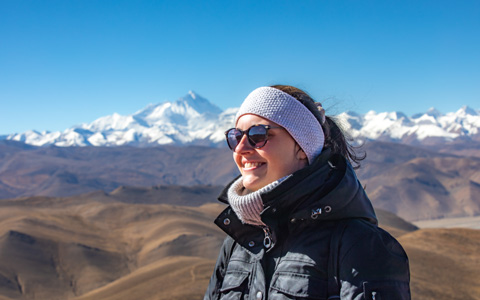
 Winter offers some of the clearest views of Mount Everest at Gawula Pass.
What Are the Important Tibetan Festivals in Shigatse?
Shigatse is one of the best places in Tibet to experience authentic Tibetan festivals. Many celebrations here are closely linked to farming traditions and major monasteries, giving visitors a deeper look into local life and beliefs.
1. Tashilhunpo Thangka Festival
The Tashilhunpo Thangka Festival is the most important religious event in Shigatse. It is held at Tashilhunpo Monastery from the 14th to the 16th day of the fifth month in the Tibetan lunar calendar. In 2026, it falls on June 28–30 in the solar calendar.
During the festival, a giant Buddha Thangka is unfolded on a hillside near the monastery. Thousands of monks and pilgrims gather to pray and receive blessings. The atmosphere is solemn and deeply spiritual, making it one of the most impressive monastery festivals in Tibet.
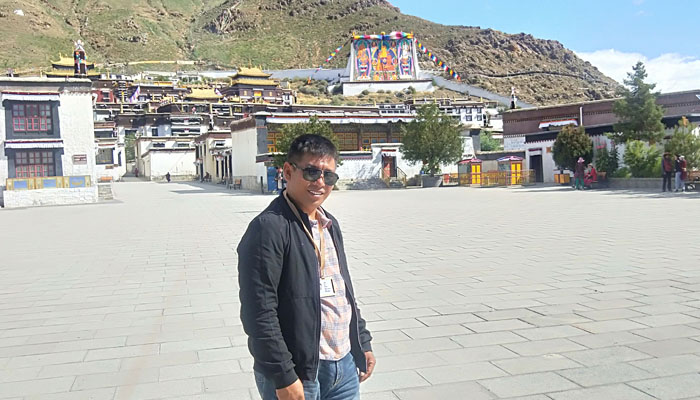 A giant Buddha Thangka is displayed on a hillside near Tashilhunpo Monastery.
2. Tibetan New Year (Losar Festival)
Losar, the Tibetan New Year, is celebrated across all Tibetan regions, including Shigatse. In 2026, Tibetan New Year’s Day falls on February 18, with celebrations lasting from New Year’s Eve to the third day of the first lunar month.
During this period, Shigatse comes alive with a festive and joyful atmosphere. Local families clean their homes, prepare traditional Tibetan dishes, visit monasteries, and exchange greetings with relatives and friends.
For toursits, you may also experience traditional performances, festive banquets, and cultural activities such as horse racing and wrestling.
3. Gtsang New Year (Farmers’ New Year)
The Gtsang New Year is unique to the Shigatse region. It is celebrated on the first day of the eleventh month in the Tibetan calendar, about one month earlier than Losar.
Also known as the Farmers’New Year, this festival is closely linked to agriculture. Local farmers pray for good harvests and favorable weather.
Compared with Losar, it is more local and less tourist-oriented, offering a rare opportunity to observe traditional rural life in Tibet.
4. Gyantse Horse-racing Festival
The Gyantse Horse-racing Festival is held in Gyantse County, part of Shigatse Prefecture. It usually takes place from the 10th to the 28th day of the fourth month in the Tibetan calendar and has a history of more than 500 years.
The festival features horse racing, archery, wrestling, and traditional Tibetan performances. Locals dress in festive clothing and set up tents near the racegrounds. With its vibrant scenes and dynamic activities, the festival is especially popular with photographers.
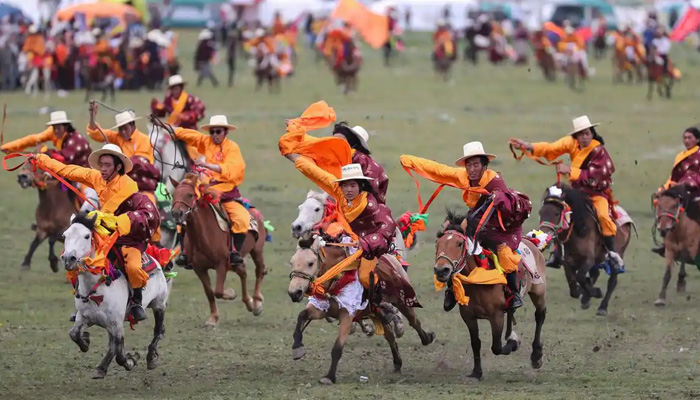 The Gyantse Horse-racing Festival is a popular event in Shigatse.
How to Experience Tibetan Festivals in Shigatse: Tips and Travel Planning Advice
Tibetan festival dates are based on the lunar calendar, so they vary each year. Planning your trip with a local travel agency is essential, especially during major festivals.
Hotels in Shigatse and Gyantse fill up quickly during festival periods, so booking accommodation well in advance is highly recommended. When attending religious events, visitors should dress modestly and respect local customs.
For international travelers, joining a guided tour is required to visit Tibet and participate in festival activities. This also helps you better understand the cultural meaning behind the rituals and ensures respectful access to festival sites.
Recommended Itineraries to Visit Shigatse
Most Shigatse itineraries are combined with Lhasa or Mount Everest Base Camp, as the city is ideally located between the two. These routes allow for gradual altitude acclimatization while offering a richer cultural and scenic experience along the way.
8-Day Lhasa to Everest Base Camp Tour (Most Popular Choice)
This 8-day Lhasa to Everest Base Camp tour is a favorite among travelers, offering the chance to experience Lhasa, Shigatse, and Mount Everest all in one trip.
The journey begins in Lhasa, where you’ll have time to acclimate and explore renowned landmarks such as the Potala Palace and Jokhang Temple. From there, the route takes you over scenic mountain passes and past the breathtaking Yamdrok Lake before reaching the historic town of Gyantse.
After an overnight stay in Shigatse, the tour continues toward Everest Base Camp, where you’ll be rewarded with a close-up view of Mount Everest’s stunning north face — a sight often the highlight of the entire trip.
On the return journey to Lhasa, you’ll also have a chance to visit Tashilhunpo Monastery in Shigatse and the ancient town of Sakya, rounding out a journey rich in both cultural and natural wonders.
Best for:
- First-time visitors to Tibet
- Travelers wanting to see Mount Everest
- Those seeking a classic, well-paced itinerary
6-Day Lhasa to Shigatse Tour (Short & Cultural Focus)
For those looking to experience the heart of central Tibet without venturing as far as Everest, this 6-day Lhasa to Shigatse tour is an excellent choice.
Starting in Lhasa, it includes visits to the city's must-see sights, such as the Potala Palace, Jokhang Temple, and Barkhor Street. The journey then heads west, stopping to admire Yamdrok Lake before arriving in Shigatse.
In Shigatse, a visit to Tashilhunpo Monastery offers a chance to see one of Tibet’s most important religious sites, with its golden-roofed halls and vibrant Buddhist culture.
This shorter itinerary allows you to delve into Tibetan history, religion, and scenic beauty while staying within a manageable timeframe.
Best for:
- Travelers with limited vacation time
- Culture and monastery lovers
- Visitors not planning to visit Everest Base Camp
Customized Shigatse Tours for More Experiences
For travelers seeking greater flexibility, a customized Shigatse tour allows you to tailor the journey to your interests and schedule. With over 30 years of experience organizing Tibet tours, we can help design your ideal Shigatse itinerary.
You can include additional monasteries, local villages, photography stops, festival visits, or extended stays in Shigatse according to your interests. Travel pace, accommodation level, and travel dates can all be adjusted to suit your needs.
Simply contact us with your travel ideas, and we will help you create a memorable journey to Shigatse and Tibet.
Best for:
- Travelers seeking flexibility
- Festival or photography-focused trips
- Families or small private groups
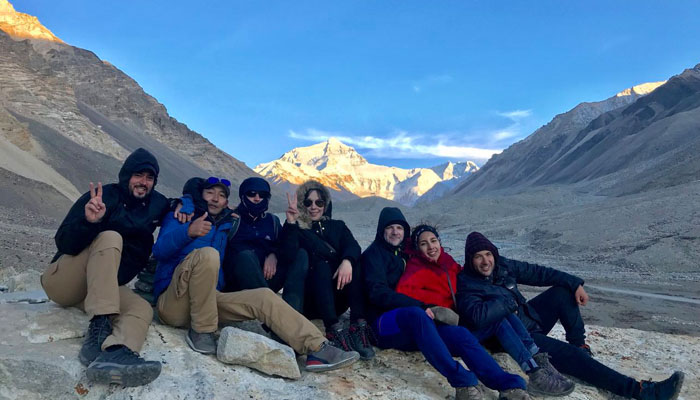 Most Shigatse itineraries include a visit to Mount Everest.
Accommodation in Shigatse: Best Hotels and Where to Stay
Shigatse offers a variety of accommodations, from luxurious 5-star hotels to cost-effective 3- and 4-star options, along with budget-friendly guesthouses. No matter your budget or preference, there’s something to suit your needs for a comfortable stay in this culturally rich city.
1. Luxury Hotels in Shigatse
For travelers seeking top-notch comfort and service, these luxury hotels provide modern amenities and beautiful surroundings, ensuring a memorable stay.
- Hilton Shigatse (5-star)
The Hilton Shigatse stands as one of the most prestigious hotels in the region. It offers elegant rooms with stunning views of the surrounding mountains. With amenities such as oxygen supply, fine dining, and a relaxing spa, it’s perfect for travelers looking for both comfort and convenience.
2. Cost-Effective Hotels in Shigatse
For travelers seeking a balance between comfort and price, these cost-effective hotels are reliable choices with good facilities and convenient locations.
- Shiga Yangcha Grand Hotel (3-star)
A well-regarded mid-range hotel, Shiga Yangcha Grand Hotel provides modern, clean rooms with reliable service. Conveniently located near Tashilhunpo Monastery, it also has an on-site restaurant offering authentic local cuisine.
- Qomo Langzong Hotel (4-star)
This hotel combines Tibetan-style decor with modern comforts. Located near major attractions, the railway station, and Shigatse Peace Airport, it offers great value for money and a peaceful atmosphere for guests.
- Rikaze Mulunlazong Hotel (4-star)
Rikaze Mulunlazong Hotel offers affordable pricing and a convenient location, perfect for travelers who want a simple, restful stay without the added luxury. The rooms are comfortable, and the hotel provides all the essential amenities for a pleasant experience.
3. Budget Hotels in Shigatse
Budget hotels in Shigatse focus on basic comfort and affordability. They are suitable for travelers who spend most of their time sightseeing and only need a clean place to rest.
Local guesthouses and small hotels near the city center offer simple rooms, hot water, and heating. While facilities are basic, they meet the essential needs of budget-conscious travelers.
Where to Stay at Everest Base Camp
Accommodation at Everest Base Camp is limited, but options have improved significantly, offering a more comfortable stay at high altitude.
- Tent Guesthouses
The Everest Base Camp tent guesthouses operate from April to October and were upgraded in June 2025. There are 60 Tibetan-style tents with various room types, including standard and single rooms. Each tent is equipped with tap water, stable electricity, and oxygen. Nearby, you'll find small shops, a restaurant, and a teahouse for added convenience.
- Rongbuk Monastery Guesthouse
Located close to Everest Base Camp, the Rongbuk Monastery Guesthouse provides breathtaking views of Mount Everest. The guesthouse offers rooms with heating and oxygen supply. Guests can also enjoy a meal at the restaurant, which serves simple dishes like hot pot, noodles, and fried rice.
Travel Tip: Booking in Advance
Shigatse is a popular destination, especially during peak travel seasons. It’s advisable to book your accommodation well in advance, particularly for luxury hotels and those near major attractions like Tashilhunpo Monastery.
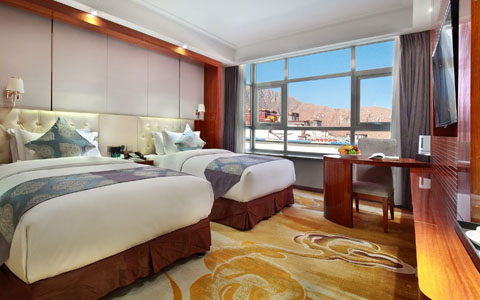
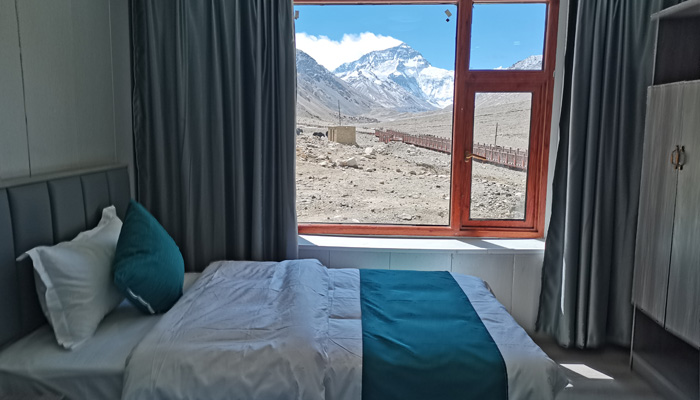 Mount Everest-view room at Rongbuk Monastery Guesthouse.
Enjoy comfortable hotels throughout our Tibet EBC tour!
Practical Travel Tips for Visiting Shigatse
Visiting Shigatse is a rewarding experience, but proper preparation is essential due to Tibet’s special travel requirements, high altitude, and changeable weather. The following practical tips will help ensure a smoother and more comfortable journey.
Required Permits to Visit Shigatse, Tibet
To visit Shigatse, you’ll need both a Tibet Travel Permit and an Alien’s Travel Permit, which we can help arrange.
The Tibet Travel Permit must be obtained before your departure and can take about 15 to 20 days to process, so we recommend contacting us well in advance.
The Alien’s Travel Permit, however, is obtained by your guide after you arrive in Lhasa and typically takes only 1 to 2 hours to issue.
Acclimatization to the High Altitude
Shigatse sits at an altitude of around 3,800 meters (12,500 feet), which is significantly higher than most cities.
To reduce the risk of altitude sickness, it is recommended to:
- Spend at least 1–2 days in Lhasa (3,650 meters) before traveling to Shigatse
- Avoid strenuous activity during the first days
- Drink plenty of water and eat light meals
- Move slowly and get enough rest
Most hotels in Shigatse, especially mid-range and luxury options, provide oxygen supply, which can help travelers adjust more comfortably.
Packing Essentials for Shigatse Weather
Shigatse has a dry climate with strong sunlight and large temperature differences between day and night.
Essential items to pack include:
- Warm layers, especially for mornings and evenings
- A windproof jacket
- Sunscreen, sunglasses, and a sun hat for protection against strong UV rays
- Comfortable and sturdy walking shoes
- Lip balm and hand cream for the dry climate
- Personal medications and basic altitude relief medicine
Even in summer, temperatures can drop noticeably after sunset, so layered clothing is always recommended.
Quick Travel Tip
Traveling with an experienced guide not only ensures permit compliance but also helps you better understand local culture, monasteries, and daily life in Shigatse.
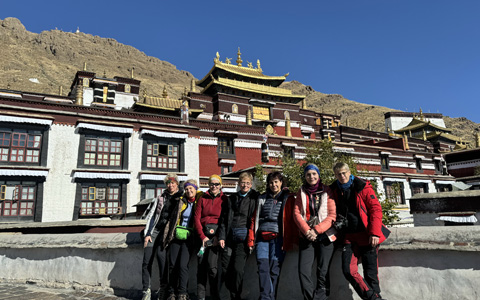
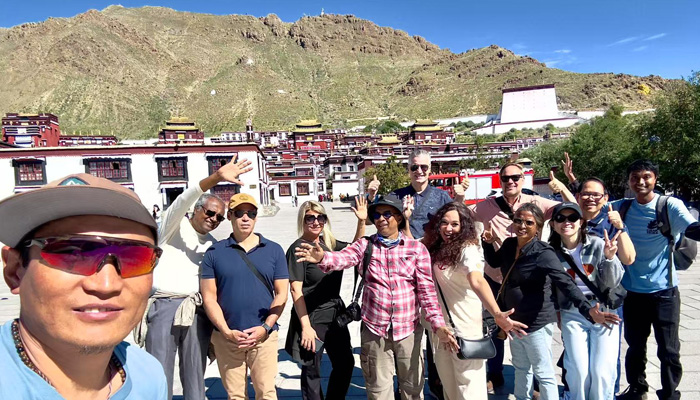 Explore Shigatse’s Tashilhunpo Monastery led by our professional Tibetan guide.
Frequently Asked Questions (FAQs) About Shigatse
1. Can I travel independently in Shigatse?
No. International travelers are required to join an organized tour arranged by a licensed local travel agency. Independent travel is not permitted in Shigatse or other parts of Tibet.
2. Is Shigatse safe for tourists?
Yes. Shigatse is generally very safe for tourists. Crime rates are low, and travelers are accompanied by licensed guides throughout their visit.
3. How many days do I need in Shigatse?
Most travelers spend 1–2 days in Shigatse. This allows enough time to visit Tashilhunpo Monastery and explore the city, or use Shigatse as a stopover when traveling to Mount Everest Base Camp.
4. How do I get to Shigatse from Lhasa?
You can travel from Lhasa to Shigatse by train or overland drive. The scenic overland route via Yamdrok Lake and Gyantse is the most popular choice among travelers.
5. Do I need a Tibet Travel Permit to visit Shigatse?
Yes. All international travelers need a Tibet Travel Permit, which must be arranged in advance through a licensed travel agency.
6. What is the altitude of Shigatse? Will I get altitude sickness?
Shigatse sits at about 3,800 meters (12,500 feet). Some travelers may experience mild altitude symptoms, but proper acclimatization in Lhasa greatly reduces the risk.
7. Can I visit Mount Everest from Shigatse?
Yes. Shigatse is the main gateway to Mount Everest Base Camp on the Tibetan side. Most Everest tours include an overnight stay in Shigatse before continuing west.
8. What is the best time for trekking in Shigatse?
The best trekking seasons in Shigatse are May to June and September to October, when the weather is stable and temperatures are comfortable.
9. Are there good hotels in Shigatse?
Yes. Shigatse offers a range of accommodation options, including luxury hotels like Hilton Shigatse, comfortable mid-range hotels, and clean budget guesthouses.
10. Can I combine Shigatse with other Tibet destinations?
Absolutely. Shigatse is commonly combined with Lhasa, Gyantse, Mount Everest Base Camp, and Sakya, making it an essential stop on classic Tibet itineraries.
We guarantee a smooth journey to Shigatse and Everest!
Conclusion: Why Shigatse Should Be on Your Tibet Travel List
Shigatse is far more than a stop between Lhasa and Mount Everest. As Tibet’s second-largest city, it offers a rich combination of magnificent monasteries, lively Tibetan festivals, stunning Himalayan views, and rewarding high-altitude trekking experiences.
Thanks to well-developed transportation, Shigatse is easily accessible from Lhasa, Kathmandu, and mainland China by road, train, or flight. It is a year-round destination, with spring and autumn providing the most favorable travel conditions.
The city also offers a wide range of accommodation options, from luxury hotels to budget stays. Popular itineraries such as the 8-day Lhasa to Everest Base Camp tour and the 6-day Lhasa to Shigatse tour showcase many of Tibet’s highlights and are highly favored by travelers.
With proper preparation - such as arranging the Tibet Travel Permit, packing essential layered clothing, and allowing time for gradual acclimatization - you can enjoy a smooth and comfortable journey to Shigatse. As a leading Tibet tour operator, we are committed to providing you with an authentic, safe, and worry-free travel experience.
So why wait? Book your Shigatse tour with us today. Share your travel ideas with us and get ready for a rewarding journey into the heart of Tibet.


Ask a Quick Question