















Tibetan customs are an important part of daily life across Tibet and reflect centuries of religious beliefs, cultural traditions, and social etiquette. From walking clockwise around monasteries to offering a Khata as a gesture of respect, these customs continue to shape how Tibetan people interact with one another and with visitors from around the world.
For travelers, understanding Tibetan customs is more than just learning local etiquette. It helps you avoid cultural misunderstandings, show respect for local traditions, and enjoy more meaningful cultural experiences throughout your journey.
Whether you are exploring Lhasa, visiting Everest Base Camp, or traveling through traditional Tibetan villages, these 10 essential customs will help you experience Tibet more respectfully and confidently.
Quick View: 10 Tibetan Customs Every Traveler Should Know
| Tibetan Custom | What You Should Do |
|---|---|
| Walk Clockwise | Follow the clockwise direction around monasteries, stupas, and prayer wheels. |
| Respect Sacred Objects | Do not step on prayer flags or move religious objects. |
| Respect Religious Practices | Avoid interrupting rituals or blocking pilgrimage routes. |
| Dress Modestly | Cover shoulders and knees when visiting monasteries. |
| Ask Before Taking Photos | Request permission before photographing people. |
| Accept Hospitality Politely | Accept butter tea and refreshments with gratitude. |
| Use Both Hands | Use both hands when giving or receiving items. |
| Learn "Tashi Delek" | Use common Tibetan greetings respectfully. |
| Keep Quiet in Monasteries | Maintain a calm and respectful atmosphere. |
| Avoid Common Taboos | Do not touch others' heads, climb mani piles, or disrespect sacred items. |
Contents
 #1 Tibetan Custom: Walk Clockwise Around Monasteries and Religious Sites
#2 Tibetan Custom: Respect Prayer Flags, Prayer Wheels, and Sacred Objects
#3 Tibetan Custom: Respect Pilgrims and Religious Practices
#4 Tibetan Custom: Dress Respectfully at Monasteries and Temples
#5 Tibetan Custom: Ask Permission Before Taking Photos
#6 Tibetan Custom: Accept Butter Tea and Other Offerings Respectfully
#7 Tibetan Custom: Use Both Hands When Giving or Receiving Items
#8 Tibetan Custom: Learn the Meaning of Khata and "Tashi Delek"
#9 Tibetan Custom: Keep Quiet and Respect the Sacred Atmosphere in Monasteries
#10 Tibetan Custom: Avoid Common Tibetan Taboos
#1 Tibetan Custom: Walk Clockwise Around Monasteries and Religious Sites
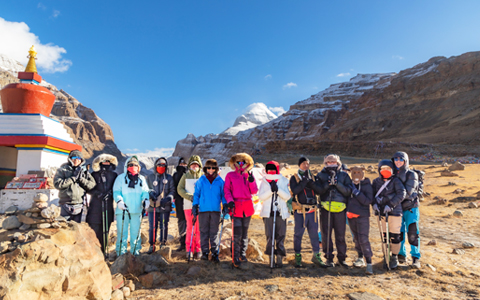
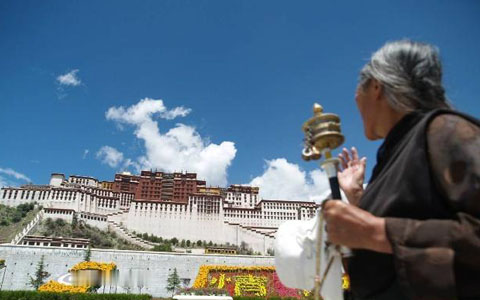
One of the most important customs in Tibet is walking clockwise around religious sites. Whether you are visiting a monastery, stupa, or sacred mountain, or encountering prayer wheels along the way, moving clockwise is considered a sign of respect in Tibetan Buddhism.
You will notice local pilgrims performing kora, a ritual practice of walking around sacred places while reciting prayers or spinning prayer wheels. This tradition has been part of Tibetan religious life for centuries and symbolizes devotion and the accumulation of spiritual merit.
When visiting famous sites such as Barkhor Street in Lhasa, Tashilhunpo Monastery in Shigatse, or pilgrimage routes across Tibet, it is best to follow the same clockwise direction as local pilgrims. If you are unsure which direction to go, simply observe what local people are doing or ask your guide.
.jpg "Clockwise Mount Kailash Kora") Walking in a clockwise direction around religious sites, such as Mount Kailash, is considered a sign of respect.
Walking in a clockwise direction around religious sites, such as Mount Kailash, is considered a sign of respect.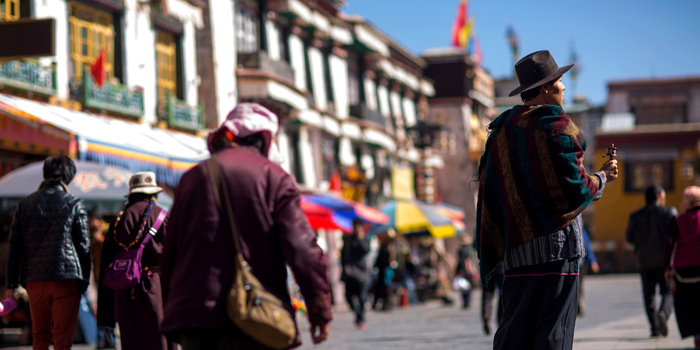

Explore the cultural heart of Tibet through Lhasa's sacred temples and monasteries!
#2 Tibetan Custom: Respect Prayer Flags, Prayer Wheels, and Sacred Objects
Throughout Tibet, you will see colorful prayer flags, spinning prayer wheels, and carved mani stones. These are not merely decorations. They are important religious symbols with deep spiritual significance.
Prayer flags are believed to carry prayers and blessings across the surrounding landscape on the wind. Prayer wheels contain sacred mantras, while mani stones are engraved with Buddhist scriptures and auspicious prayers.
When visiting religious sites, avoid stepping on prayer flags, sitting on mani stones, or moving sacred objects. If you choose to spin a prayer wheel, do so gently and clockwise. Respecting these symbols is one of the simplest ways to demonstrate appreciation for Tibetan culture and beliefs.
 You can see many sacred mani stones throughout Tibet. Remember not to sit on them or move them.
#3 Tibetan Custom: Respect Pilgrims and Religious Practices
Pilgrimage is an important part of Tibetan religious life. Many Tibetans travel hundreds or even thousands of kilometers to visit sacred sites and perform religious rituals.
Some pilgrims spend weeks or months making their journey. Others perform full-body prostrations along the way, repeatedly kneeling and stretching themselves flat on the ground as an expression of devotion.
When you encounter these devoted pilgrims or observe religious practices during a Tibet tour, avoid interrupting ceremonies, blocking pilgrimage routes, or getting too close while taking photos. If you wish to watch a ritual, do so quietly and respectfully from a reasonable distance.
 At sacred sites like the Jokhang Temple, you may encounter pilgrims performing full-body prostrations.
#4 Tibetan Custom: Dress Respectfully at Monasteries and Temples
Tibet is generally relaxed when it comes to everyday clothing, especially in larger towns such as Lhasa. However, modest dress is recommended when entering monasteries, temples, and other religious sites.
Visitors should avoid overly revealing clothing such as very short shorts, crop tops, or overly casual beachwear. Clothing that covers the shoulders and knees is usually considered appropriate. When entering temples or monastery halls, visitors are encouraged to remove their hats and sunglasses as a sign of respect for the sacred environment.
Practical clothing is also important because temperatures in Tibet can change dramatically throughout the day. Layered clothing, comfortable walking shoes, and a light jacket are often good choices for monastery visits.
 When visiting Tibetan monasteries, temples, and other religious sites, you should dress modestly to show respect.
#5 Tibetan Custom: Ask Permission Before Taking Photos
Tibet offers endless opportunities for photography. From snow-capped mountains and sacred lakes to ancient monasteries and traditional villages, almost every corner of Tibet is photogenic. However, photography rules in Tibet are stricter than in many other tourist destinations.
When photographing people, politeness and respect are essential. Before taking close-up photos of monks, pilgrims, or local residents, it is best to ask for permission. Most Tibetans are friendly and willing to be photographed if you communicate politely.
Photography rules also vary between monasteries. Some temples allow photography in outdoor areas but prohibit photos inside assembly halls or shrine rooms. Flash photography is often restricted as well. Always check for "No Photography" signs first.
 Most Tibetan monks are friendly and willing to take photos with tourists if you politely ask for permission.
#6 Tibetan Custom: Accept Butter Tea and Other Offerings Respectfully
Hospitality is an important part of Tibetan culture. Guests and visitors are often welcomed with butter tea, snacks, or other refreshments.
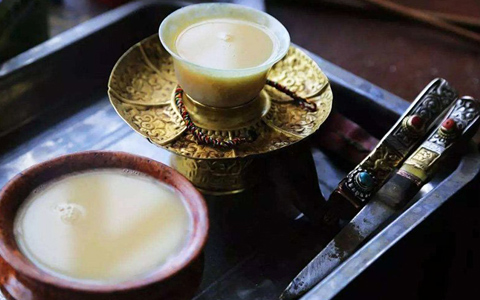
Butter tea, made from tea, yak butter, salt, and water, is one of the most traditional Tibetan drinks. When local families or guides offer you butter tea, it is a sincere gesture of hospitality and friendship.
You do not need to finish the entire bowl if you are not used to the taste. Simply take a few sips and express your gratitude politely. This simple gesture is a meaningful way to show appreciation for Tibetan hospitality and local customs.
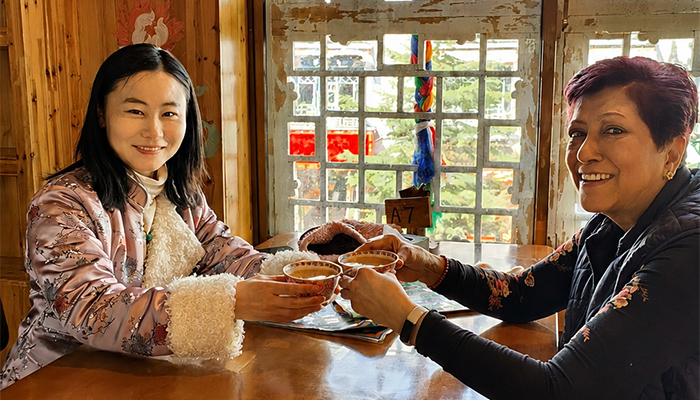 Accepting butter tea with both hands is a sincere gesture to express your gratitude.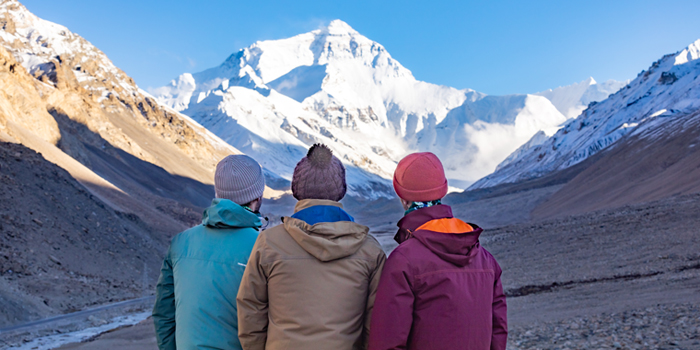
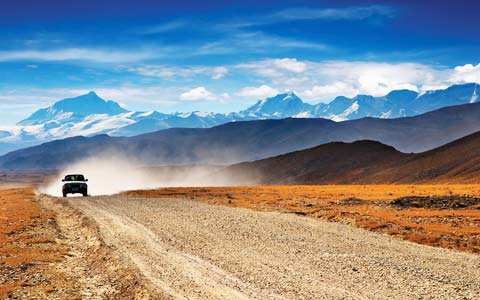
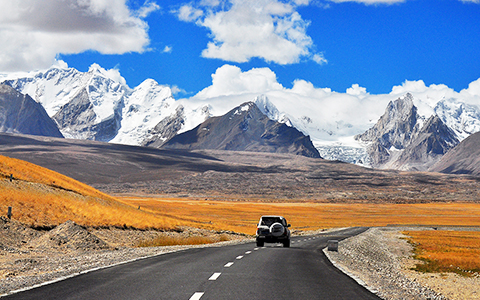
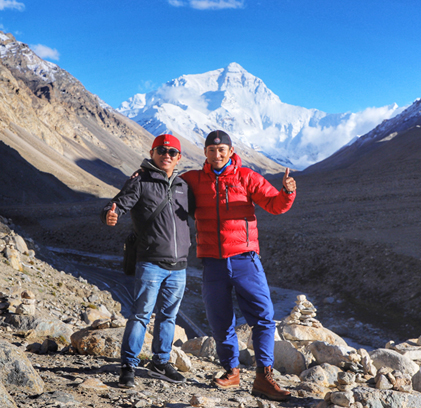
Experience the best of Tibet from Lhasa to Everest Base Camp with stunning Himalayan views!
#7 Tibetan Custom: Use Both Hands When Giving or Receiving Items
In Tibetan culture, using both hands when giving or receiving something is considered respectful and courteous. This custom is commonly practiced when exchanging gifts, receiving a Khata, accepting tea, or handing over important items.
Using both hands symbolizes sincerity and gratitude. This small daily habit is easy to follow but helps you show respect and connect more naturally with local people. Whenever you are unsure, using both hands is usually a safe and respectful choice.
#8 Tibetan Custom: Learn the Meaning of Khata and "Tashi Delek"
The Khata and the greeting "Tashi Delek" are two of the most recognizable symbols of Tibetan hospitality and greeting traditions. Offering a Khata or greeting someone with "Tashi Delek" is one of the simplest ways to show friendliness and respect.
A Khata is a traditional white ceremonial scarf that symbolizes purity, goodwill, blessings, and respect. It is commonly offered during religious visits, festivals, weddings, family celebrations, and welcoming ceremonies.
When you join one of our Tibet tours, your guide will welcome you with a traditional Khata upon your arrival at the airport or railway station, marking the beginning of your unforgettable journey across Tibet.
"Tashi Delek" is the most common Tibetan greeting. It is often translated as "good luck," "best wishes," or "auspicious blessings." Learning this simple phrase is an excellent way to show friendliness and respect. You can use it when greeting locals, saying goodbye, or exchanging good wishes during Tibetan festivals.
 When you join one of our Tibet tours, your guide will welcome you with a traditional Khata upon your arrival.
#9 Tibetan Custom: Keep Quiet and Respect the Sacred Atmosphere in Monasteries
Tibetan monasteries are not just tourist attractions; they are active religious centers where monks study, pray, meditate, and perform rituals throughout the day. For local residents, monasteries are sacred places of worship rather than sightseeing destinations.
When visiting monasteries, keep your voice low and avoid unnecessary noise. Mobile phones should be set to silent mode whenever possible. Running, shouting, or speaking loudly can disturb worshippers and disrupt the spiritual atmosphere.
 When visiting Tibetan monasteries and temples, always keep quiet and respect their sacred atmosphere.
#10 Tibetan Custom: Avoid Common Tibetan Taboos
Like every culture, Tibet has certain taboos that visitors should be aware of. Avoid stepping over religious objects such as prayer books, prayer beads, or ceremonial items. Do not point directly at sacred statues or touch religious artifacts unless invited to do so.
When visiting monasteries, avoid sitting on prayer cushions or altars reserved for monks and religious ceremonies. Mani piles can be found throughout Tibet. While you are welcome to place a stone on a mani pile as a gesture of prayer, you should never remove stones, step on the piles, or climb over them.
In Tibetan culture, the head is considered a sacred part of the body. Touching another person's head, even that of a child, without permission is regarded as disrespectful and should be avoided. If you are ever unsure about what is appropriate, observe local behavior or ask your guide for advice.
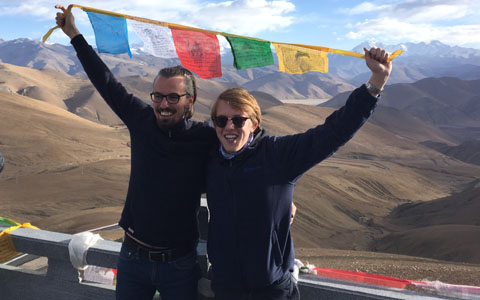
 You may hang your own prayer flags for blessings, but do not step on, cross over, or tear them.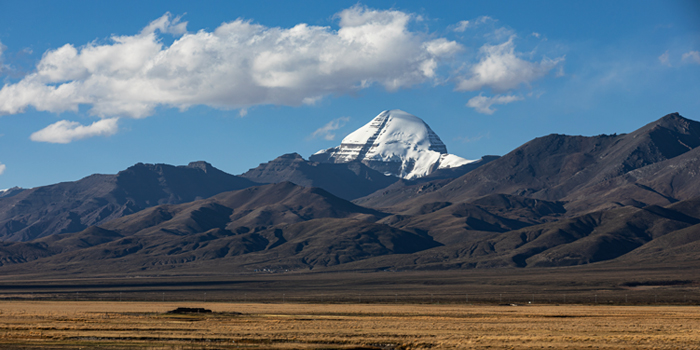
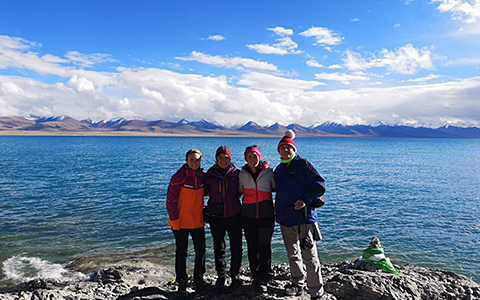
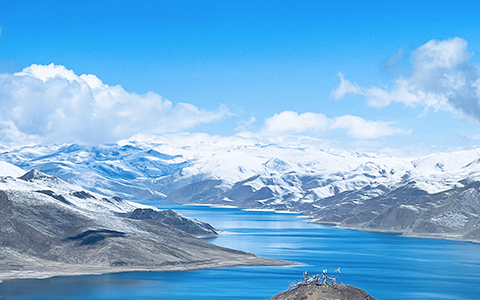
Discover Tibet's sacred Mount Kailash and Lake Manasarovar amid breathtaking Himalayan landscapes!
Quick Summary and FAQs About Tibetan Customs
Quick Summary
The most important Tibetan customs for visitors include walking clockwise around sacred sites, respecting prayer flags and religious objects, dressing appropriately in monasteries, asking permission before taking photos, and showing respect toward pilgrims and local religious traditions.
Learning the meaning of Khata and "Tashi Delek," accepting hospitality politely, and understanding common taboos can also help create more meaningful travel experiences. By following these customs, you can enjoy Tibet respectfully while gaining a deeper appreciation for its unique culture and spiritual heritage.
Q1: What are the most important Tibetan customs visitors should know?
The most important customs include walking clockwise around sacred sites, respecting religious objects, dressing modestly in monasteries, and showing respect toward pilgrims and local religious practices.
Q2: What does "Tashi Delek" mean?
"Tashi Delek" is the most common Tibetan greeting. It is often translated as "good luck," "best wishes," or "auspicious blessings."
Q3: What is a Khata in Tibetan culture?
A Khata is a traditional white ceremonial scarf that symbolizes respect, goodwill, blessings, and hospitality. It is commonly offered during welcoming ceremonies and special occasions.
Q4: Why do Tibetans walk clockwise around temples?
Walking clockwise is an important practice in Tibetan Buddhism. It symbolizes devotion, respect, and the accumulation of spiritual merit.
Q5: Can tourists visit Tibetan monasteries?
Yes. Most monasteries in Tibet welcome visitors. However, travelers should follow local etiquette by dressing respectfully, keeping quiet, and observing any photography restrictions.
Q6: Is it okay to photograph Tibetan monks?
Usually yes, but it is always polite to ask for permission first. Photography may also be restricted in certain monastery areas.
Q7: Why do Tibetans spin prayer wheels?
Prayer wheels contain sacred mantras. Spinning them clockwise is believed to bring blessings and spiritual merit.
Q8: What should I wear in Tibet?
Comfortable clothing is suitable for most situations, but modest dress is recommended when visiting monasteries and temples.
Q9: What should I avoid inside monasteries?
Avoid speaking loudly, touching sacred objects, taking photos in restricted areas, or disrupting religious activities.
Q10: What are some common Tibetan taboos tourists should avoid?
Avoid stepping over religious objects, climbing on mani piles, touching another person's head, or pointing directly at sacred statues.
Conclusion
Understanding Tibetan customs is one of the best ways to enrich your travel experience in Tibet. By walking clockwise around sacred sites, respecting religious symbols, showing courtesy toward local people, and observing monastery etiquette, you can travel more confidently and respectfully.
These traditions are not complicated rules but expressions of a culture shaped by centuries of faith, hospitality, and community values. By learning the top 10 Tibetan customs before your trip, you can avoid common mistakes and enjoy more authentic interactions with local people.
Want to know more about Tibetan customs? Feel free to contact us for expert travel advice and personalized planning for your dream Tibet tour.
 Facebook
 Tweet
Tweet
 Linkedln
 Reddit



Ask a Quick Question