





















Tibetan Animals: A Complete Guide to Wildlife in Tibet
Known as the “Roof of the World,” Tibet is not only famous for its stunning snow-capped mountains, sacred lakes, and ancient monasteries but also for its unique wildlife. From wild yaks roaming the grasslands to snow leopards hiding in remote mountain valleys, the Tibetan Plateau offers an unforgettable wildlife experience for travelers around the world.
Whether you are planning a photography tour, an overland adventure, or simply want to learn more about Tibetan wildlife, this guide will help you discover the most famous animals of Tibet, when and where to see them, and how to travel safely and respectfully.
Quick Facts About Tibetan Animals
- Where to See: Primarily found across the Tibetan Plateau, including northern Tibet, grasslands, lakes, and Himalayan regions
- Most Famous Animal: Yak — the iconic symbol of Tibetan life and nomadic culture
- Iconic Species: Wild yaks, Tibetan antelopes, snow leopards, and black-necked cranes
- Best Viewing Spots: Northern Tibet grasslands, Changtang Nature Reserve, and lakeside wetlands
- Best Time for Wildlife Watching: April–October
- Essential Travel Tip: Respect wildlife and keep a safe distance when taking photos
Contents
 Why Tibet’s Wildlife Is So Unique
Rare and Elusive Animals of Tibet
Best Places to See Wildlife in Tibet
Can Tourists Easily See Wildlife in Tibet?
Best Time to See Tibetan Animals
Tibetan Animals and Local Culture
Wildlife Watching Rules & Travel Etiquette
Why Tibet’s Wildlife Is So Unique
Tibet’s wildlife is shaped by the extreme environment of the Tibetan Plateau, which lies at an average elevation of over 4,000 meters. The air is thin, temperatures can drop far below freezing at night, and the landscape is often dry and windswept.
Facing such harsh conditions, Tibetan wildlife has evolved special physical features. Their thick fur protects them from freezing winds, while larger lungs and stronger hearts help them survive in low-oxygen environments. Some species even travel long distances across the plateau during seasonal migrations in search of better habitats.
Because of its remote location and relatively untouched wilderness, Tibet has become one of Asia’s most important habitats for high-altitude wildlife. Many species found here cannot easily be seen anywhere else in the world.
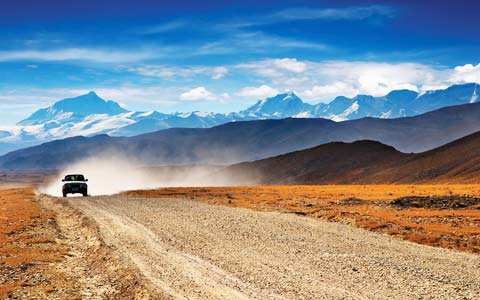
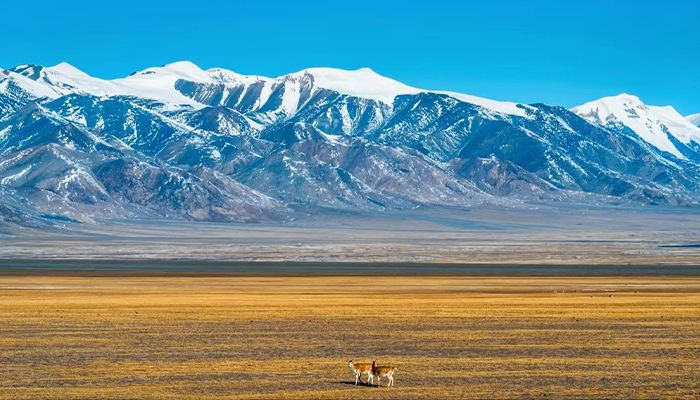 Tibet is home to vast wilderness areas and diverse wildlife species.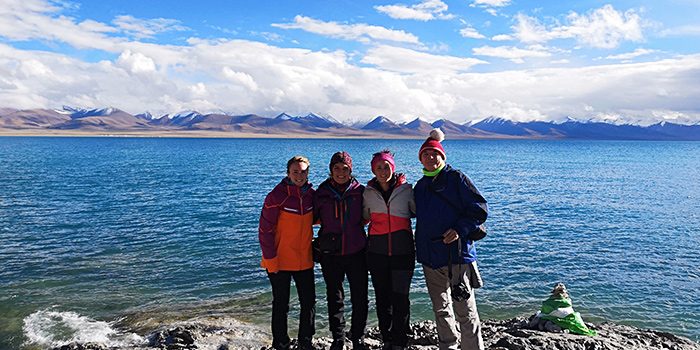

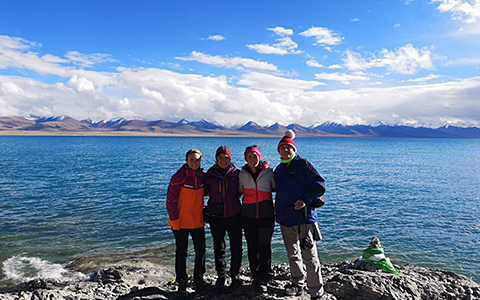
Join this unforgettable Tibet journey combining Mount Everest and sacred Namtso Lake during the best travel season!
Most Famous Animals of Tibet
Tibetan Antelope (Chiru)
The Tibetan antelope, also known as the chiru, is one of the most iconic animals of the Tibetan Plateau. Because of its graceful appearance, gentle nature, and elegant movements, it is often called the “spirit of the plateau.”
These elegant animals usually live in large groups on remote grasslands. You can find them mainly in protected areas such as Changtang Nature Reserve and Hoh Xil. They can run extremely fast, and watching a herd of Tibetan antelopes racing across the grasslands is undoubtedly a breathtaking sight.
The Tibetan antelope is also famous for its soft and warm fur, which has led to illegal hunting in the past. Today, strict conservation efforts have helped its population recover. As we share the same planet with these rare animals, it is important to admire them responsibly and protect their natural habitats while traveling in Tibet.
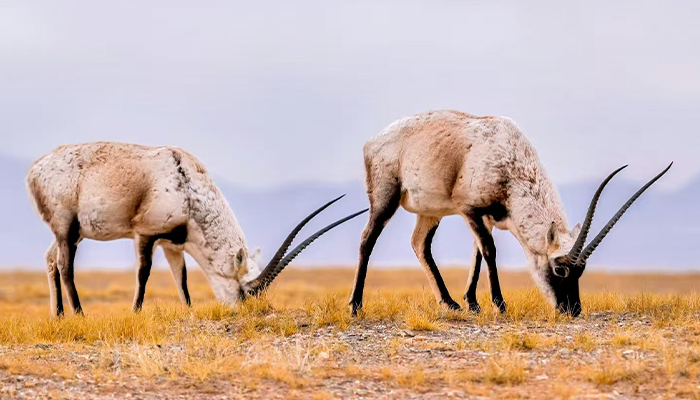 The Tibetan antelope is one of the most iconic animals of the Tibetan Plateau.
Wild Yak
The wild yak is the ancestor of the domestic yak and a symbol of strength on the Tibetan Plateau. As one of the largest animals living on the plateau, adult male wild yaks usually measure between 2.5 and 3.3 meters in body length and stand about 1.7 to 2 meters tall at the shoulder.
Adult male wild yaks typically weigh between 500 and 800 kilograms, while exceptionally large individuals can reach up to 1,000 kilograms. They are significantly larger than both female wild yaks and domestic yaks. They are also known for their thick dark fur and strong, sharp horns, which can grow to around 50 centimeters in length.
Unlike domestic yaks commonly seen near villages and nomadic camps, true wild yaks are much rarer and difficult to spot. They live mainly in remote northern Tibet, where human activity remains limited.
The yak holds deep importance in Tibetan culture. For centuries, domestic yaks have provided milk, butter, meat, wool, transportation, and fuel for Tibetan nomads. Yak butter tea remains one of the most famous traditional Tibetan drinks.
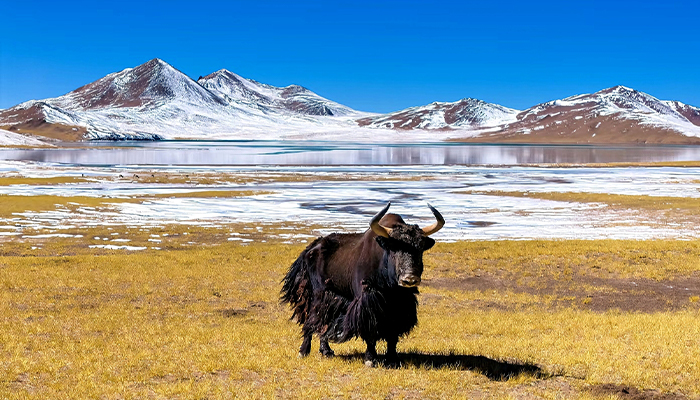 The wild yak is a symbol of strength on the Tibetan Plateau and an important part of Tibetan culture.
Snow Leopard
The Tibetan snow leopard, often honored as the “King of the Snow Mountains,” is listed as a national first-class protected animal in China. In Tibetan culture, the snow leopard is regarded as the guardian of sacred mountains and a symbol of good fortune and strength.
Snow leopards live in rocky mountain regions and remote valleys, where they hunt blue sheep, white-lipped deer, and other mountain animals. Their pale gray coats blend almost perfectly into rocky mountain landscapes, making them nearly invisible from a distance.
As one of the most mysterious and legendary creatures of the plateau wilderness, snow leopards are rare and hard to spot. They are active at dawn and dusk and usually avoid human contact, so seeing one in the wild is considered a lucky experience.
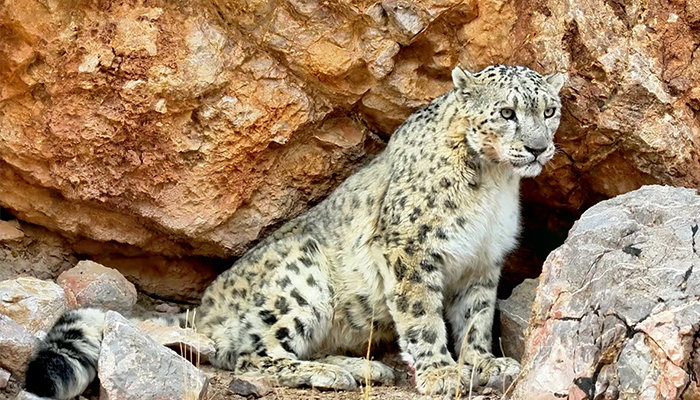 The snow leopard is regarded as the guardian of sacred mountains and a symbol of good fortune and strength.
Kiang (Tibetan Wild Ass)
Kiangs, also known as Tibetan wild asses, are among the easiest wild animals to spot during a Tibet tour. Their reddish-brown coats and white underbellies make them easy to recognize. These strong and graceful animals are mainly found in open plains and semi-desert regions such as Changtang, Hoh Xil, Ngari, Nagqu, and parts of Shigatse.
Kiangs are highly adapted to life on the plateau and can travel long distances in search of food and water. They often move freely across the grasslands in small groups or large herds. Kiangs can run extremely fast and are sometimes seen racing alongside vehicles across open grasslands, creating unforgettable moments for travelers.
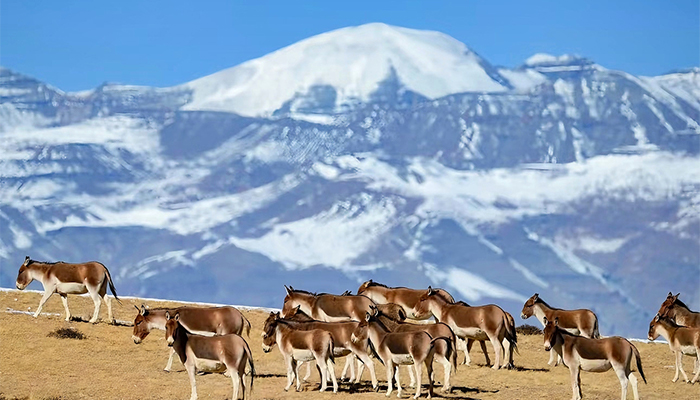 Tibetan wild asses, also known as kiangs, often move freely across the grasslands in small groups or large herds.
Black-Necked Crane
The black-necked crane is one of the most sacred birds in Tibetan Buddhism. Known for its graceful movements and elegant appearance, this rare crane symbolizes good fortune, peace, purity, and longevity. Black-necked cranes are usually found near wetlands, lakes, and river valleys.
Black-necked cranes are famous for their long seasonal migrations across the Tibetan Plateau. In spring, they travel from lower wintering areas to high-altitude wetlands. In autumn, they migrate back to warmer regions in central and southern Tibet for the winter.
The image of the black-necked crane can be found throughout Tibetan daily life and traditional art, including Thangka paintings, Tibetan carpets, and clothing decorations. In 2025, the black-necked crane was officially named the city bird of Lhasa, reflecting the deep cultural connection between local people and nature.
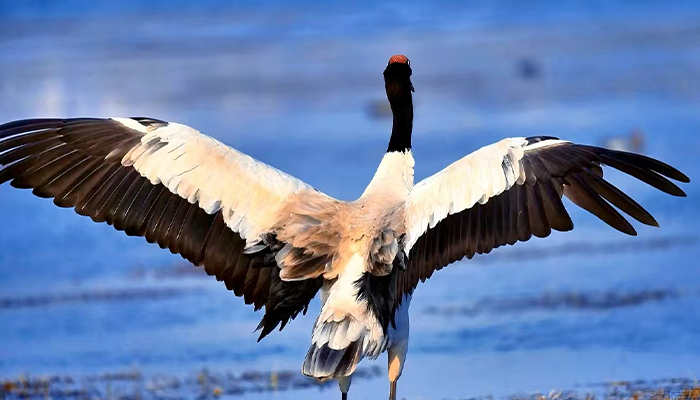 You can usually find elegant black-necked cranes near wetlands, lakes, and river valleys.
White-Lipped Deer
The white-lipped deer is considered the highest-altitude deer species in the world. Its name comes from the striking white fur around the mouth and throat, which creates a sharp contrast with its dark body fur. They mainly inhabit high-altitude alpine meadows, shrublands, and forest edges across the Qinghai–Tibet Plateau.
Tibet is considered one of the most important habitats for the white-lipped deer, with populations found in regions such as eastern Nagqu, Chamdo, Shannan, Nyingchi, parts of Shigatse, and areas around Lhasa. These deer usually live in groups, with males and females often forming separate herds outside the breeding season.
White-lipped deer are well known for their climbing and running abilities, allowing them to move easily across steep mountain slopes. During seasonal migrations, they often move between higher summer pastures and lower winter habitats.
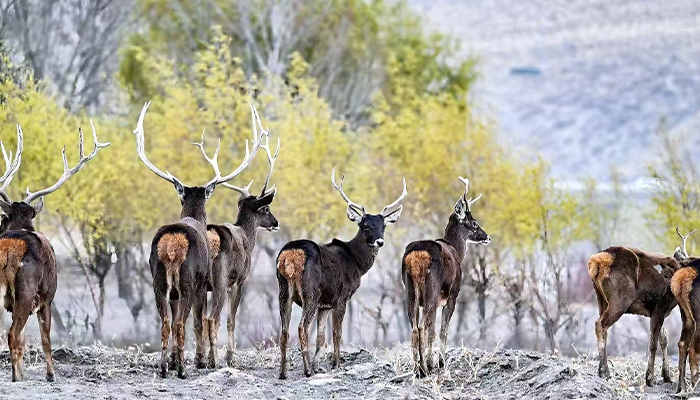 The white-lipped deer is easy to recognize because of the striking white fur around its mouth and throat.
Tibetan Mastiff
The Tibetan mastiff is native to the Tibetan Plateau and especially common in areas such as Changtang, Ngari, and Nagqu. Considered one of the oldest dog breeds in the world, Tibetan mastiffs have helped Tibetan nomads guard livestock from predators and protect monasteries and family homes for centuries.
Tibetan mastiffs are famous for their thick fur, loyalty, and strong territorial instincts. They are extremely devoted to their owners, but they remain highly alert to strangers and potential threats. You can often see them near nomadic tents, monasteries, and rural villages, but it is important to keep a safe distance.
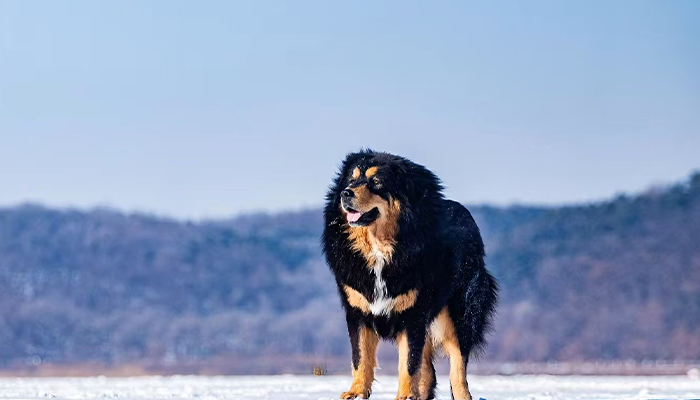 Tibetan mastiffs are good at guarding livestock from predators and protecting monasteries and family homes.
Himalayan Marmot
The Himalayan marmot is a cute, furry rodent that lives in grassland burrows. It has brown fur, a round body, and short legs. Marmots are very social and often live in small family groups. They are good at building large underground burrow systems that include multiple entrances, nesting chambers, storage areas, and escape tunnels.
These cute animals are active during the daytime, especially in the morning after sunrise. They are often seen standing upright near their burrows to watch for danger. To survive the cold winter, the Himalayan marmots hibernate from mid-October to April.
During warmer months, you can occasionally find them near grasslands, lakes, and roadside areas. They are popular subjects for wildlife photography because of their playful behavior and expressive faces.
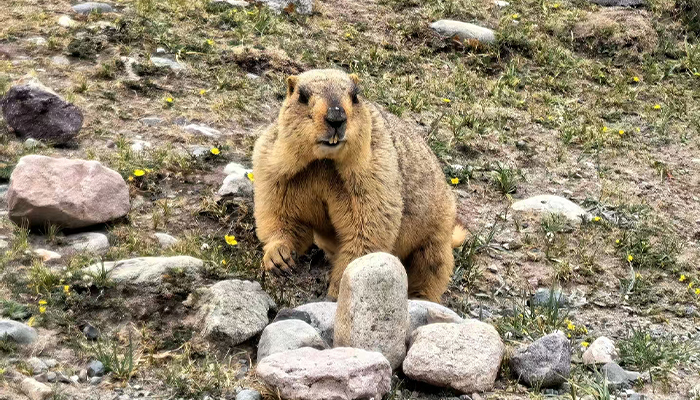 The Himalayan marmot is a cute rodent with brown fur, a round body, and short legs.
Tibetan Pika
The Tibetan pika is a small rabbit-like animal unique to the Qinghai–Tibet Plateau. It looks like a mouse but is actually more closely related to rabbits. With its tiny body and adorable appearance, the Tibetan pika is one of the most common and charming little animals on the plateau.
Pikas play an essential role in the ecosystem for several reasons. First, by digging burrows, they help aerate the soil and recycle nutrients. Second, they are an important food source for many predators in the region, such as wolves, foxes, and birds of prey. In addition, their burrows also provide shelter for various birds and reptiles.
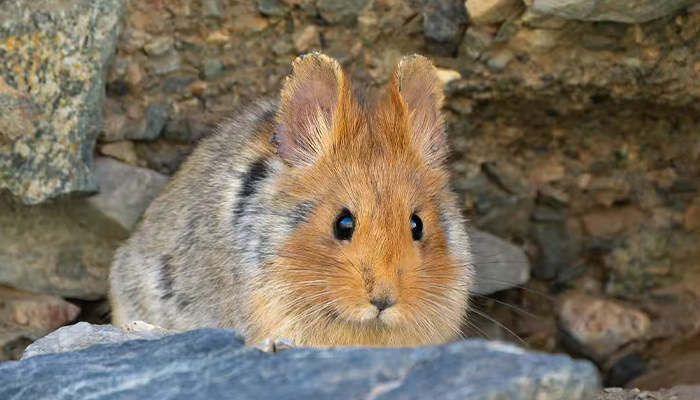 The Tibetan pika looks like a mouse but is actually more closely related to rabbits.
Tibetan Fox
The Tibetan fox has become increasingly famous online because of its distinctive square-shaped face and calm expression. It usually inhabits open alpine meadows, grasslands, and semi-desert areas. It is mainly active during the day and often rests quietly in open grasslands while observing its surroundings.
Unlike many other fox species, Tibetan foxes are usually monogamous and often live alone or in pairs. These foxes are highly adapted to plateau life and often hunt pikas in open grasslands, playing a key role in maintaining the ecological balance of the plateau ecosystem.
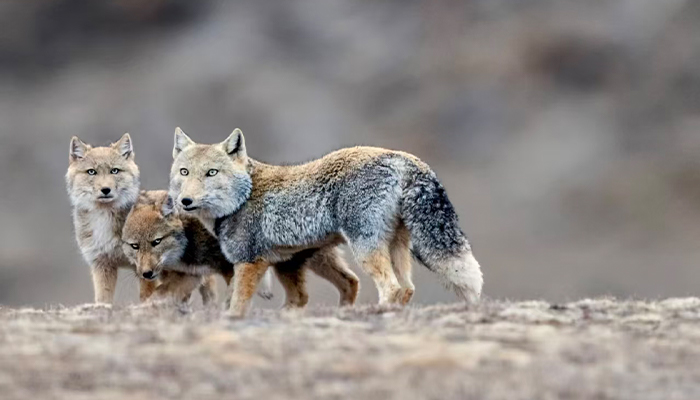 The Tibetan fox is famous online mainly because of its distinctive square-shaped face and calm expression.
Rare and Elusive Animals of Tibet
Himalayan Blue Bear
The Himalayan blue bear, also known as the Tibetan brown bear, is one of the rarest bear subspecies in the world. It gets its name from its unique bluish-gray fur. These bears mainly inhabit remote high-altitude grasslands, alpine deserts, and rocky areas of northern and western Tibet.
These large bears feed on pikas, marmots, roots, and carrion. They hibernate in caves in winter and usually live alone except for mothers with cubs. In Tibetan culture, the Tibetan blue bear is deeply respected as a powerful guardian of the plateau wilderness.
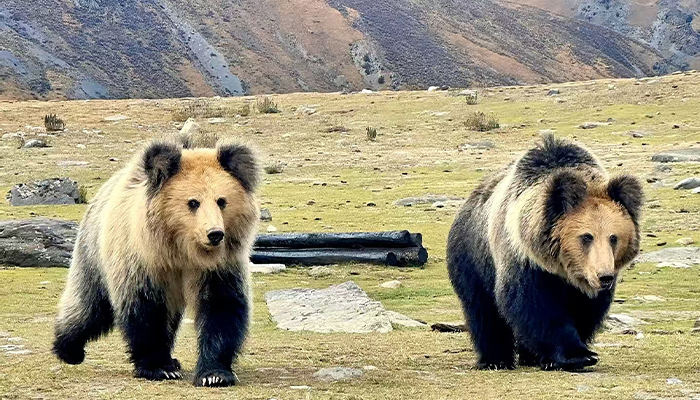 The Tibetan blue bear is deeply respected as a powerful guardian of the plateau wilderness.
Lynx
Lynxes are elusive mountain predators occasionally found in remote regions of Tibet. Their sharp hearing, strong hunting skills, and excellent camouflage make them highly successful hunters in harsh environments. They mainly prey on pikas, hares, marmots, birds, and other small animals.
In Tibetan culture, the lynx is often regarded as a symbol of strength, alertness, and wilderness. Because of its secretive nature and extremely low population density, spotting a lynx in the wild is considered a rare and unforgettable experience.
Pallas’s Cat
Pallas’s cat is a small, fluffy wild cat with a flat face and thick fur. It lives in rocky areas and is very good at hiding. This cute cat is extremely hard to find, so only a few lucky travelers and photographers can see it.
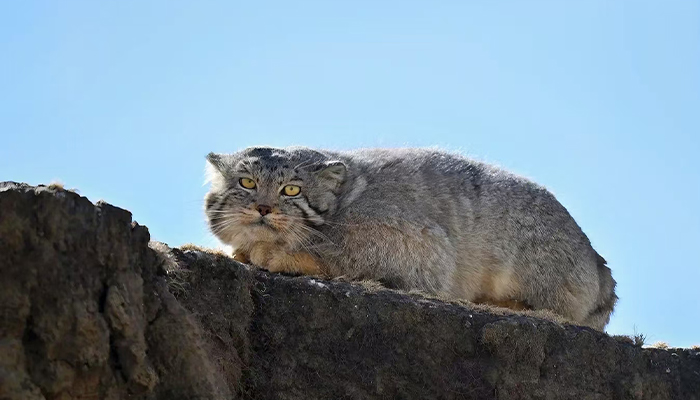 The Pallas’s cat looks like a fluffy little mountain spirit, with its round face, thick fur, and calm expression.
Corsac Fox
The corsac fox is a small fox species that lives in grasslands, semi-desert regions, and dry open plains in northern Tibet. Compared with the Tibetan fox, it has a more slender body, a pointed face, larger ears, and a black-tipped tail. Its sandy yellow or grayish-brown fur helps it blend naturally into dry grassland environments.
Corsac foxes often use abandoned burrows for shelter and are most active in the early morning and at night. They mainly feed on small rodents, insects, lizards, and bird eggs, obtaining most of their moisture from food rather than drinking water directly.
Best Places to See Wildlife in Tibet
Changtang Nature Reserve
Covering nearly 300,000 square kilometers, Changtang Nature Reserve is one of the largest and wildest nature reserves in the world. Located in northern Tibet, this enormous protected area features vast grasslands, lakes, and remote wilderness.
It is home to Tibetan antelopes, wild yaks, kiangs, wolves, and black-necked cranes. Most of the animals here live freely in their natural habitat. Changtang is also one of the best destinations in Tibet for wildlife watching and experiencing the beauty of the plateau wilderness.
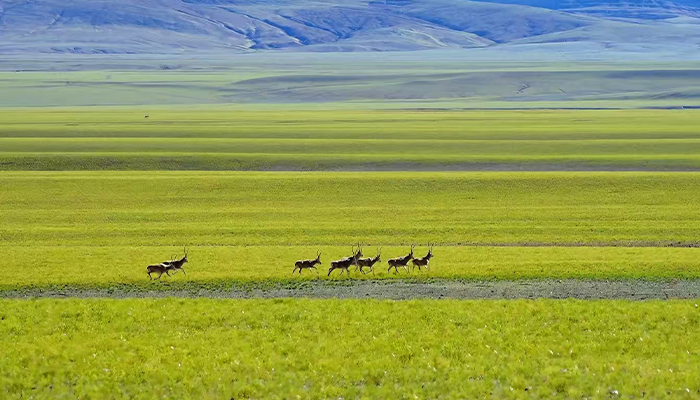 As one of the largest nature reserves in the world, Changtang Nature Reserve is an ideal place to watch wildlife.
Everest Base Camp Region
The Everest region is characterized by steep mountains and rocky slopes, which are perfect habitats for snow leopards, blue sheep, marmots, and Himalayan birds. Wildlife photography in the Everest region can be especially rewarding because of the dramatic mountain backdrop.
Namtso Lake Area
Namtso Lake is one of the most beautiful sacred lakes in Tibet. The grasslands and wetlands around the lake are home to marmots, pikas, various birds, and sometimes kiangs.
Migratory birds, including black-necked cranes, arrive at the Namtso wetlands from late March to May and migrate south from late September to late October. These periods are considered the best time for birdwatching and photography.
 The Namtso wetlands are home to many kinds of migratory birds.
Mount Kailash Region
The Mount Kailash region combines spiritual significance with rugged natural beauty. Travelers visiting this area may encounter wildlife on long overland journeys across remote valleys and grasslands. The surrounding meadows and valleys are home to a rich variety of wildlife, including deer, foxes, pikas, and migratory birds.
Hoh Xil National Reserve
Hoh Xil National Reserve is one of the most remote and untouched wilderness areas on the Tibetan Plateau. It covers about 45,000 square kilometers and is home to more than 230 animal species.
Although most parts of Hoh Xil are not open to independent tourism, the Qinghai–Tibet Railway and China National Highway 109 pass through the eastern part of the reserve. If you travel to Tibet by train, you may have the chance to spot wildlife such as Tibetan antelopes, wild yaks, kiangs, and Tibetan foxes through the train window.
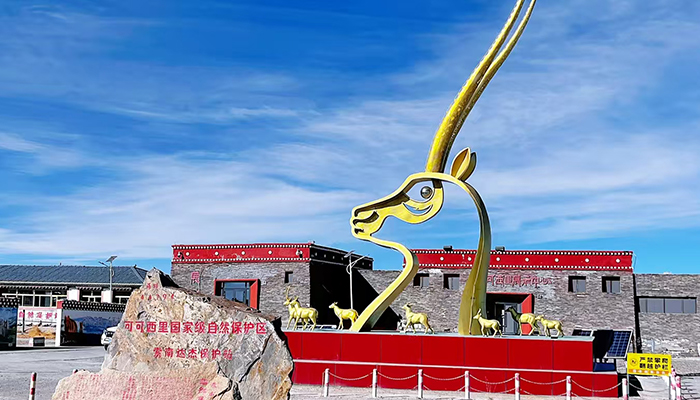 Hoh Xil National Reserve is a vast and untouched wilderness area on the Tibetan Plateau with diverse wildlife.
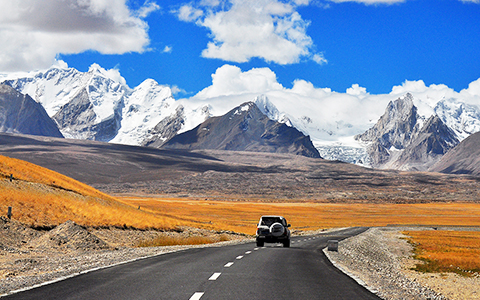
Experience the highlights of Tibet on our classic small group tour from Lhasa to Everest Base Camp!
Can Tourists Easily See Wildlife in Tibet?
Yes, you can easily see many common Tibetan animals during a regular Tibet tour. Animals like kiangs, marmots, pikas, Tibetan foxes, and various birds are widely seen on grasslands and near lakes. If you pass through Tibetan villages, you can easily see domestic yaks, Tibetan sheep, and Tibetan mastiffs.
However, rare and elusive animals such as snow leopards, Pallas’s cats, and wild yaks are usually found only in remote areas and require a good deal of luck to spot. These Tibetan animals move freely across enormous landscapes, and sightings depend on weather, season, patience, and luck.
If you are interested in wildlife watching or photography, we highly recommend a multi-day Tibet overland tour through northern Tibet, where human activity is limited and the landscapes remain largely untouched.
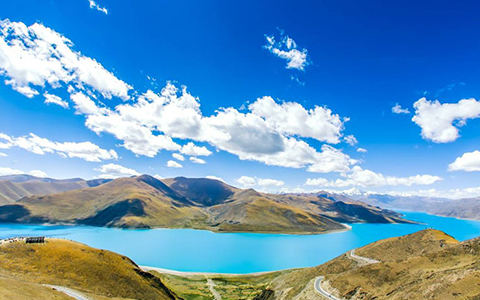
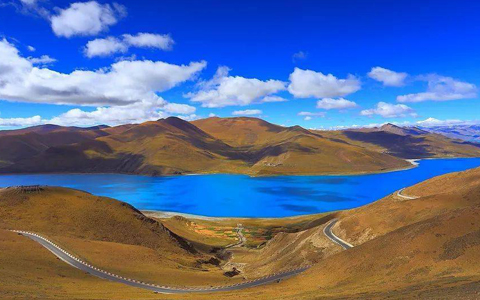
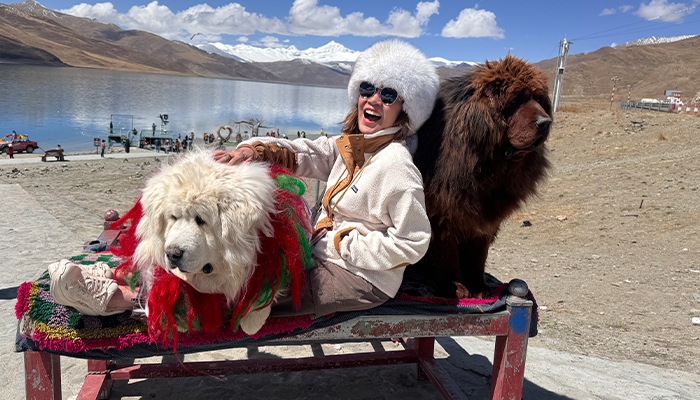 You can enjoy close interactions with Tibetan mastiffs by the sacred Yamdrok Lake.
Best Time to See Tibetan Animals
The best time for wildlife watching in Tibet is generally from April to October. In spring, some animals emerge from hibernation after the harsh winter, and migratory birds return to wetlands. Summer brings warm temperatures and the greenest grasslands, making it the best season for seeing large groups of animals roaming across the plateau.
Autumn is considered one of the best seasons for wildlife photography. Clear skies, golden grasslands, and dramatic mountain scenery create excellent conditions for capturing Tibetan landscapes and animals.
Winter travel is possible but much more challenging. Heavy snow, freezing temperatures, and limited road access make wildlife viewing more difficult.
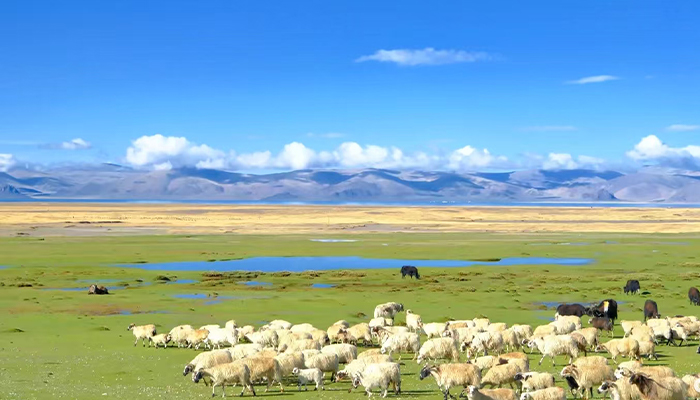 With warm temperatures and green grasslands, summer is ideal for seeing animals roaming across the plateau.
Tibetan Animals and Local Culture
Animals in Tibetan Buddhism
Tibetan Buddhism teaches kindness and respect for all living things. Many animals are seen as sacred and bear spiritual meanings. For example, the yak symbolizes strength, perseverance, and guardianship of the plateau, while the black-necked crane stands for peace, longevity, and purity.
Wildlife in Nomadic Traditions
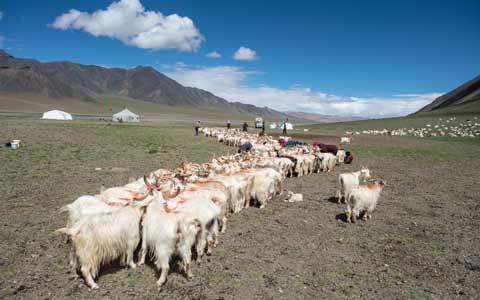
Tibetan nomads depend on yaks, sheep, and horses for survival. Yaks provide milk, meat, wool, and transportation. Nomads have lived in harmony with animals for thousands of years. They respect wild animals and do not disturb their habitats. This traditional lifestyle helps protect Tibet’s natural environment.
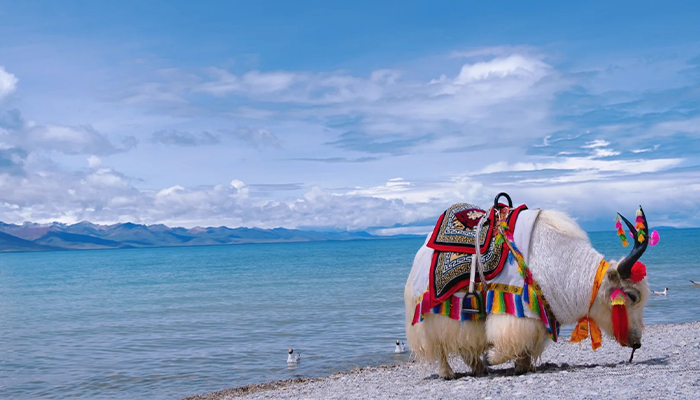 Domestic yaks are important traditional transport animals in Tibet, and you can enjoy yak riding at Namtso Lake.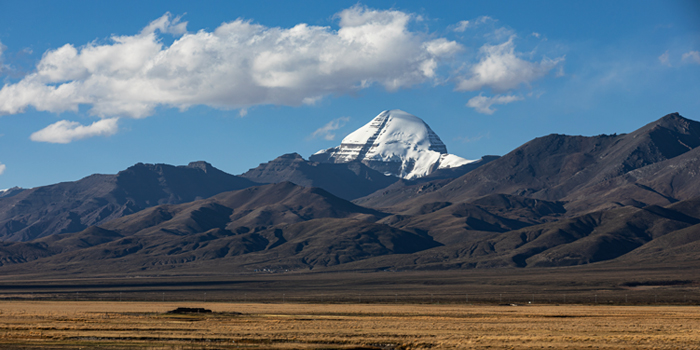
Embark on a spiritual adventure to Mount Kailash and Lake Manasarovar across the breathtaking landscapes of western Tibet!
Wildlife Watching Rules & Travel Etiquette
Keep a Safe Distance
You should always keep a safe distance from wild animals and avoid making loud noises or sudden movements. This keeps you safe and reduces stress on animals. Do not feed wildlife, as this can negatively affect their natural behavior and health.
Avoid Off-Road Driving in Wildlife Habitats
Off-road driving can damage fragile grasslands, wetlands, and animal habitats on the Tibetan Plateau. Many wild animals rely on these environments for food, shelter, and breeding. Protecting the plateau ecosystem helps preserve Tibet’s wildlife for future generations.
Respect Local Beliefs About Sacred Animals
Many Tibetan people believe certain animals, such as black-necked cranes, yaks, and snow leopards, hold deep spiritual significance and should be respected. When visiting monasteries, villages, or sacred sites, you should avoid disturbing animals and always respect local customs and traditions.
Wildlife Photography Tips: Do Not Chase or Disturb Animals
Wildlife photography in Tibet can be an unforgettable experience, but animals should never be chased, surrounded, or frightened for better photos. Using zoom lenses and observing wildlife quietly and patiently from a distance are the best ways to photograph animals responsibly.
Summary and FAQs About Tibetan Animals
Quick Summary
Tibet is a paradise for high-altitude wildlife. From Tibetan antelopes and wild yaks to black-necked cranes and snow leopards, the Tibetan Plateau is home to many rare and iconic animals that have adapted to extreme environments.
The vast grasslands, wetlands, mountains, and remote wilderness areas are some of the best places to watch wildlife roaming freely across the plateau. Always remember to respect local traditions and protect wildlife habitats to enjoy a meaningful and unforgettable journey through Tibet.
Q1: What is the most famous animal in Tibet?
The yak is probably the most famous animal in Tibet because it is deeply connected to Tibetan nomadic life, culture, transportation, and food traditions.
Q2: What is the most sacred animal in Tibetan culture?
Many animals are considered sacred in Tibetan culture, especially black-necked cranes, snow leopards, and yaks, which symbolize peace, strength, purity, and spiritual protection.
Q3: Where is the best place to see wild animals in Tibet?
Northern Tibet, Changtang Nature Reserve, the Hoh Xil region, and grassland areas around Namtso Lake are among the best places for wildlife watching in Tibet.
Q4: Are Tibetan animals dangerous?
Most Tibetan animals avoid humans and are not dangerous if observed from a safe distance. However, wild animals should never be approached, fed, or disturbed.
Q5: When is the best time to see wildlife in Tibet?
The best time for wildlife watching in Tibet is usually from April to October, when the weather is milder and many animals are more active.
Q6: What birds can be seen in Tibet?
Tibet is home to many bird species, including black-necked cranes, Himalayan birds of prey, bar-headed geese, wild ducks, and various migratory birds found near lakes and wetlands.
Conclusion
Just like the snow-capped mountains and sacred monasteries, Tibetan animals are also an important part of the plateau’s charm. Wild yaks, Tibetan antelopes, snow leopards, and black-necked cranes all hold deep cultural and spiritual significance for local people.
For travelers, watching these unique creatures is a wonderful way to connect with nature and better understand Tibetan culture. By traveling responsibly and respecting the fragile ecosystem of the plateau, you can make discovering Tibetan wildlife one of the most memorable parts of your Tibet journey.
If you are a nature lover, a wildlife photography enthusiast, or an adventurous traveler who hopes to connect more deeply with Tibetan wildlife and nature, feel free to contact us for further information and itinerary planning!





Ask a Quick Question