












Saga Dawa Festival 2026: Complete Guide to Celebrating and Traveling to Mount Kailash
Saga Dawa Festival is the most sacred festival in Tibet. It commemorates the birth, enlightenment, and nirvana of Buddha Shakyamuni. During this special time, good deeds are believed to carry multiplied spiritual merit.
In 2026, Saga Dawa coincides with the Year of the Horse in the Tibetan calendar, making it an especially auspicious year. Completing the Kailash Kora during this sacred festival is believed to bring greatly increased merit compared with an ordinary year.
Whether you are a pilgrim on a Kailash Manasarovar pilgrimage or a traveler eager to explore Tibetan culture, Saga Dawa Festival 2026 offers a unique opportunity you won’t want to miss.
This guide covers everything you need to know, including festival dates, rituals and activities, celebrations at Mount Kailash and Lhasa, recommended tour itineraries, and practical tips for making the most of the festival.
Keep reading to discover how you can be part of this once-in-a-lifetime experience!
Contents
 What is Saga Dawa Festival? Basic Facts You Should Know
What is the History of Saga Dawa Festival? Why Is It Celebrated?
When is Saga Dawa Festival Celebrated in 2026?
What are the Main Activities and Rituals of Saga Dawa Festival?
Saga Dawa Festival at Mount Kailash: The Spiritual Highlight
Saga Dawa Festival in Lhasa: How to Celebrate the Holy City
How to Enjoy a Saga Dawa Festival Tour in 2026?
Practical Tips for Attending the Saga Dawa Festival Smoothly
Conlcusion: Experience the Spiritual Power of Saga Dawa Festival 2026
What is Saga Dawa Festival? Basic Facts You Should Know
Saga Dawa Festival is the most important religious festival in Tibetan Buddhism. It takes place during the fourth month of the Tibetan lunar calendar and commemorates the birth, enlightenment, and nirvana of Buddha Shakyamuni, which are believed to have occurred during this sacred month.
For Tibetans, Saga Dawa is widely regarded as the holiest time of the year to accumulate merits. During this month, Tibetans focus on pilgrimage, circumambulation (kora), acts of compassion, and religious ceremonies.
Saga Dawa is celebrated throughout the Tibetan Plateau, especially at major sacred sites such as Mount Kailash, Lake Manasarovar, and the holy city of Lhasa. The festival sets the spiritual tone for the entire region and plays a central role in Tibetan religious life.
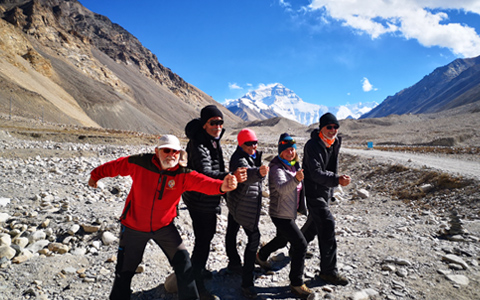
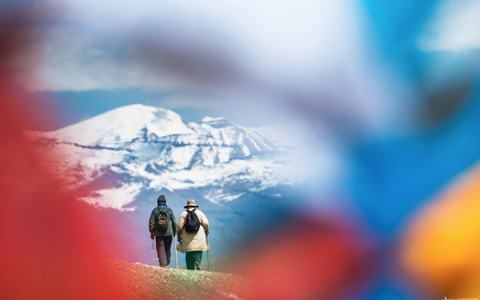
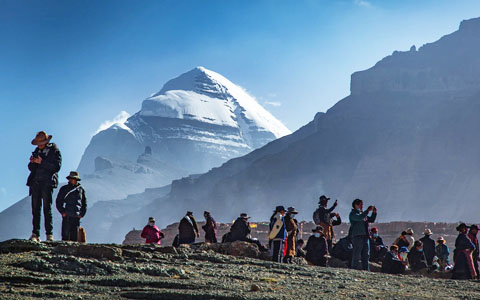
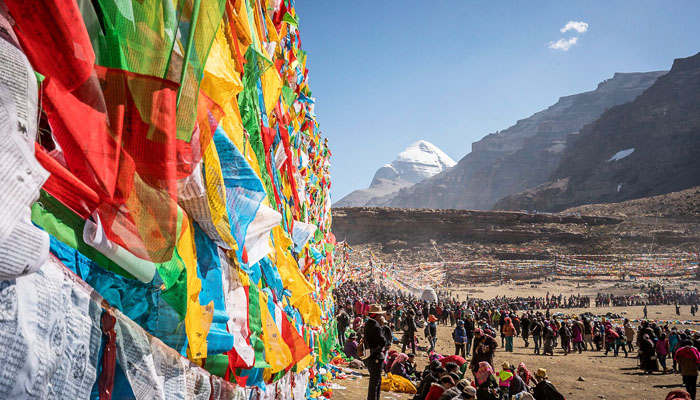 Mount Kailash is one of the major sacred sites of the Saga Dawa Festival.
What is the History of Saga Dawa Festival? Why Is It Celebrated?
The Historical Roots of Saga Dawa
Saga Dawa Festival originates from the life of Buddha Shakyamuni, the founder of Buddhism. It commemorates three significant events in his life:
- His birth in Lumbini, Nepal, during the full moon of the fourth Tibetan lunar month.
- His enlightenment under the Bodhi tree in Bodhgaya, India, marking his transformation into the Buddha.
- His nirvana, or passing away, in Kushinagar, India, after attaining complete liberation from the cycle of birth, death, and rebirth.
These pivotal moments are celebrated together during Saga Dawa, highlighting Buddha’s journey toward spiritual liberation.
Why Saga Dawa Is Celebrated?
Saga Dawa is celebrated because Tibetans believe that during this month, all positive actions — including prayers, kindness, and compassion — are multiplied many times over. It is regarded as the most powerful time to accumulate spiritual merit and purify the mind.
People focus on acts of compassion and generosity: helping others, giving alms, feeding animals, and avoiding harm to living beings. Prayer, meditation, and lighting butter lamps are key practices during the festival.
Saga Dawa is closely linked with pilgrimage, as devotees travel to sacred sites like Mount Kailash, Lake Manasarovar, and Jokhang Temple in Lhasa to perform kora and other religious rituals, seeking blessings, peace, and spiritual growth.
The Importance of Saga Dawa in Tibetan Culture
Saga Dawa is not only a religious festival but also a time when visitors can observe Tibetan culture and values in everyday life. During this sacred month, values such as compassion, mindfulness, and respect for life are clearly reflected in the actions of local communities.
Families and communities slow down, gather at monasteries, and participate in traditional practices, creating a calm, spiritual atmosphere. For travelers, Saga Dawa offers a unique opportunity to witness living Tibetan traditions and connect deeply with the heart of Tibetan Buddhism.
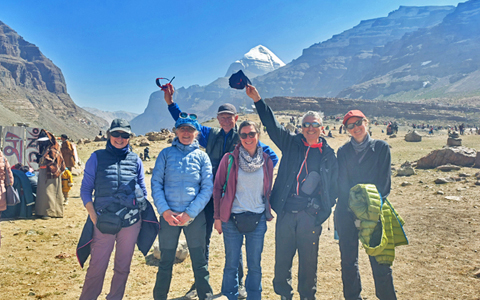
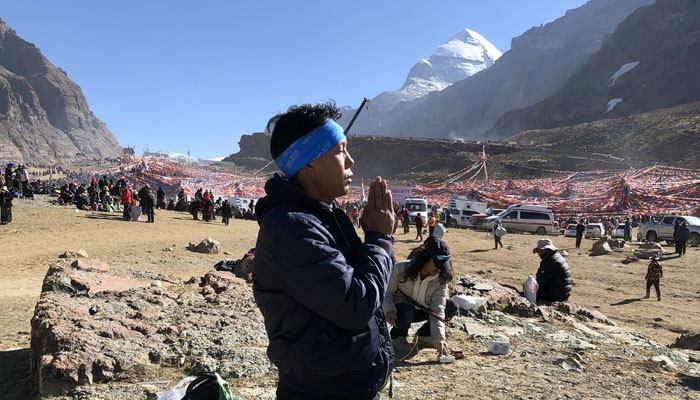 Our Tibetan tour guide prayed at Mount Kailash during the Saga Dawa Festival.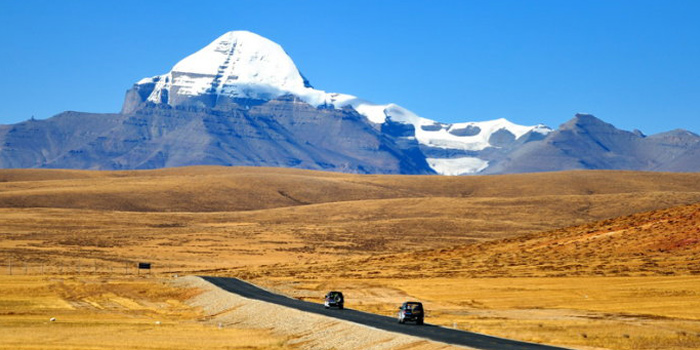

Join our best-selling Kailash Manasarovar tour for a hassle-free journey!
When is Saga Dawa Festival Celebrated in 2026?
Saga Dawa is Celebrated on April 15 in Tibetan Calendar
Saga Dawa is celebrated on the fifteenth day of the fourth month of the Tibetan lunar calendar. In Tibetan, Saga means "fourth", while Dawa translates to "month", which reflects the time of the festival and its name.
Because the Tibetan calendar differs from the Gregorian (solar) calendar, the exact date of Saga Dawa changes each year. It usually falls in May or June on the solar calendar.
Saga Dawa Festival Date in 2026: May 31
In 2026, the main festival day falls on May 31, which is the 15th day of the fourth Tibetan lunar month. This day is considered the most sacred and is when the largest religious activities and pilgrimages take place across Tibet.
How Long Does Saga Dawa Festival Last?
The Saga Dawa Festival lasts for about one month, with the main day falling on the 15th day of the fourth lunar month. It is one of the longest Tibetan festivals, and pilgrims and visitors can participate in spiritual activities throughout this period.
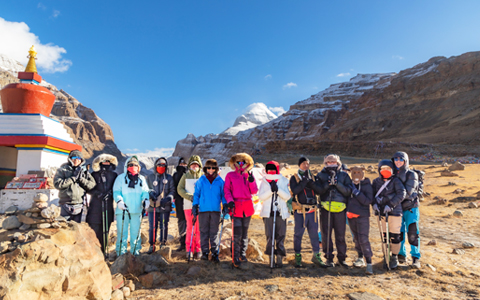
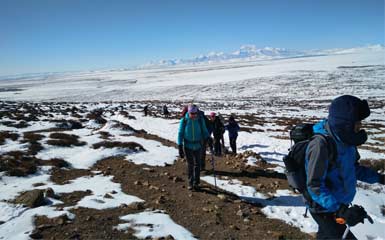
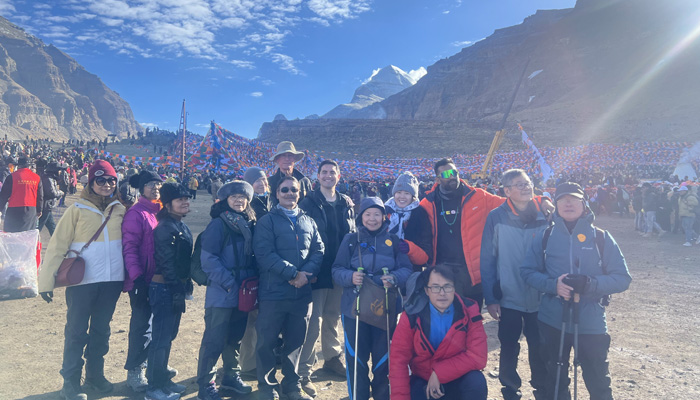 Our guests did the trek around Mount Kailash during the Saga Dawa Festival.
What are the Main Activities and Rituals of Saga Dawa Festival?
1. Kora Around Mount Kailash and Other Holy Sites
Kora is the ritual circumambulation of sacred sites, and it’s one of the most important practices during Saga Dawa. Pilgrims walk clockwise around holy places, chanting prayers or mantras as an act of devotion.
During this time, performing kora is believed to bring greater spiritual merit than at any other time of the year. The most significant kora is around Mount Kailash, but pilgrims also complete kora around sites like Lake Manasarovar, Barkhor Street, and the Potala Palace.
2. Raising Tibetan Prayer Flags During Saga Dawa
Raising Tibetan prayer flags is a common sight during Saga Dawa. The flags, printed with prayers and sacred symbols, are believed to spread blessings and peace with the wind.
During this month, hanging prayer flags is especially meaningful, as it’s believed that the prayers are more powerful during this sacred time.
3. Lighting Butter Lamps in Tibetan Temples
Lighting butter lamps is an important devotional practice during Saga Dawa. These lamps, typically made from yak butter, are offered in temples, monasteries, and homes.
Butter lamps symbolize wisdom and the dispelling of darkness. During Saga Dawa, they are lit to honor Buddha Shakyamuni and accumulate spiritual merit.
4. Almsgiving, Kindness, and Good Deeds
Acts of compassion and generosity are central to Saga Dawa. Tibetans believe that helping others during this time brings great merit.
Common acts include giving alms to monks, donating food or money to the poor, feeding animals, and avoiding harm to any living beings. These acts reflect the core Buddhist values of kindness and compassion.
5. Chanting Prayers and Mantras in Tibet
Chanting prayers and mantras is another key ritual during Saga Dawa. Monks lead prayer ceremonies, while laypeople chant mantras like Om Mani Padme Hum throughout the day.
These prayers are believed to purify the mind and cultivate compassion, creating a deeply spiritual atmosphere across Tibet.
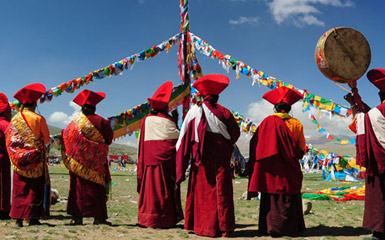
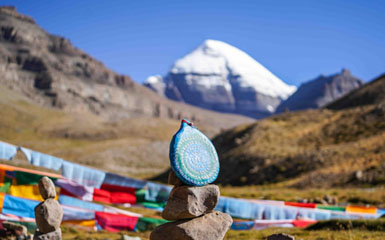
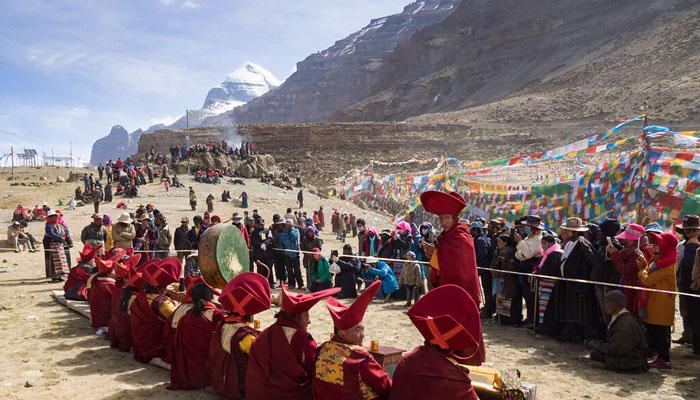 Locals are doing the rituals at Mount Kailash during the Saga Dawa Festival.
Saga Dawa Festival at Mount Kailash: The Spiritual Highlight
Among all the celebration sites across Tibet for Saga Dawa Festival, Mount Kailash is the most auspicious and central focal point. Pilgrims from around the world undertake the Kailash Mansarovar Yatra during this special time.
1. Kailash Kora during Saga Dawa: More Spiritual Merit
Saga Dawa Festival is one of the best times to undertake Mount Kailash kora, as the pilgrimage during this sacred month carries special significance.
- What to Expect for Kailash Kora during Saga Dawa Festival?
During Saga Dawa Festival, many more pilgrims gather around Mount Kailash, creating a strong spiritual atmosphere along the kora route. Compared with other times of the year, the mood is noticeably more solemn and devout.
As you walk, you will see devotees chanting prayers, performing full-body prostrations, and walking around stupas with prayer wheels. These sincere acts of faith offer a meaningful glimpse into Tibetan Buddhist devotion.
At the same time, the Kailash Kora rewards you with spectacular mountain views. Along the route, you can admire the changing colors of the snow-capped Mount Kailash, as well as wide valleys and high passes with panoramic views of the surrounding peaks.
- How Long Does the Kailash Kora Take and What Are the Challenges?
The Kora route around Mount Kailash is 52 kilometers (32 miles) long and is considered one of the most spiritually significant treks in Tibet. Most trekkers and tourists typically complete the Kora in 3 days, though local pilgrims often finish it in one or two days.
The main challenge is the high altitude, as the average elevation of the Kailash Kora is around 5,000 meters. The trek starts at about 4,560 meters in Darchen and reaches a peak of 5,630 meters at the Dolma La Pass.
Another challenge is the unpredictable weather at Mount Kailash. Temperatures can drop below freezing, especially at night. The region is known for intense UV radiation, sudden storms, and biting cold winds.
In addition to the altitude and weather, trekkers will encounter rugged terrain and steep climbs along the kora route. Therefore, it’s essential to prepare well in advance for the journey.
Traveling with a local Tibetan guide is highly recommended. Our experienced guides, each having completed the Mount Kailash trek over 70 times (some over 100 times), can ensure a smooth and safe experience throughout the trek.
- Spiritual Significance of Completing the Kailash Kora During Saga Dawa
Completing the Kailash Kora during Saga Dawa is considered especially auspicious. It’s believed that kora around Mount Kailash during this time brings extra spiritual rewards — one journey is thought to be equivalent to two or even three at other times of the year.
Plus, 2026 is a "Year of the Horse," considered highly sacred, where one Kailash kora is equivalent to 13 in a regular year. When these two sacred elements align, the spiritual significance of completing the Kailash Kora is believed to be further amplified.
Many pilgrims believe that the kora helps cleanse years of accumulated sins, purify karma, and even brings one closer to spiritual liberation or enlightenment. It is seen as a journey of self-reflection, devotion, and spiritual rebirth.
2. Tarboche Flagpole Ceremony at the Foot of Mount Kailash
The Tarboche Flagpole Ceremony is another important ritual held at Mount Kailash during the Saga Dawa Festival. It marks the beginning of the Kailash Manasarovar Yatra for Saga Dawa, followed by the Kailash Kora.
On the 15th day of the fourth lunar month, thousands of pilgrims, including Buddhists, Hindus, and Bon followers, gather at Tarboche to raise a new flagpole, about 30 meters high.
Before the new pole is erected, Lamas perform religious rituals to remove the old pole, and pilgrims offer new prayer flags, which are then attached to the new flagpole. After it is securely re-positioned, pilgrims perform a clockwise kora around the pole and Mount Kailash.
This ritual symbolizes the spiritual renewal of the sacred site and is believed to carry prayers and blessings to the heavens. As travelers, you can also join the locals in performing the kora around the new flagpole, receiving blessings along the way.
3. Sacred Walk Around Lake Manasarovar
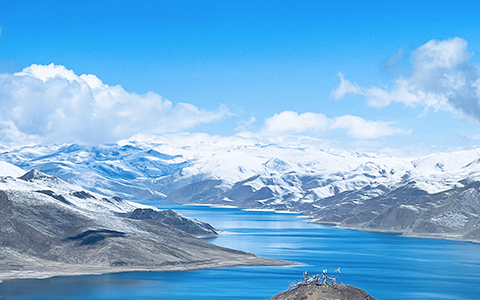
Lake Manasarovar is one of the Three Great Sacred Lakes of Tibet, together with Namtso Lake and Yamdrok Lake. In Tibetan belief, walking around Lake Manasarovar is considered just as spiritually meaningful as completing the Kailash Kora. Pilgrims walk clockwise around the lake to cleanse sins, accumulate spiritual merit, and seek liberation.
The sacred walk around Lake Manasarovar is usually undertaken after completing the kora around Mount Kailash. The full circuit is about 90 kilometers long and typically takes four to five days to complete on foot. Along the way, pilgrims often visit important spiritual sites near the lake, such as Chiu Monastery.
For tourists, you can also join pilgrims to touch the holy waters of Lake Manasarovar, or simply wash your face and hands with the waters, an act that carries deep spiritual meaning for both Hindus and Buddhists.
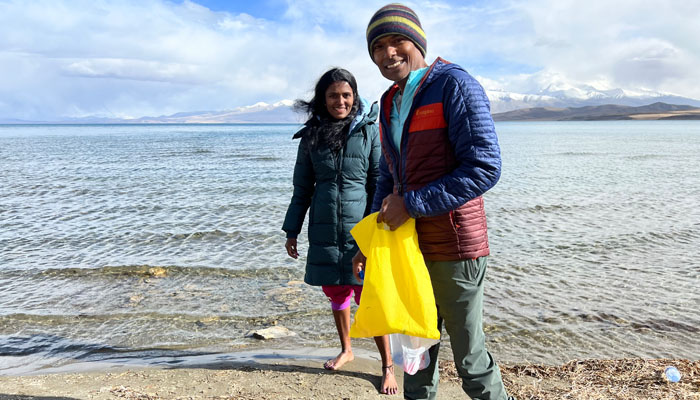 Our Hindus guests gladed visit the Lake Manasarovar during the Saga Dawa Festival.
Join our classic Kailash Manasarovar tour for an authentic experience!
Saga Dawa Festival in Lhasa: How to Celebrate the Holy City
Lhasa is the spiritual heart of Tibet, making it an essential part of any Tibetan festival tour. During Saga Dawa, the city is filled with unique opportunities to experience Tibetan Buddhist rituals and traditions.
1. Kora Around Barkhor Street or Potala Palace
One of the most common ways to observe Saga Dawa in Lhasa is by joining locals in kora, or ritual circumambulation.
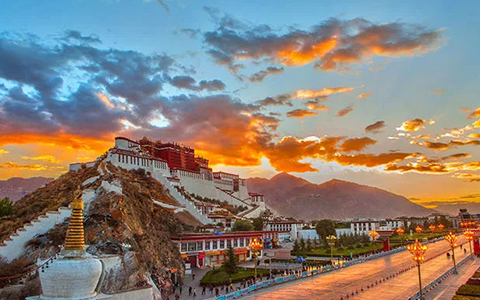
Thousands of pilgrims slowly make their way along the Lingkhor and Barkhor Street routes, walking clockwise around the sacred Jokhang Temple and Potala Palace, while murmuring prayers and sutras and spinning prayer wheels.
For travelers, joining this gentle flow offers a rare chance to observe Tibetan religious life up close and experience the spiritual atmosphere that defines Saga Dawa in Lhasa.
2. Visit Jokhnag Temple and Other Important Monasteries
During Saga Dawa Festival, Jokhang Temple becomes especially lively and is a must-visit for travelers. As the most sacred temple in Tibetan Buddhism, it draws pilgrims who come to pray, light butter lamps, and offer tsampa in quiet devotion.
Across the city, locals visit temples and monasteries throughout the day. Travelers can also explore important monasteries such as Sera Monastery and Drepung Monastery, where special prayer ceremonies are held during Saga Dawa.
These visits offer a peaceful and meaningful way to connect with Tibetan Buddhist traditions.
3. Local Picnics: A Living Festival Tradition
After completing kora, many local families head to nearby parks to enjoy relaxed picnics with friends and relatives. This joyful tradition adds a warm and human touch to Saga Dawa celebrations in Lhasa.
One of the most popular gathering spots is Zongjiao Lukang Park, located at the foot of the Potala Palace. Here, you can see locals dressed in traditional Tibetan clothing, sharing food, chatting, singing, dancing, and enjoying the festive atmosphere.
These picnics offer a wonderful glimpse into everyday Tibetan community life, beyond temples and religious rituals.
4. Releasing Fish for Compassion and Good Karma
Another meaningful practice visitors may witness during Saga Dawa is the release of fish into rivers or lakes, often along the Lhasa River. This simple act represents compassion and respect for life.
Watching locals gently release fish while offering silent prayers is a moving experience. It reflects the Buddhist values of kindness, mindfulness, and non-harm that are central to Tibetan culture.
Why Lhasa Is Special During Saga Dawa?
Celebrating Saga Dawa in Lhasa allows travelers to experience both the spiritual depth and the everyday warmth of Tibetan life. From sacred pilgrimages to joyful local gatherings, the city offers an authentic and memorable way to connect with Tibetan traditions during one of the most important times of the year.
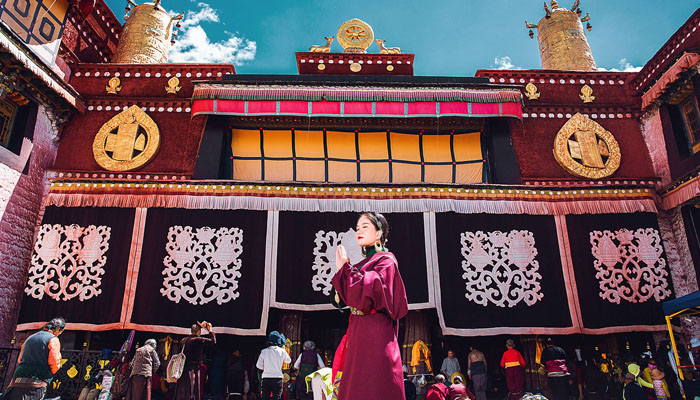 Local Tibetan pilgrims pay a visit to Jokhang Temple during the Saga Dawa Festival.
How to Enjoy a Saga Dawa Festival Tour in 2026?
Planning ahead is the key to fully enjoying the Saga Dawa Festival in Tibet. From choosing the right time to travel to selecting a suitable itinerary, good preparation will help you experience the festival smoothly and meaningfully.
Best Time to Visit Tibet for Saga Dawa Festival
The main day of the Saga Dawa Festival in 2026 falls on May 31. If you wish to witness the peak celebrations at Mount Kailash, it is recommended to arrive in Lhasa several days earlier. This allows time for sightseeing and acclimatization before traveling to Mount Kailash and reaching the area on or around the main festival day.
Although the most important ceremonies take place on a single day, Saga Dawa celebrations last for an entire month. You can visit Tibet at any time during this sacred month to experience the festival atmosphere across the region.
How to Get to Tibet: Flights and Trains
You can reach Tibet by either flight or train, depending on your schedule and travel style.
- Flights to Lhasa
Direct flights to Lhasa are available from major Chinese cities such as Beijing, Shanghai, Chengdu, Xi’an, and Chongqing. Flying is the fastest way to reach Tibet and is suitable for travelers with limited time.
- Trains to Lhasa
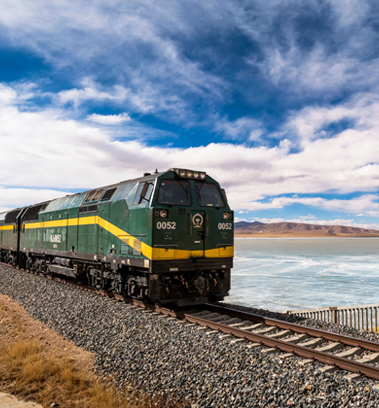
The Qinghai–Tibet Railway offers a scenic and gradual way to enter Tibet, helping travelers acclimatize more smoothly. Trains to Tibet depart from cities such as Beijing, Shanghai, Chengdu, Xi’an, and Xining, offering stunning views of the Tibetan Plateau along the way.
Recommended Saga Dawa Festival Tours to Mount Kailash
As independent travel in Tibet is not permitted, joining an organized tour is the most convenient and reliable way to experience the Saga Dawa Festival.
For Saga Dawa Festival 2026, we have specially designed Mount Kailash tours that align with the festival dates. Among them, two popular itineraries are highly recommended: the 15-day Lhasa to Mount Kailash Tour and the 16-day Lhasa to Kailash Manasarovar Pilgrimage Tour.
- Classic Route: 15-Day Lhasa to Mount Kailash Tour
This classic route combines the highlights of Tibet, including Lhasa, Mount Everest Base Camp, and Mount Kailash. It is ideal for travelers who wish to experience both iconic Tibetan landmarks and the spiritual heart of Saga Dawa.
You will first spend several days in Lhasa for acclimatization and sightseeing, then travel westward toward Shigatse, Yamdrok Lake, and Mount Everest Base Camp before continuing to Ngari.
The journey ends in Darchen, the starting point of the Mount Kailash Kora, where you can join pilgrims in celebrating the Saga Dawa Festival and complete the sacred three-day kora trek. The itinerary also includes a visit to Lake Manasarovar before returning to Lhasa via Gyirong and Tingri.
>> See More Details about 15-day Lhasa to Mount Kailash and Lake Manasarovar Tour
- In-depth Spiritual Experience: 16-Day Lhasa to Kailash Manasarovar Tour
This extended itinerary offers a deeper and more immersive spiritual journey during the Saga Dawa Festival.
Following a similar route to the 15-day tour, this 16-day Mount Kailash pilgrimage tour includes a special one-day excursion to Selung Monastery, the gateway to the Inner Kora, after completing the three-day Outer Kora. Here, you will have a rare opportunity to view the southern face of Mount Kailash up close—an experience few travelers ever have.
The journey also includes all major highlights from Lhasa to Shigatse and Everest Base Camp, combining Tibet’s cultural and natural wonders with deep spiritual fulfillment.
>> See More Details about 16-day Lhasa to Kailash Manasarovar Pilgrimage Tour
Why You Should Book Early for Saga Dawa 2026
Saga Dawa is one of the most important periods in the Tibetan travel calendar. In 2026, it also coincides with the Year of the Horse, which is considered especially auspicious for the Kailash Kora.
As a result, Saga Dawa 2026 is expected to be a peak season for visiting Mount Kailash, with pilgrims and travelers arriving from around the world. During this time, travel permits, accommodations, flights, and train tickets are in high demand.
To ensure a smooth journey to Kailash Manasarovar during the Saga Dawa Festival, it is highly recommended to book your tour as early as possible. Early booking helps secure your preferred itinerary, ensures smoother permit processing, and provides greater flexibility in travel arrangements.
Enjoy Saga Dawa Festival with Confidence
Every year, we successfully arrange tours for hundreds of travelers visiting Mount Kailash during the Saga Dawa Festival. As a trusted Tibet travel operator with over 30 years of experience, we ensure a smooth and well-organized journey, including the guaranteed arrangement of your Tibet Travel Permit.
Feel free to contact us and share your travel ideas — we’re happy to help you plan an unforgettable Saga Dawa Festival journey to Mount Kailash.
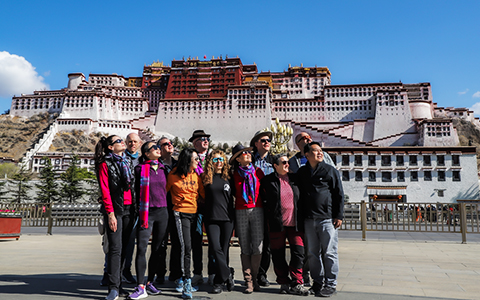
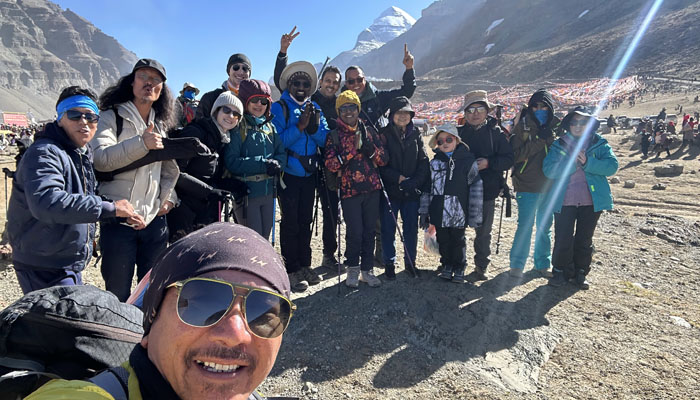 Join Mount Kailash tour with us during Saga Dawa Festival to ensure a smooth experience.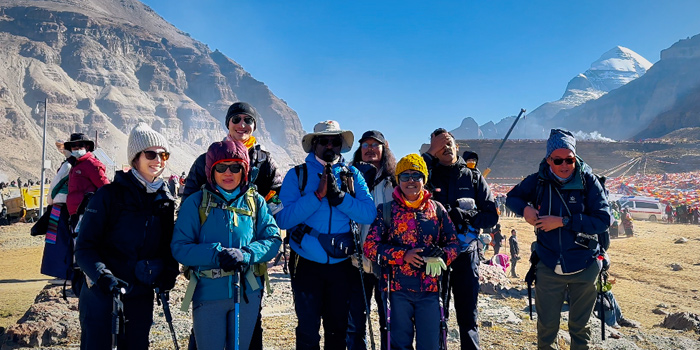
Get the deepest spiritual aspiration with our special Kailash Manasarovar trip!
Practical Tips for Attending the Saga Dawa Festival Smoothly
Saga Dawa Festival takes place in high-altitude areas and is deeply rooted in Tibetan religious traditions. A bit of preparation and awareness will help you enjoy the festival comfortably, respectfully, and safely.
1. Prepare for the High Altitude
Many Saga Dawa celebration sites, including Lhasa, Mount Kailash, and Lake Manasarovar, are located at high altitudes. Allowing time for gradual acclimatization is essential.
It is recommended to spend several days in Lhasa before traveling to higher regions. During this time, take it easy, avoid strenuous activity, and listen to your body. Walking slowly, resting well, and maintaining a relaxed pace will help your body adjust more smoothly.
2. Required Tibet Travel Permits Explained
All international travelers must obtain the Tibet Travel Permit to enter Tibet. Additional permits, including the Alien’s Travel Permit and the Military Permit, are required to visit remote areas such as Mount Kailash, Ngari, and Everest Base Camp.
These permits cannot be applied for independently and must be arranged through a licensed local travel agency. No worries — we will help handle all your Tibet travel documents once you book your tour with us.
To ensure smooth processing, it is recommended to contact us early and send us copies of your passport and Chinese visa well in advance.
3. Health, Packing and Hydration Tips
Weather conditions during Saga Dawa can vary greatly between day and night. Packing layered clothing is essential, including warm jackets, windproof outer layers, and sun protection such as hats and sunglasses.
Staying well-hydrated is especially important at high altitude. Drink plenty of water, avoid alcohol, and eat light meals. Simple health essentials such as sunscreen, lip balm, and basic personal medications are also highly recommended.
4. Cultural Etiquette and Environmental Respect
Saga Dawa is the most sacred time of the year for Tibetan Buddhists, so showing respect for local customs is essential.
When visiting temples and monasteries, dress modestly, walk clockwise around religious sites, and avoid loud conversations. Always ask before taking photos of people or religious ceremonies.
Environmental protection is also an important part of Buddhist practice. Avoid littering, respect wildlife, and follow the principle of leaving no trace, especially in sacred areas like Mount Kailash and Lake Manasarovar.
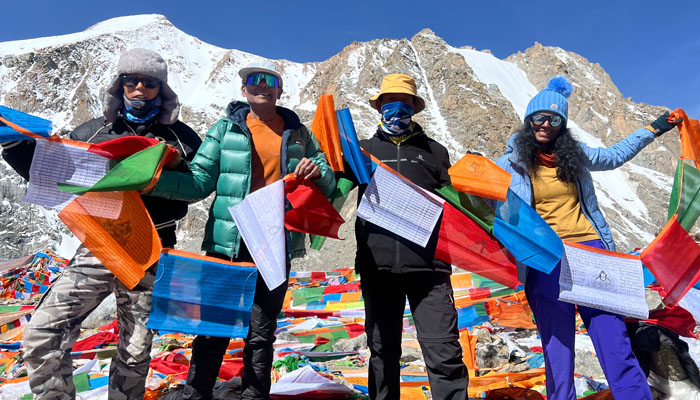 Be cautious to prevent sunburn and stay warm during the Saga Dawa Festival.
FAQs about Saga Dawa Festival
1. Can I Travel Alone to Tibet during the Saga Dawa Festival?
No. Independent travel is not allowed for international travelers in Tibet, including during the Saga Dawa Festival. You must join an organized tour arranged by a licensed local travel agency, which will also handle all required travel permits for you.
2. How about the Weather in Tibet Saga Dawa Festival?
Saga Dawa usually falls in May or June, when the weather in Tibet is generally pleasant and stable. You can expect clear skies, mild daytime temperatures, and cooler nights. This period is considered one of the best times to visit Tibet, especially for long-distance travel to western Tibet and the Mount Kailash Kora.
3. How to Attend the Tibet Saga Dawa Festival from Abroad?
To attend the Saga Dawa Festival from abroad, you first need to book an organized Tibet tour with a registered Tibetan travel agency. The agency will help secure all required permits and arrange your itinerary.
You will first travel to mainland China, then continue to Lhasa by flight or train. After arriving in Lhasa, you will join the pre-arranged tour, which includes transportation, local guides, and festival-related travel arrangements.
4. What to Eat During Tibet Saga Dawa Festival?
During Saga Dawa, many Tibetans follow a vegetarian diet as an act of compassion. You’ll find simple vegetarian Tibetan dishes, noodles, rice, and vegetables widely available, especially near monasteries. In cities like Lhasa, restaurants continue to offer a variety of Tibetan, Chinese, and Western food options.
5. How is the Accomodation in Lhasa During the Saga Dawa Festival?
Lhasa offers a wide range of accommodations, from budget guesthouses to comfortable mid-range and luxury hotels. However, Saga Dawa is a busy travel season, so hotels can fill up quickly. Booking accommodation early is strongly recommended to secure your preferred option.
6. Is There any Special Cultural Attire during the Saga Dawa Festival?
There is no required dress code for visitors, but many Tibetans wear traditional Tibetan clothing during the festival. Travelers are encouraged to dress modestly and respectfully, especially when visiting temples and monasteries.
7. How Many Days Does a Tibet Kailash Trip Last?
A Mount Kailash trip usually lasts between 13 and 16 days, depending on the itinerary. This includes time for acclimatization in Lhasa, overland travel across western Tibet, and the three-day Kailash Kora.
8. How Much does a Tibet Kailash Saga Dawa Festival Tour Cost?
The cost of a Saga Dawa Festival tour to Mount Kailash varies depending on group size, route, and tour duration.
A standard 15-day Lhasa to Mount Kailash tour typically starts from USD 2,069 during regular travel periods. This price usually includes required permits, transportation, accommodation, local Tibetan guides, entrance fees, and other essential services.
During the Saga Dawa Festival, prices may be slightly higher due to increased demand for hotels, guides, and transportation. For an accurate quote of Mount Kailash tour cost, it’s best to contact us with your preferred travel dates and itinerary.
Enjoy a wonderful Kailash Saga Dawa Festival with our one-stop services!
Conlcusion: Experience the Spiritual Power of Saga Dawa Festival 2026
The Saga Dawa Festival 2026 is one of the most meaningful times to visit Tibet, offering travelers a rare chance to experience Tibetan Buddhism at its spiritual peak.
From sacred rituals in Lhasa to the once-in-a-lifetime pilgrimage around Mount Kailash and Lake Manasarovar, this holy month brings together devotion, culture, and breathtaking landscapes in a truly powerful way.
For travelers, the key to a successful Saga Dawa journey is early planning, proper acclimatization, and traveling with a professional local team.
Our Mount Kailash tours during the Saga Dawa Festival are carefully designed to match the festival dates, ensure smooth permit arrangements, and provide experienced Tibetan guides who understand both the spiritual significance and practical needs of the journey.
From logistics and accommodation to on-the-ground support during the Kailash Kora, we take care of every detail so you can focus on the experience itself.
If you are ready to experience Tibet at its most sacred and inspiring moment, now is the time to join us. Contact us today and start planning your Saga Dawa Festival 2026 adventure with confidence.


Ask a Quick Question