











May or October: Which is the Best Month for a Tibet Overland Trip?
May and October are two of the best months for a Tibet overland trip. Both offer stable weather, good road conditions, and beautiful plateau scenery. However, they offer very different travel experiences, so choosing the month that fits your travel style really matters.
May is better if you prefer warmer daytime drives, longer daylight hours, melting turquoise lakes, and fresh spring landscapes. October is ideal if you care most about clear Mount Everest views, golden autumn scenery, and fewer crowds after China’s National Day holiday.
In this guide, we will compare May and October for Tibet overland travel in detail. From weather and scenery to mountain visibility, road conditions, travel costs, and crowds, you will get a clear picture of what to expect in each month.
Keep reading for practical tips to help you plan a smooth and enjoyable overland trip in Tibet.
May vs October Tibet Overland Trip at a Glance
| Travel Factor | May | October |
|---|---|---|
| Weather | Warmer days, easier for sightseeing | Sunny and dry, but colder mornings and nights |
| Scenery | Snowy mountains, melting lakes, fresh spring views | Golden grasslands, blue skies, autumn valleys |
| Everest Views | Good mornings, possible afternoon clouds | Usually clearer for Mount Everest |
| Road Conditions | Stable, with possible spring snowmelt | Stable, with possible icy mornings on high passes |
| Crowds | Avoid May 1 to 5; better after May 6 | Avoid October 1 to 7; better after October 8 |
| Travel Cost | Steady demand, especially near Everest | Better value after Golden Week |
Contents
 Tibet Weather in May vs October: Which Month Feels More Comfortable for an Overland Trip?
Tibet Scenery in May vs October: Spring Landscapes or Golden Autumn Views?
Mount Everest Visibility in May vs October: Which Month Offers Clearer Mountain Views?
Tibet Road Conditions in May vs October: Is It Safe for an Overland Trip?
Tibet Tour Cost in May vs October: Which Month Offers Better Value?
Tibet Travel Crowds in May vs October: Best Dates to Avoid Peak Holidays
Tibet Packing List for May and October: What to Bring for an Overland Trip?
May or October for Tibet Overland Travel: Which Month Fits Your Travel Style?
FAQs about Tibet Overland Trips in May and October
Conclusion: Is May or October Better for a Tibet Overland Trip?
Tibet Weather in May vs October: Which Month Feels More Comfortable for an Overland Trip?
When you spend several days on a Tibet overland trip, weather is not just about numbers on a forecast. It affects how comfortable you feel during long drives, sightseeing stops, monastery visits, and high mountain passes.
Both May and October avoid the heavy summer monsoon rains, but they feel very different. May brings warmer spring days and longer daylight hours, while October offers crisp, dry weather with colder mornings and nights.
May Weather: Warmer Days, Longer Daylight, and Gentle High-Pass Winds
Traveling in May lets you see the Tibetan Plateau transition from winter to late spring.
In Lhasa (3,650m) and Nyingchi (3,100m), daytime temperatures usually range from 15°C to 20°C (59–68°F), while nighttime temperatures hover around 5°C to 8°C (41–46°F). This makes walking, sightseeing, and long scenic drives more pleasant.
One of the biggest advantages of May is the longer daylight hours—up to 13–14 hours in western Tibet. You have more time to visit monasteries, enjoy holy lakes, stop for photos, and take in the scenery without feeling rushed.
High passes like Kamba La (4,794m) or Karo La Glacier (5,039m) are generally calmer than in winter. Wind speeds at these elevations are typically 15–25 km/h, making stops for panoramic photos and reflections far more pleasant.
October Weather: Clear Sunny Days but Much Colder Nights
October is known for its clear, dry, and stable weather. After the summer monsoon ends, the Tibet weather in October brings bright, deep blue skies with very little rain. During the day, sunshine can feel warm and pleasant, especially in places like Lhasa and Shigatse.
The main difference is the temperature drop after sunset. Once the sun goes down, the dry plateau air cools quickly. Nights at Everest Base Camp or high-altitude stops such as Old Tingri can fall well below freezing, sometimes around -5°C to -10°C (23°F to 14°F).
October can also feel windier on high passes. At elevations around 5,000 meters, the wind chill can make the air feel much colder than the thermometer suggests, so warm layers are essential.
Tibet Weather in May vs October: Lhasa, Shigatse, and Everest Base Camp
To help you pack and prepare accurately, here is a detailed breakdown of what the weather actually looks like on the main overland route during both months:
| Destination | Month | Avg. Temp | Rainfall | Wind | Sightseeing Comfort |
|---|---|---|---|---|---|
| Lhasa | May | 5°C to 20°C | Low to moderate | Mild to moderate | Very comfortable for city walks and monastery visits |
| Lhasa | October | 0°C to 18°C | Very low | Moderate | Comfortable in the daytime, chilly after sunset |
| Shigatse | May | 2°C to 19°C | Low to moderate | Moderate | Good for sightseeing and road travel |
| Shigatse | October | -2°C to 17°C | Very low | Moderate to strong | Pleasant by day, cold in the morning and evening |
| Everest Base Camp | May | -8°C to 13°C | Low | Moderate | Manageable with warm layers; mornings are more comfortable |
| Everest Base Camp | October | -10°C to 10°C | Very low | Stronger wind possible | Best for sunny days, but much colder at night |
Quick Weather Verdict:
- For warmer daytime sightseeing and longer daylight hours, May feels more comfortable. For drier air, clearer skies, and better mountain visibility, October is stronger, especially for Everest views. However, October nights at Everest Base Camp can be much colder, so warm layers are essential.
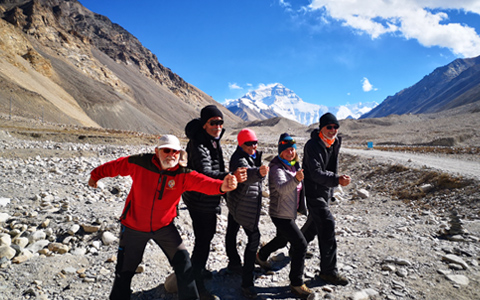
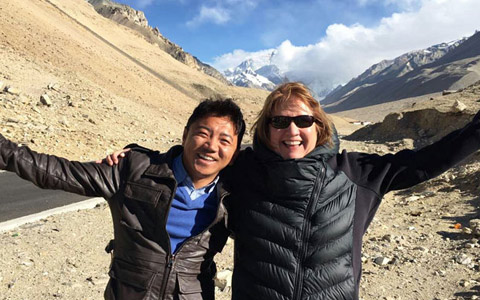
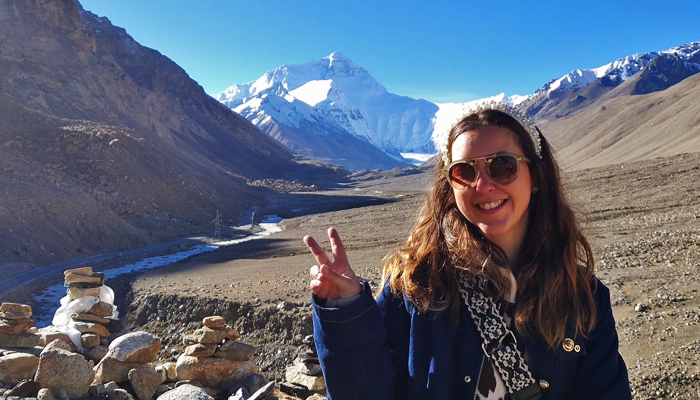 Our guests enjoy clear views of Mount Everest when touring Tibet in October.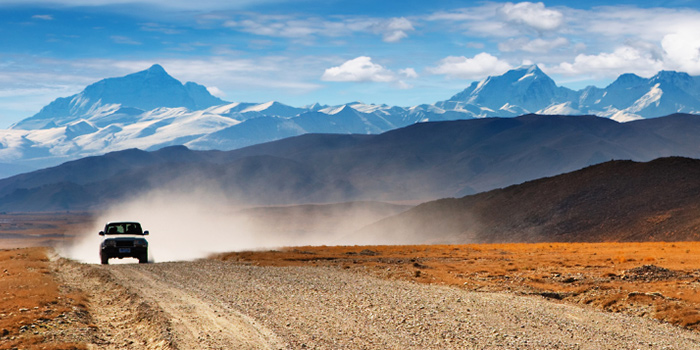

Explore exotic Tibet on our classic overland journey across the Roof of the World!
Tibet Scenery in May vs October: Spring Landscapes or Golden Autumn Views?
When comparing Tibet scenery in May vs October, the biggest difference is the color and feeling of the landscape. May feels fresh, bright, and full of spring energy, while October feels golden, crisp, and highly photogenic.
Tibet in May: Snowy Mountains, Melting Lakes, and Fresh Spring Colors
Tibet in May is a beautiful late-spring month on the plateau. The scenery feels bright, open, and refreshing, especially along classic overland routes from Lhasa to Shigatse, Everest Base Camp, or Namtso Lake.
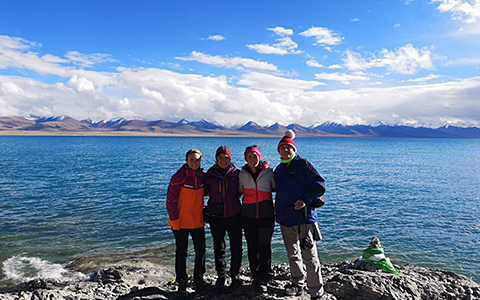
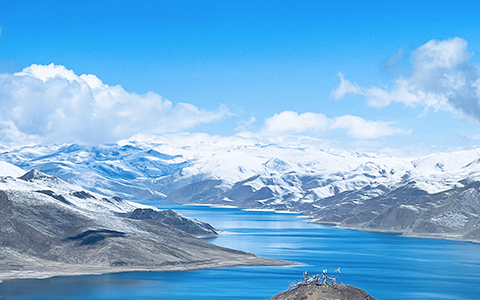
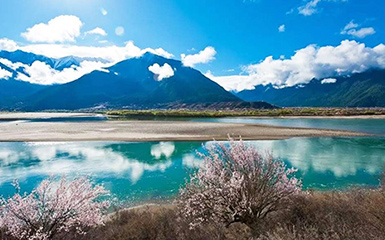
One of the most charming sights in May is the mix of blue water and remaining ice on high-altitude lakes. Lakes such as Yamdrok Lake and Namtso Lake usually begin to thaw in April, and by May, more of the water turns bright turquoise or deep blue. In some colder or higher areas, you may still see patches of ice near the shore, creating a special late-spring view.
High mountain passes can still hold snow in May. When you drive over viewpoints such as Gawula Pass on the way to Everest Base Camp, the snow-covered mountains often look especially grand and photogenic.
May is also lovely for travelers who enjoy fresh, bright landscapes. The days are longer, the light feels softer, and the scenery has a clean late-spring feeling before the summer rainy season arrives.
Tibet in October: Golden Grasslands, Autumn Valleys, and Clear Blue Skies
Tibet in October shows a completely different side of the plateau. After the summer monsoon ends, the sky often becomes clearer, the air feels drier, and the landscape turns beautifully golden.
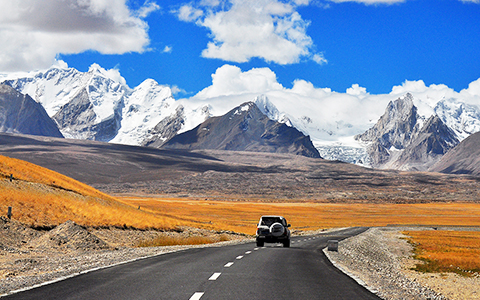
Grasslands and alpine meadows gradually turn yellow and gold, especially along overland routes through Shigatse, Tingri, and the Everest region. Instead of the fresh spring colors of May, October gives you wider golden fields stretching toward snow-capped mountains.
Valleys and roadside vegetation also show warm autumn colors. In some lower valleys, trees and shrubs turn yellow, orange, or brown, adding more layers to the scenery during long drives.
October is especially good for photography. The light is crisp and clean, the sky is often deep blue, and the golden landscape contrasts beautifully with white Himalayan peaks. If you want a more dramatic and photogenic Tibet overland trip, October is one of the strongest choices.
Quick Scenery Verdict:
- Choose May if you want snowy mountains, melting turquoise lakes, and fresh spring scenery.
- Choose October if you prefer golden grasslands, autumn valleys, clear blue skies, and a more photogenic road-trip atmosphere.
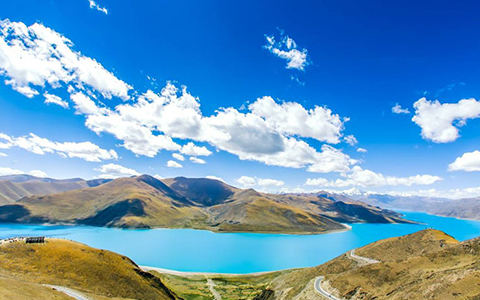
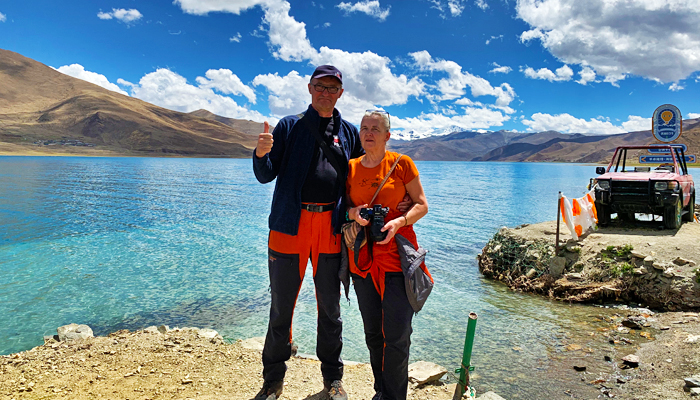 The water of Yamdrok Lake turns bright turquoise or deep blue in May.
Mount Everest Visibility in May vs October: Which Month Offers Clearer Mountain Views?
For many travelers, seeing the north face of Mount Everest is the highlight of a Tibet overland trip. However, mountain visibility in Tibet can change quickly. A clear blue sky in Lhasa does not always mean clear views at Everest Base Camp, about 600 kilometers southwest of Lhasa.
When comparing mountain visibility in May vs. October, the choice is simple: May offers dramatic snow-covered peaks, while October usually offers clearer skies and better long-distance views.
October: Best Chance for Clear Everest Views and Star Photography
If seeing Mount Everest clearly is your top goal, October is usually the best month.
- The Post-Monsoon Cleansing:
By early October, the Indian Ocean summer monsoon has ended. The wet air moves away, and dry continental air takes over. This makes the sky cleaner, drier, and deeper blue, with much less haze and cloud cover.
- The Golden Hour Timeline:
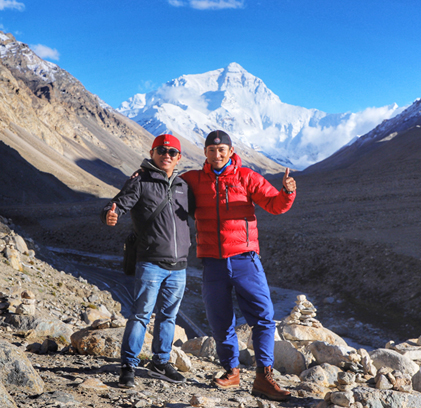
October often gives travelers a 90%+ chance of seeing the full north face of Everest clearly, making it one of the best months to visit Everest Base Camp.
In mid-October, sunset usually happens around 6:30 PM to 7:00 PM. This is when the summit may turn golden orange in the famous alpenglow. For photography, the best spots are Gawula Pass viewpoint (5,210m) and the hills behind Rongbuk Monastery.
- Deep-Sky Star-Gazing:
October is also excellent for night-sky photography at EBC. Because the air is very dry, the stars look sharper and clearer.
On a good night, you can often photograph the Milky Way above Mount Everest as early as 9:00 PM, without waiting until the coldest hours before sunrise.
May: Dramatic Snowy Himalayan Peaks but More Afternoon Clouds
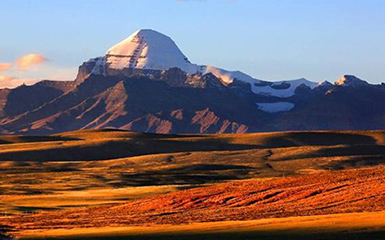
May offers a different kind of beauty. Since Tibet is in late spring, the Himalayas still hold a lot of winter snow. Mount Everest and Mount Kailash can look especially grand, bright, and dramatic.
- The Classic Snowpack:
In May, the mountains are often covered with thick white snow and ice. This gives Everest a more “classic Himalayan” look, with strong snow-and-rock contrast. In October, some lower snowfields may have melted, so more dark rock can be exposed.
- The 2:00 PM Afternoon Cloud Trap:
The main challenge in May is afternoon cloud buildup. As the late-spring sun warms the valleys, snow and glacier ice begin to evaporate. This moisture rises and forms convective clouds along the ridges. By around 2:00 PM, these clouds may cover the summit of Everest.
- Our Overnight Advantage:
Instead of rushing through Everest Base Camp in one day, our overland itineraries include an overnight stay at EBC or Rongbuk Monastery guesthouse. If Everest is cloudy in the afternoon, you still get a second chance the next morning.
As temperatures drop after sunset, the air becomes calmer and clouds often clear. The best morning viewing window is usually 6:30 AM to 9:00 AM, giving you a better chance to see a clear sunrise over snow-covered Mount Everest right from the guesthouse area.
Quick Visibility Verdict:
- Choose October if your top priority is clear Everest views, blue skies, sunset photography, and star-gazing.
- Choose May if you prefer dramatic snow-covered mountains, fresh spring scenery, and classic Himalayan landscapes.
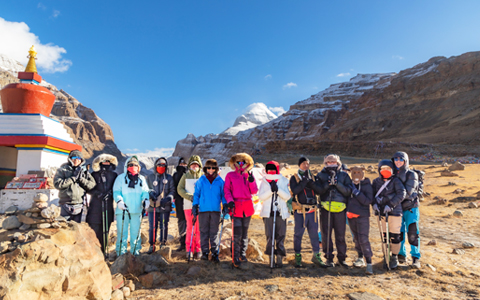
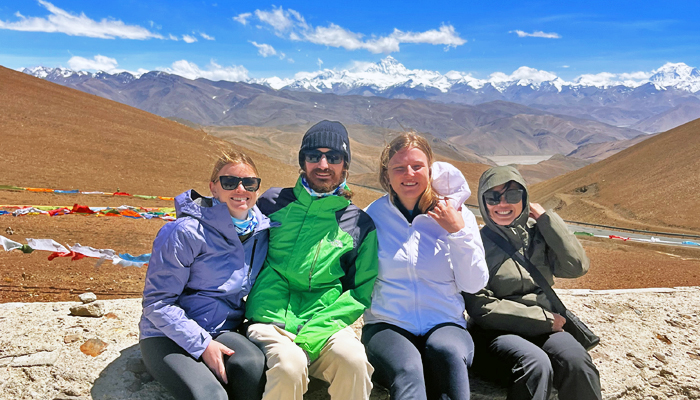 Our guests enjoy the snow-covered Himalayas at Gawula Pass in May.
Tibet Road Conditions in May vs October: Is It Safe for an Overland Trip?
Safety matters on any Tibet overland trip, especially when your route crosses high mountain passes above 5,000 meters. The good news is that major roads in Tibet are now well-paved and suitable for tourist vehicles.
Both May and October are good months for road travel in Tibet. They avoid the heavy summer monsoon and the harshest winter snow, but each month still has small seasonal differences to note.
Lhasa to Everest Base Camp Road Conditions: Spring Melt vs. Autumn Ice
The road from Lhasa to Everest Base Camp is generally stable and well-paved in both May and October. The famous mountain road around Gawula Pass is usually suitable for travel, especially with an experienced local driver.
In May, warmer daytime temperatures may cause some snowmelt in higher areas. This can bring small amounts of water across the road, especially in the afternoon. It usually does not affect normal travel, but drivers still need to stay alert on mountain sections.
In October, the main concern is colder mornings. After a freezing night, shaded corners on high passes may have thin icy patches before the sun warms the road. For this reason, local drivers often adjust the driving time and avoid rushing through high passes too early in the morning.
Lhasa to Kathmandu Overland via Gyirong Border: A More Stable Travel Window
For travelers planning the Lhasa to Kathmandu overland route, May and October are two of the better months to travel. This route drops from the dry Tibetan Plateau toward the greener valleys near Gyirong Port, where weather can affect road conditions more strongly.
The summer monsoon months, especially July and August, can bring heavy rain, landslides, rockfalls, and temporary road closures in border areas. May and October usually avoid the worst of these monsoon risks, making the journey smoother and more reliable.
This is one reason many travelers choose May or October for a Tibet to Nepal overland trip. The weather is generally more stable, the road is easier to manage, and the border crossing feels less stressful.
Chengdu to Lhasa Overland via G318 Highway: Good Months for a Long Road Trip
The Chengdu to Lhasa overland route via the G318 Highway is one of the most scenic road journeys to Tibet. It passes through high mountains, deep valleys, forests, rivers, and Tibetan towns, so stable weather is very important.
May and October are both good choices for this long-distance route. They avoid the strongest summer rains and the deepest winter snow, giving travelers a better chance of a smooth multi-day journey.
Some high passes may still see light snow or cold conditions, especially in early May or late October. However, with local road maintenance and experienced drivers, the route is usually manageable.
For travelers who want a big scenic road adventure, May offers fresh spring views, while October offers clearer skies and golden autumn landscapes.
Quick Road Condition Verdict:
- Choose May if you prefer warmer road travel and do not mind possible snowmelt in higher areas.
- Choose October if you want drier conditions and clearer skies, but be prepared for cold mornings and possible icy patches on high passes.
- Both months are safe and suitable for a Tibet overland trip. When you travel with us, we arrange experienced local Tibetan drivers who know the plateau roads and seasonal conditions well, helping you enjoy a safer, smoother ride.
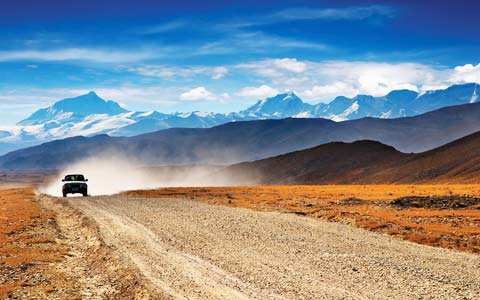
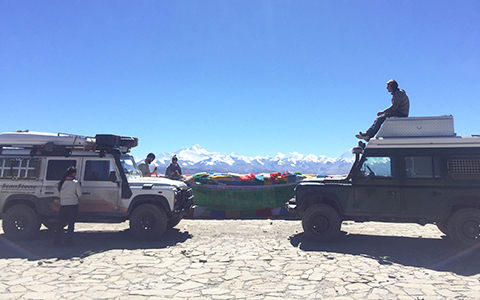
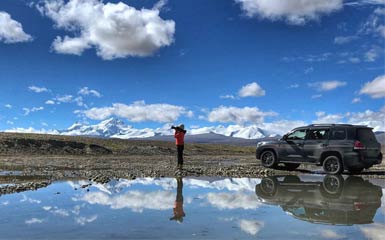
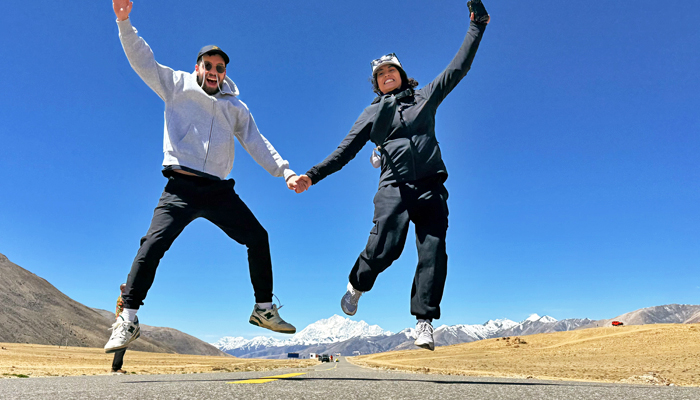 Join our Lhasa to Everest Base Camp overland tour in May for smooth road conditions.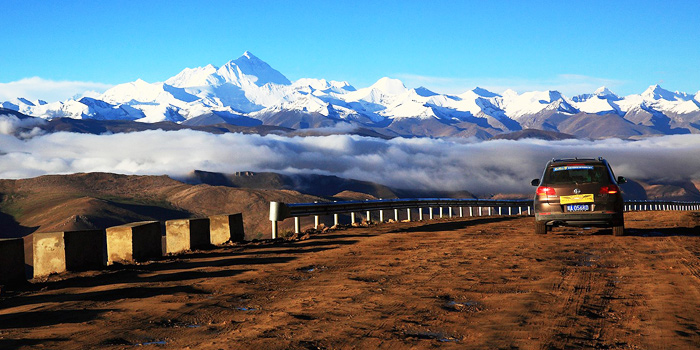
Enjoy a safe and pleasant overland journey from Nepal to Tibet with our one-stop services!
Tibet Tour Cost in May vs October: Which Month Offers Better Value?
Budget is an important part of planning a Tibet overland trip. May and October are both good-value travel months because they sit outside the busy summer peak season. However, the Tibet tour cost can still change depending on holidays, hotel demand, transport availability, and route popularity.
May usually offers steady shoulder-season prices, while October can offer better value after China’s National Day holiday.
May Travel Cost: Good Weather but Steady Demand
May is a good month for travelers who want pleasant weather before the summer rush. Flights and Qinghai-Tibet train tickets are usually easier to arrange than in July and August, and prices are often more stable.
However, May is not always the cheapest month. The Everest region can be busier because of the spring climbing season. Hotels and vehicles around Shigatse, Tingri, and Everest Base Camp may stay in steady demand during this period.
The main date to avoid is May 1 to May 5, China’s Labor Day holiday. During these days, domestic travel increases quickly, and hotels, flights, train tickets, and guide services may become more expensive.
For better value, mid-to-late May is usually a smarter choice. You can still enjoy warmer weather, longer daylight hours, and beautiful spring scenery without the holiday price pressure.
October Travel Cost: Best Value After Golden Week
October has two very different price periods. October 1 to October 7 is China’s National Day Golden Week, one of the busiest and most expensive travel periods of the year.
After October 8, the situation becomes much better for travelers. Crowds drop, hotel prices often become more reasonable, and tour arrangements are usually easier to secure. At the same time, the weather remains dry and clear, making it a great period for Everest views and autumn scenery.
This makes mid-to-late October one of the best-value windows for a Tibet overland tour. It is ideal for travelers who want clear skies, golden landscapes, fewer crowds, and better prices.
Budget Tip: Join a Fixed-Departure Small Group Tour
Whether you travel in May or October, one of the easiest ways to reduce your Tibet overland tour cost is to join a fixed-departure small group tour instead of booking a private trip.
In a small group, usually limited to 8 to 12 travelers, the main daily costs are shared. These include the tourist vehicle, driver, fuel, highway tolls, and professional local guide. This can reduce your overall cost by around 50% to 60% compared with a private tour.
Small group tours also make the planning easier. Your local agency helps arrange the Tibet Travel Permit, train tickets, Everest-related permits, hotels, vehicles, and guide service in one package, which is especially helpful during busy travel months.
Quick Cost Verdict:
- Mid-to-late May: Stable pricing, longer daylight, warmer accommodations, ideal for comfortable sightseeing.
- October 8 onward: Maximum value, minimal crowds, clear skies, and perfect Everest views.
- Tip: Join our Tibet overland small group tour to save on costs and secure permits in both May and October.
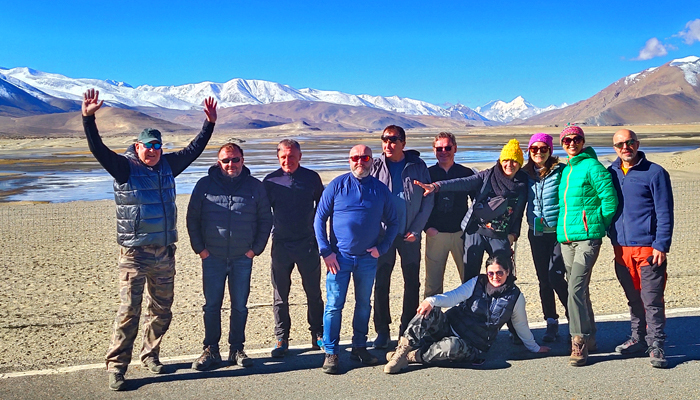 Joining our Tibet overland small group tour helps save on costs.
Tibet Travel Crowds in May vs October: Best Dates to Avoid Peak Holidays
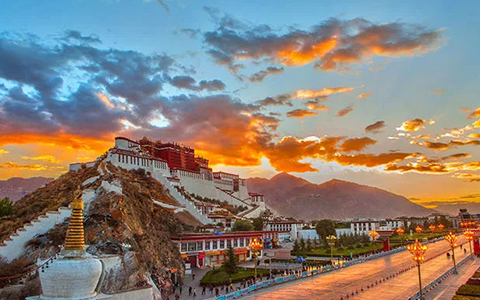
Crowds can greatly affect your Tibet travel experience, especially at popular places like the Potala Palace, Jokhang Temple, Everest Base Camp, and Namtso Lake. Although both May and October are among the best times to visit Tibet, each has a major Chinese public holiday that can make travel busier and more expensive.
If you avoid these short holiday periods, you can enjoy quieter roads, easier bookings, and a smoother Tibet overland trip.
Avoid May 1 to 5: China’s Labor Day Holiday
The first few days of May are China’s Labor Day holiday. During this period, Tibet travel crowds increase quickly, especially in Lhasa and along popular overland routes.
Attractions such as the Potala Palace and Jokhang Temple can become harder to book. Flights, train tickets, hotels, vehicles, and local guides may also be in higher demand.
If you must travel during this week, book your Tibet overland tour several months in advance. Otherwise, we recommend visiting after the holiday rush for a smoother and more affordable trip.
Avoid October 1 to 7: National Day Golden Week
The busiest autumn travel period is October 1 to 7, China’s National Day Golden Week. During this week, many domestic travelers visit Tibet, and famous routes such as the G318 Highway, Namtso Lake, and Everest Base Camp can become much busier.
Hotel rooms along overland routes may sell out quickly, and transport prices can rise. For international travelers who prefer a peaceful journey, this is the main week to avoid in October.
Best Travel Dates for Fewer Crowds
- Best time in May: May 6 to late May
After the Labor Day crowds leave, you can enjoy warmer weather, longer daylight hours, and peaceful monasteries. It is also a great time to book a Tibet overland small group tour, as permits and train tickets are usually easier to arrange.
- Best time in October: October 8 to late October
After Golden Week, crowds drop quickly, roads become quieter, and hotel prices are often more reasonable. Clear autumn skies also make this one of the best times for Everest views and photography.
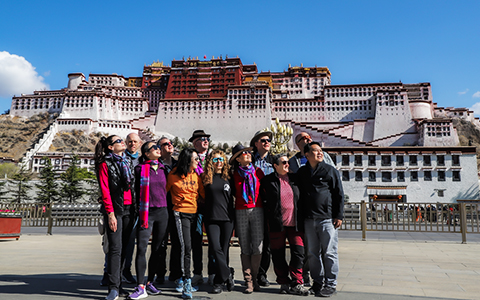
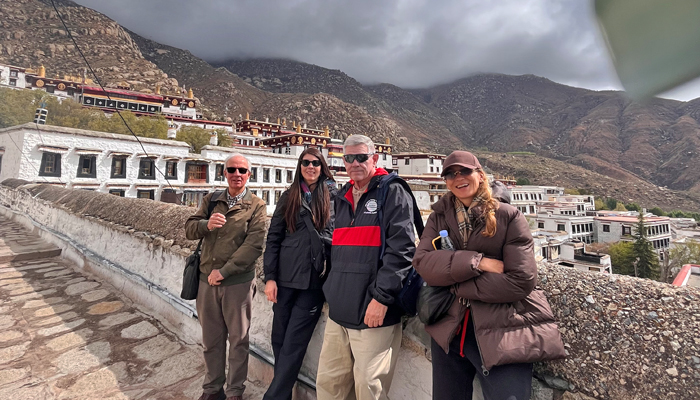 Our guests enjoy the peaceful atmosphere of Drepung Monastery in late May.
Tibet Packing List for May and October: What to Bring for an Overland Trip?
Packing for the Tibetan Plateau is all about layering smart. Temperatures can swing by up to 20°C (36°F) in a single day as you travel from sunny valleys to wind-whipped passes above 5,000 meters.
While your core gear is similar for both months, seasonal tweaks are key to avoid altitude headaches, severe sunburn, and hypothermia.
Essential Items for Both May and October
For both May and October, your Tibet packing list should include strong sun protection and warm layers. The plateau sun is intense, even when the air feels cool:
- Sun & UV Protection (UV Index 12+): SPF 50+ PA++++ sunscreen and polarized sunglasses with UV400. At EBC (5,000 m), the thin atmosphere lets through 50% more UV, meaning unprotected skin can burn in under 15 minutes.
- Hydration & Skincare: Heavy-duty lip balm, rich moisturizer, and saline nasal spray. Humidity often drops below 20%, causing cracked lips and sudden nosebleeds.
- Core Layers: Merino wool base layer (200 g/m²), paired with Gore-Tex windproof jacket and pants. Blocking plateau wind is essential to prevent chills and altitude headaches.
What Else to Pack for a Tibet Overland Trip in May?
For a Tibet overland trip in May, focus on sun and wind protection. May is late spring, with 13+ hours of strong sunlight and occasional thermal winds stirring up dry soil.
- Dust & Wind Protection: Microfiber neck gaiter, balaclava, or reusable PM2.5 mask to prevent throat irritation and the “Lhasa cough.”
- Headwear: Wide-brimmed safari hat with chin strap for sun protection at Yamdrok Lake and open-air monastery courtyards.
- Layering: Daytime temperatures reach 15–20°C (59–68°F). Fleece mid-layers and a light windbreaker are enough for valleys, but keep a windproof jacket handy for 5,000 m mountain passes.
What Else to Pack for a Tibet Overland Trip in October?
For a Tibet overland trip in October, cold-weather clothing becomes more important. October days can be sunny and pleasant, but mornings, evenings, and high-altitude areas can feel very cold.
- Down Jacket: High-quality, 700+ fill power (≥200 g down) jacket is essential. Night temps at EBC or Old Tingri drop to -5°C to -10°C (23–14°F).
- Extremities: Fleece-lined gloves, thermal beanie covering ears, heavyweight merino wool hiking socks (400 g/m²). Cold fingers and toes can quickly sap body warmth.
- Battery & Devices: Hand warmers keep your fingers and lithium-ion devices alive; batteries drain fast in sub-zero conditions.
- Guesthouse Gear: Thermal underwear and a small hot water bottle help stay warm overnight where heating is minimal.
Quick Packing Tip:
- May: “Sun & Dust Shield.” High-SPF protection, dust masks, and lighter, adaptable layers for long daylight exploring.
- October: “Arctic Night Survival.” Down jacket, heavy fleece accessories, and device warmers to handle freezing Himalayan wind chills.
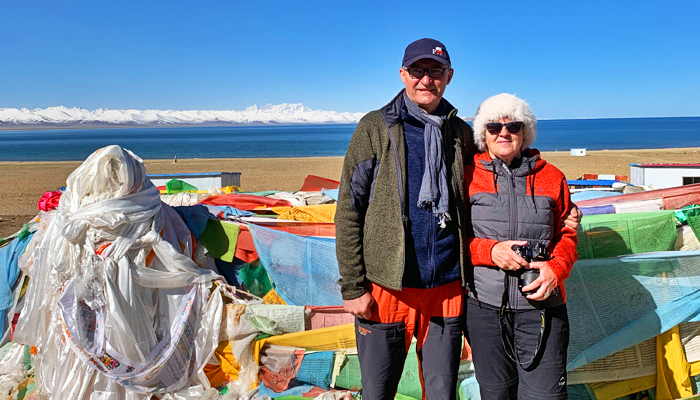 Sun protection and warm clothing are essential for visiting Namtso Lake in both May and October.
May or October for Tibet Overland Travel: Which Month Fits Your Travel Style?
There’s no single “perfect” month for a Tibet overland tour, but the best month depends on your travel goals. Both May and October are excellent windows to explore the roof of the world, each offering a completely different vibe.
Let’s break it down so you can choose the month that fits your comfort, pace, and scenery preferences.
Choose May If You...
- Prefer Warmer Daytime Comfort: You enjoy driving and exploring in cozy, late-spring warmth and want to avoid the freezing wind-chills of early winter.
- Want Longer Daylight Hours: You like unhurried days with extra sunlight, giving you plenty of time to explore vast monasteries and stroll along alpine lakes without racing the sunset.
- Love Spring Landscapes & Melting Lakes: You want to witness the dramatic transition of the plateau waking up—complete with massive, snowy Himalayan passes and the rare "half-ice, half-turquoise" melting phenomenon of Yamdrok and Namtso lakes.
- Dislike Freezing Nights at EBC: You prefer more manageable nighttime temperatures when staying overnight at high altitudes like Everest Base Camp or Old Tingri.
Choose October If You...
- Want the Absolute Clearest Views of Mt. Everest: Getting a 100% flawless, cloudless view of Everest’s north face is your ultimate, non-negotiable dream.
- Love Golden Autumn Scenery: You want to drive through a living oil painting filled with fiery poplar trees, golden grasslands, and deep indigo skies.
- Are Passionate About Photography: You want to capture the legendary "Golden Peak" at sunset or shoot razor-sharp images of the Milky Way directly over the Himalayas at night.
- Want Fewer Crowds and Better Value: You are smart about your budget and want discounted hotel prices and quiet, peaceful highways right after China’s National Day holiday ends on October 8th.
Best Overall Recommendation
- Best for Overall Comfort: mid-to-late May
- Best for Mt. Everest views: October 8 onward
- Best for Landscape Photography: October
- Best for Warmer daytime travel: May
- Best for Value for Money: mid-to-late October
- Best for Long-Distance Road Trip: May
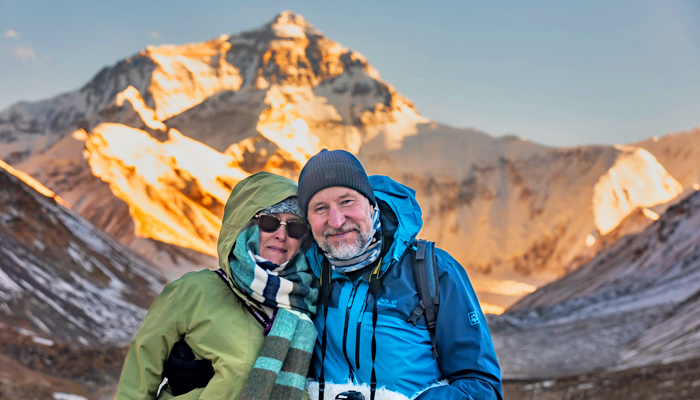 Our guests enjoy the legendary "Golden Peak" at sunset of Mount Everest in October.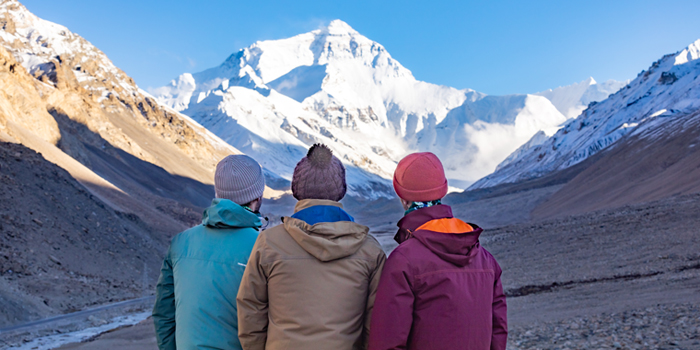
Join our popular Lhasa to Everest Base Camp overland tour for grand views of Mount Everest!
FAQs about Tibet Overland Trips in May and October
Q1: Is Everest Base Camp colder at night in May or October?
October is colder at night at Everest Base Camp. October nights can drop to around -5°C to -10°C (23°F to 14°F), while May nights are usually slightly milder. If you visit EBC in October, bring a down jacket, thermal layers, gloves, and a warm hat.
Q2: Is May or October better for seeing Mount Everest clearly?
October is usually better for clear Mount Everest views. After the summer monsoon ends, the air becomes drier and cleaner, giving you a higher chance of cloudless views.
May can also be beautiful, especially in the morning, but afternoon clouds may sometimes form around the peak.
Q3: Is the Tibet-Nepal border crossing smoother in May or October?
Both May and October are good for the Tibet-Nepal overland route. These two months avoid the heavy summer monsoon, so the road to Gyirong Port is usually more stable than in July and August.
Q4: Which month is better for avoiding altitude sickness?
May may feel slightly easier for some travelers. The warmer weather and longer daylight hours can make sightseeing more comfortable.
However, altitude sickness mainly depends on your body, travel pace, sleep, hydration, and acclimatization, not just the month.
Q5: How early should I apply for my Tibet Travel Permit?
Apply 30 to 45 days in advance for both May and October trips. These are popular travel months, so early booking gives you enough time for Tibet Travel Permit processing, as well as train tickets, flights, and hotel arrangements.
Q6: Is it harder to book Tibet train tickets or flights in May or October?
Bookings are hardest during May 1 to 5 and October 1 to 7. These are major Chinese holiday periods, so train tickets, flights, hotels, and tours can sell out quickly. Outside these dates, bookings are usually easier. For a smoother trip, choose mid-to-late May or October 8 onward.
Q7: Can snow close high mountain passes in May or October?
Long road closures are uncommon in both months. Light snow can happen on high passes in early May or late October, but these months are outside the deep winter season. Local road crews usually clear major roads quickly.
Q8: Is Gyirong Port open in both May and October?
Yes, Gyirong Port is usually open in both May and October. These months are good windows for Tibet-Nepal overland travel because the weather is generally more stable and the route is less affected by monsoon rain.
Q9: Which month is better for photographers?
October is better for most photographers. It offers clear skies, golden grasslands, autumn colors, and excellent Everest visibility. May is also beautiful if you prefer snowy peaks, late-spring scenery, and partly melted lakes.
Q10: Which month is better for a first-time Tibet overland trip?
Choose May for comfort and October for views.
- May is better if you want warmer daytime weather, longer daylight hours, and a more comfortable first-time experience.
- October is better if your dream is clear Everest views, golden autumn scenery, and better value after Golden Week.
Conclusion: Is May or October Better for a Tibet Overland Trip?
You cannot go wrong with either month. May and October are two of the safest, most stable, and most scenic shoulder-season windows for a Tibet overland trip. The better choice depends on your travel style and priorities.
- Choose May if you want warmer daytime travel, longer daylight hours, and beautiful spring scenery, including snow-capped passes and melting turquoise lakes.
- Choose October if you want clearer views of Mount Everest, golden autumn landscapes, better photography conditions, fewer crowds, and better hotel value after October 8.
To make your high-altitude journey safer and smoother, careful local planning is essential. With over 30 years of Tibet travel experience, we handle the key details so you can focus on enjoying the road.
Whether you join our small group tours or choose a private tour, you will travel in reliable vehicles with experienced local Tibetan drivers who know how to handle seasonal road conditions, from May snowmelt to October morning ice.
We also arrange your Tibet Travel Permit in advance and provide English-speaking Tibetan guides with local knowledge, daily travel support, and oxygen backup for high-altitude safety.
The plateau is ready for you. Contact our local travel experts to check departure dates, secure your permit, and start planning your Tibet overland adventure in May or October.


Ask a Quick Question