











Tibet is home to some of the world's most spectacular scenery. You can find a wide variety of landscapes here, including towering snow-capped mountains, crystal-clear lakes, vast glaciers, lush forests, and open grasslands.
Beyond its natural beauty, Tibet also has a rich cultural heritage. Traditional monasteries, magnificent palaces, and small Tibetan villages blend harmoniously with the surrounding mountains and valleys.
Whether you want to admire the Himalayas, explore ancient monasteries, or enjoy the changing colors of Tibet's landscapes through the seasons, this guide introduces the most beautiful scenery in Tibet, where to find it, and the best ways to experience it.
Tibet Scenery at a Glance
| Scenery Type | Best Places to See | Location |
|---|---|---|
| Snow-Capped Mountains | Mount Everest, Mount Kailash, Mount Namcha Barwa | Shigatse, Ngari, Nyingchi |
| Turquoise and Sacred Lakes | Yamdrok Lake, Namtso Lake, Lake Manasarovar, Basum Tso | Shannan, Lhasa and Nagqu border, Ngari, Nyingchi |
| Glaciers and Blue Ice | Karola Glacier, Laigu Glacier | Shannan and Shigatse border, Chamdo |
| Alpine Forests and Green Valleys | Lulang Forest, Bomi Peach Blossom Valley, Yarlung Tsangpo Grand Canyon | Nyingchi |
| Grasslands and Open Plateaus | Nagqu Grassland, Qiangtang Grassland, Damxung Grassland | Northern Tibet |
| Monasteries and Traditional Architecture | Potala Palace, Jokhang Temple, Sera Monastery, Drepung Monastery, Tashilhunpo Monastery, Samye Monastery | Lhasa, Shigatse, Shannan |
Contents
 Tibet's Iconic Snow-Capped Mountains
Turquoise Lakes and Sacred Waters
Glaciers and Blue Ice Landscapes
Lush Alpine Forests and Green Valleys
Vast Grasslands and Open Highland Plateaus
Tibetan Monasteries and Traditional Architecture
What Does Tibet's Scenery Look Like in Different Seasons?
Best Ways to Enjoy the Scenery in Tibet
Practical Tips for Enjoying the Scenery in Tibet
Tibet's Iconic Snow-Capped Mountains
Snow-capped mountains are among the most recognizable features of Tibet's scenery. Rising above deep valleys and open plateaus, many of the mountains in Tibet are known for their towering heights, distinctive shapes, and religious significance.
Mount Everest
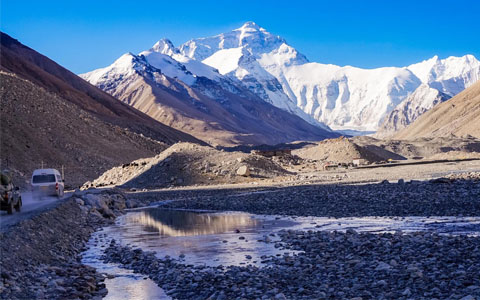
Mount Everest, known as Qomolangma in Tibetan, is the world's highest mountain, rising to 8,848.86 meters above sea level. Located on the border between Tibet and Nepal, it is one of the most impressive natural landmarks in the Himalayas.
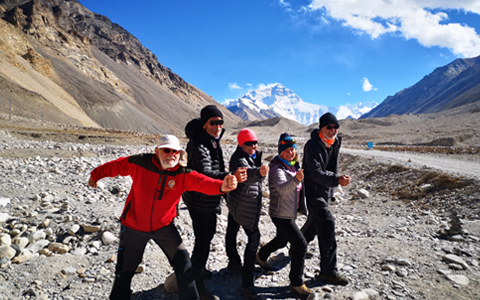
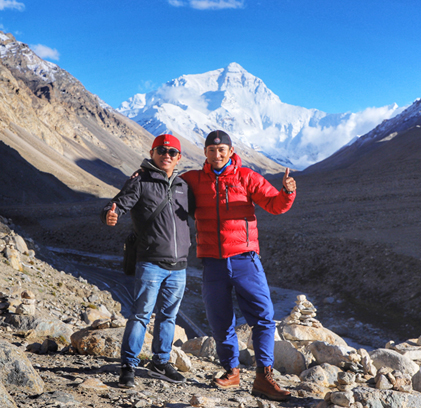
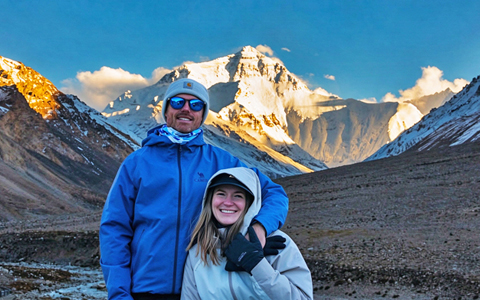
On the Tibetan side, you can enjoy panoramic views of the Himalayas from Gawula Pass, where several snow-capped peaks stretch across the horizon. Tibet Everest Base Camp, at approximately 5,000 meters, offers a closer view of Mount Everest.
Staying overnight at Everest Base Camp offers the chance to enjoy starry skies and watch the golden sunlight illuminate Everest's north face at sunrise. This can be one of the highlights of your Tibet tour.
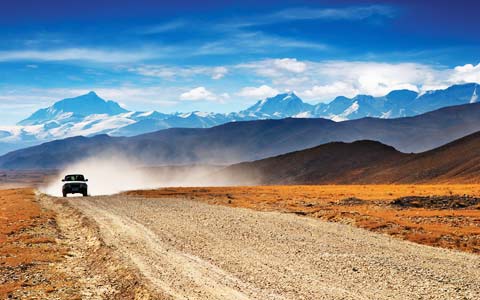
One of the best ways to enjoy Everest's scenery is to join an overland tour from Lhasa to Everest Base Camp. This journey allows you to spend time acclimatizing in Lhasa, explore its iconic landmarks, and travel through Gyantse and Shigatse before reaching Everest Base Camp.
 Tibet Everest Base Camp offers a closer view of Mount Everest and its magnificent north face.
Mount Kailash
Mount Kailash, standing at approximately 6,638 meters, is one of the most sacred mountains in Tibet. It is revered by followers of Tibetan Buddhism, Hinduism, Jainism, and Bon, attracting pilgrims from different religious traditions.
Unlike many Himalayan peaks with long, rugged ridges, Mount Kailash has a distinctive pyramidal shape with a snow-covered summit. The mountain stands out against the barren landscape and wide-open valleys of western Tibet.
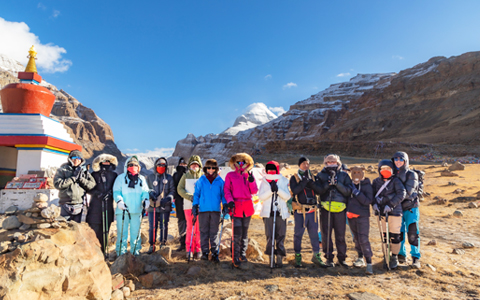
The best way to experience the mountain's changing scenery is to follow the 52-kilometer Mount Kailash Kora, a traditional pilgrimage route that usually takes three days. During the trek, you can admire its towering north face, rocky slopes, high mountain passes, and surrounding valleys.
The views from Dirapuk Monastery are particularly impressive, while Dolma La Pass (5,630 meters), the highest point of the kora, offers dramatic high-altitude scenery. Before starting the trek, make sure you are in good physical condition and allow enough time to acclimatize.
 Mount Kailash combines spectacular mountain scenery with deep spiritual significance.
Mount Namcha Barwa
Mount Namcha Barwa, reaching approximately 7,782 meters, is one of the most striking peaks in southeastern Tibet. Located in Nyingchi, near the Great Bend of the Yarlung Tsangpo River, it is famous for its sharp summit, steep slopes, and dramatic mountain scenery.
Mount Namcha Barwa is often shrouded in clouds, making clear views of its summit especially rewarding. From viewpoints along the Yarlung Tsangpo Grand Canyon, you can admire its snow-covered peak rising above deep river valleys and green forests.
The contrast between its snowy summit and lush surroundings sets Mount Namcha Barwa apart from the drier mountain landscapes of western and northern Tibet. Spring and autumn are particularly good seasons to admire this spectacular scenery.
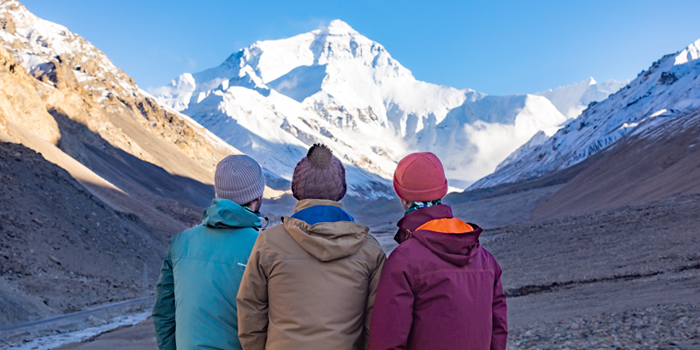

Explore Lhasa and Everest Base Camp with a scenic overland journey, cultural highlights, and Himalayan views.
Turquoise Lakes and Sacred Waters
The high-altitude lakes in Tibet are another highlight of its natural scenery. Their waters range from deep blue to brilliant turquoise, reflecting the surrounding mountains and open skies. Some are also important pilgrimage destinations with deep religious significance.
Yamdrok Lake
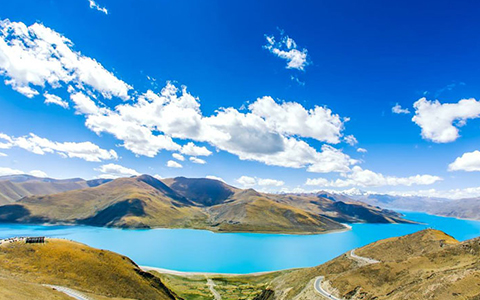
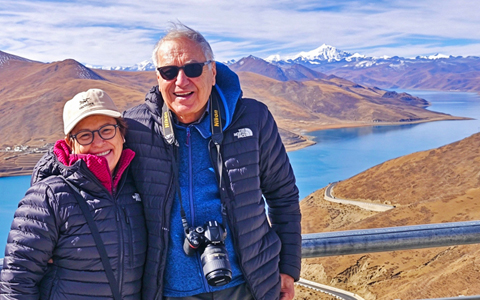
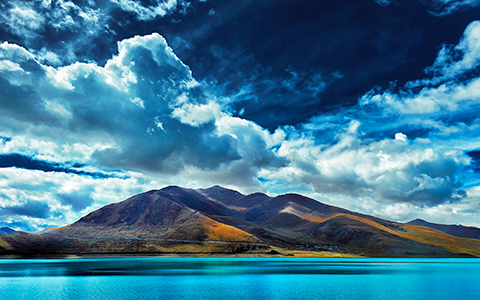
Located about 110 kilometers southwest of Lhasa, Yamdrok Lake is one of the three major sacred lakes in Tibet, about a two-hour drive from the city center. Its irregular shoreline creates a series of beautiful bays and peninsulas, while the surrounding mountains add depth to the landscape.
The lake is famous for its changing shades of blue and turquoise. From viewpoints along the mountain road near Gambala Pass, you can admire its winding shoreline and the surrounding snow-capped mountains.
Yamdrok Lake is a popular stop on overland tours from Lhasa to Shigatse. Its accessible viewpoints allow you to enjoy beautiful lake scenery without trekking. Standing by the lakeshore, you can enjoy the peaceful atmosphere and admire the turquoise waters up close.
 Yamdrok Lake enchants visitors with its brilliant turquoise waters and surrounding snow-capped mountains.
Namtso Lake
Namtso Lake, meaning Heavenly Lake in Tibetan, is one of the highest large saltwater lakes in the world, sitting at approximately 4,718 meters above sea level. It is about 220 kilometers from Lhasa by road, with a driving time of around 4.5 hours.
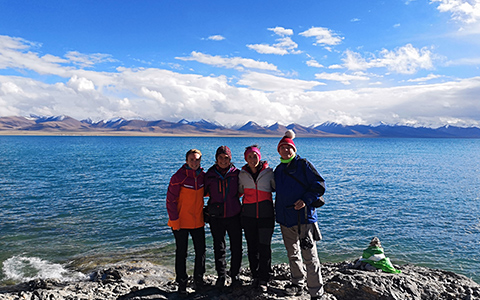
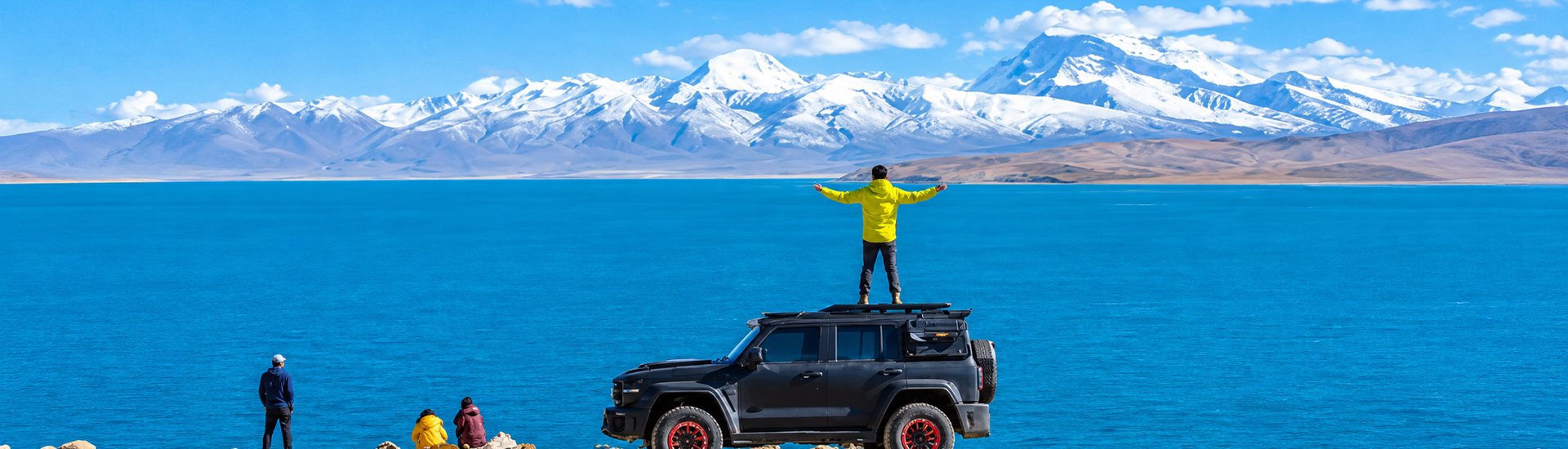
The lake stretches across an open plateau, with the snow-covered Nyenchen Tanglha Mountains rising in the distance. On a clear day, the contrast between the deep blue water, white clouds, and rugged mountains creates a breathtaking panorama.
On your way from Lhasa to Namtso, you will pass Nagela Pass (5,190 meters), which offers a classic panoramic view of the lake. Upon arrival, you can visit Tashi Dor Peninsula, another popular spot for enjoying the lakeside scenery.
You can also see prayer flags fluttering along the lakeshore, adding a cultural element to the natural scenery. Namtso is particularly beautiful in summer and autumn, although heavy snowfall and icy roads may restrict access in winter.
 The blue waters of Namtso Lake and the snow-capped Nyenchen Tanglha Mountains create a stunning panorama.
Lake Manasarovar
Lake Manasarovar, located in Ngari Prefecture near Mount Kailash, is one of the most sacred lakes in Asia. Sitting at approximately 4,590 meters, it is revered by several religious traditions and has been an important pilgrimage destination for centuries.
Many pilgrims believe its sacred waters can wash away sins and purify the soul. They visit the lake to pray and bathe in its waters as part of their religious traditions. For travelers visiting western Tibet, Lake Manasarovar is often combined with Mount Kailash in the same itinerary.
The lake is known for its clear water, broad shoreline, and peaceful surroundings. On calm days, the surface reflects the surrounding mountains and sky, creating a beautiful natural mirror. On clear days, you can also enjoy distant views of Mount Kailash from parts of the lakeshore.
 The clear waters of Lake Manasarovar and surrounding snow-capped mountains create a breathtaking landscape.
Basum Tso
Basum Tso, also called Draksum Tso, is a beautiful alpine lake in Nyingchi. Its name means "green water" in Tibetan, and the lake is considered sacred by the Nyingma school of Tibetan Buddhism. Surrounded by dense forests and snow-capped mountains, the lake's turquoise waters appear even greener.
Its turquoise water, forested shoreline, and mountain reflections create a peaceful atmosphere. Tashi Island is one of the lake's best-known scenic spots, where you can admire the surrounding scenery and explore the historic Tsodzong Monastery.
Basum Tso is especially attractive in spring and autumn, when the surrounding forests display fresh greenery or golden autumn colors. It is also a popular stop on journeys through eastern Tibet.
 The emerald waters and forested mountains of Basum Tso offer a peaceful escape into nature.
Glaciers and Blue Ice Landscapes
Tibet's glaciers reveal another side of the Tibetan Plateau. Formed over thousands of years, these massive ice formations lie among high mountains and remote valleys. Their white snowfields, blue ice, and rugged surfaces create striking contrasts with the surrounding terrain.
Karola Glacier
Karola Glacier is located along the scenic road from Yamdrok Lake to Gyantse. Its massive ice face descends from the mountainside, making it one of the most accessible glaciers along popular central Tibet travel routes.
From the roadside viewpoint, you can see layers of ice and snow covering the mountain slope. The glacier's pale blue and white tones stand out against the dark rocks, creating a dramatic high-altitude landscape.
Karola Glacier is a popular stop on overland tours from Lhasa to Shigatse via Yamdrok Lake and Gyantse. You can admire the glacier up close without taking a long trek.
 Located right beside the highway, Karola Glacier is an easy stop on the journey from Lhasa to Shigatse.
Laigu Glacier
Laigu Glacier is located near Ranwu Lake in Baxoi County, Chamdo. It is part of a group of glaciers surrounding Laigu Village and is famous for its striking blue ice and impressive mountain setting.
The glacier's ice formations can display different shades of blue, from pale turquoise to deep sapphire, depending on the light and weather. During colder months, frozen sections and snow-covered surroundings create an especially dramatic scene.
The nearby Ranwu Lake adds to the beauty of the area, with its blue water, forested shores, and surrounding peaks. Visiting Laigu Glacier and Ranwu Lake together offers a wonderful opportunity to experience the varied landscapes of eastern Tibet.
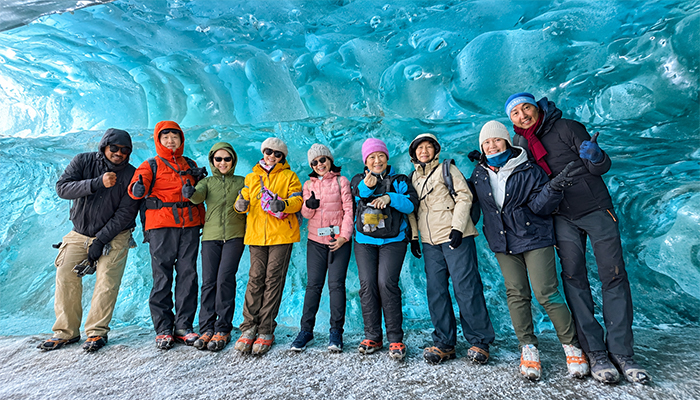 Laigu Glacier is famous for its spectacular blue ice formations and breathtaking winter scenery.
Lush Alpine Forests and Green Valleys
Unlike the dry plateaus and rocky mountains of western Tibet, Nyingchi in southeastern Tibet is known for its lush forests, green valleys, and flowing rivers. Its relatively mild climate and higher rainfall create some of the most colorful scenery in Tibet.
Lulang Forest
Lulang Forest is a scenic alpine area in Nyingchi, featuring dense forests, green meadows, flowing streams, and traditional Tibetan villages, all surrounded by snow-capped mountains. Its name means "Dragon King Valley" in Tibetan, and it is often called "a place that makes you forget home" for its beautiful scenery.
The forest is especially attractive from May to October. Rhododendrons bloom across the hillsides in May and June, while July and August bring lush green meadows and colorful wildflowers. In September and October, the forests display rich autumn colors, from golden yellow to deep red.
On clear days, you can enjoy distant views of Mount Namcha Barwa from viewpoints around Lulang. If you are traveling from Lhasa to Nyingchi, you can include Lulang Forest in your itinerary.
 Lulang Forest offers enchanting scenery with lush alpine forests, rolling meadows, and distant mountain peaks.
Bomi Peach Blossom Valley
Bomi Peach Blossom Valley, located in Bomi County, Nyingchi, is one of the most famous spring destinations in Tibet. Known as China's largest peach blossom valley, it stretches nearly 60 kilometers and is home to over 200,000 wild peach trees, many of which are centuries old.
Every spring, pink peach blossoms bloom across the valleys and hillsides, while snow still covers the distant mountains. The combination of pink flowers, green barley fields, traditional Tibetan houses, and snow-capped peaks creates one of the most iconic spring landscapes in Tibet.
The flowering period generally falls between March and April, although the exact timing varies with elevation and weather conditions. As one of the main venues of the Nyingchi Peach Blossom Festival, the valley offers many villages and viewpoints where you can enjoy the beautiful spring scenery.
 In spring, Bomi Peach Blossom Valley comes alive with pink blossoms against a backdrop of snow-capped mountains.
Yarlung Tsangpo Grand Canyon
The Yarlung Tsangpo Grand Canyon is one of the world's deepest and longest canyons, cutting through the mountains of southeastern Tibet. It is particularly famous for the Great Bend, where the Yarlung Tsangpo River makes a dramatic turn around Mount Namcha Barwa.
The canyon features steep mountain walls, dense forests, a rushing river, and snow-covered peaks. Its landscapes change with elevation, creating a remarkable variety of natural environments within one region.
Spring and autumn are good seasons to visit, when clearer weather offers better chances of seeing the surrounding mountains. From viewpoints along the canyon, you can admire the deep river valley and towering peaks from different angles.
 The Yarlung Tsangpo Grand Canyon showcases some of Tibet's most dramatic mountain and river valley scenery.
Vast Grasslands and Open Highland Plateaus
Tibet's grasslands stretch across vast areas of the northern plateau, featuring rolling meadows, distant mountains, grazing yaks, and traditional pastoral life. Their open scenery offers a sense of freedom and a peaceful escape into nature.
Nagqu Grassland
Nagqu Grassland, located in northern Tibet at an average altitude of around 4,500 meters, is one of the region's most representative high-altitude grasslands. Its vast meadows, distant snow-capped mountains, rivers, and lakes create classic northern Tibet scenery.
The best time to visit is from June to September, especially July and August, when the grasslands turn lush green and wildflowers bloom. Herds of yaks and sheep graze across the open pastures, while clear blue skies and white clouds complete the beautiful landscape.
Nagqu is also known for its traditional nomadic culture and annual horse racing festivals in summer. You can experience local celebrations and Tibetan pastoral life while enjoying the scenery.
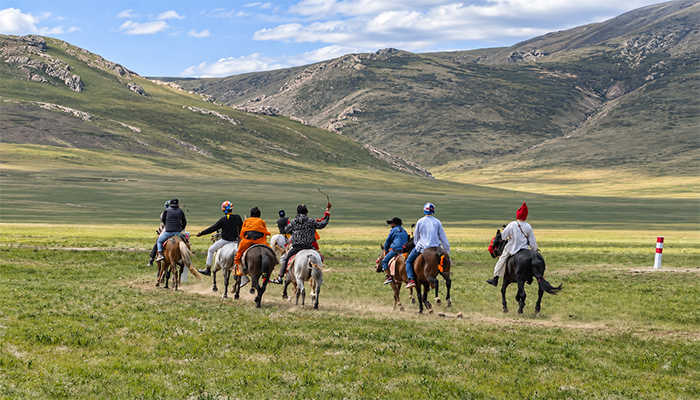 Visit Nagqu Grassland in summer for a chance to watch traditional Tibetan horse racing.
Qiangtang Grassland
Stretching across northwestern Tibet, Qiangtang Grassland is one of the world's largest high-altitude grassland regions, with an average elevation of around 4,800 meters. Its vast and remote wilderness preserves some of Tibet's most untouched natural landscapes.
Unlike Nagqu Grassland, Qiangtang offers a more rugged and isolated landscape, featuring open grasslands, barren hills, lakes, and distant snow-capped mountains. It is also an important habitat for Tibetan animals, including Tibetan antelopes, wild yaks, and Tibetan wild asses.
Due to its remote location and limited travel facilities, Qiangtang is better suited to adventurous travelers with plenty of time to explore. Its vast wilderness offers a unique opportunity to experience the quieter, less-visited side of Tibet.
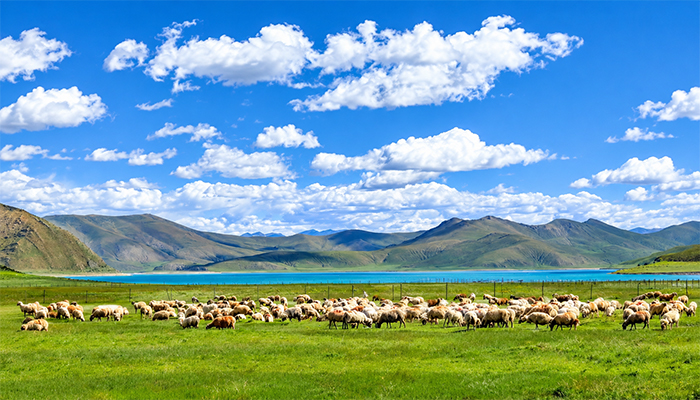 The vast Qiangtang Grassland is a great place to observe Tibetan animals in their natural surroundings.
Damxung Grassland
Damxung Grassland is located in Damxung County, along the route from Lhasa to Namtso Lake. Its convenient location makes it one of the easiest places to experience Tibet's highland grassland scenery without traveling far from Lhasa.
One of its most distinctive features is the combination of open grasslands and the snow-covered Nyenchen Tanglha Mountains. In summer, green pastures dotted with grazing yaks and sheep stretch toward the distant peaks, creating excellent opportunities for sightseeing and photography.
If your Tibet itinerary includes Namtso Lake, you can enjoy the grassland scenery along the way without arranging a separate trip. This makes Damxung Grassland a convenient choice for first-time visitors who want to experience Tibet's natural beauty.
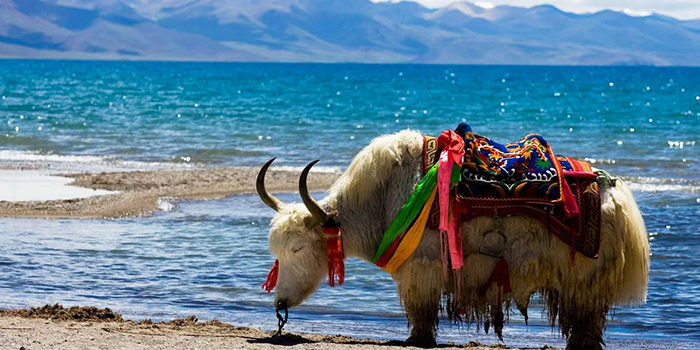
Discover the cultural treasures of Lhasa and enjoy the breathtaking turquoise waters of sacred Namtso Lake.
Tibetan Monasteries and Traditional Architecture
Tibet's cultural scenery is just as impressive as its natural landscapes. Ancient monasteries, traditional Tibetan buildings, colorful prayer flags, and golden rooftops add a unique charm to the region. Many religious sites blend beautifully with the surrounding mountains and valleys.
Potala Palace
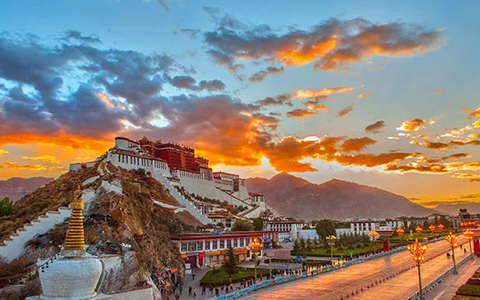
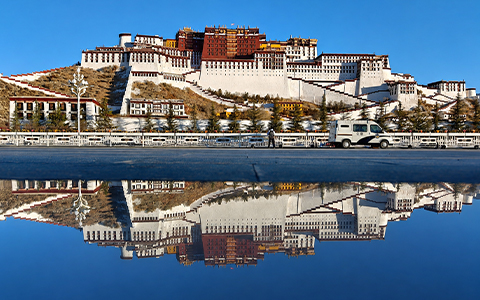
Potala Palace is an iconic landmark of Lhasa and a UNESCO World Heritage Site. Standing on Red Hill, it is one of the world's highest-altitude palace complexes and once served as the winter residence of successive Dalai Lamas.
The magnificent architecture consists mainly of the Red Palace and White Palace. Inside the palace, you can discover an extraordinary collection of Tibetan Buddhist art and cultural treasures, including thangka paintings, murals, ancient scriptures, Buddha statues, and precious artifacts.
Tickets to Potala Palace must be reserved in advance. As the palace sits at a high altitude and requires climbing many steps, take your time during the visit and avoid overexertion to reduce the risk of altitude sickness.
 Potala Palace is Tibet's most iconic landmark and a symbol of its rich cultural and religious heritage.
Jokhang Temple
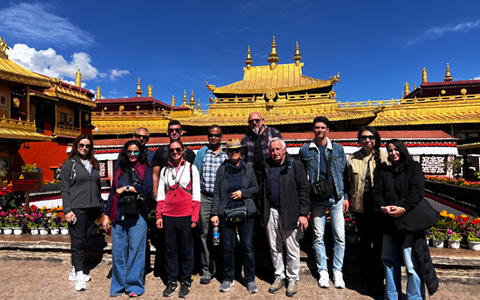
Jokhang Temple is one of the most sacred Buddhist sites in Tibet, located in the heart of Lhasa's old town. Its architecture blends Tibetan, Chinese, Nepalese, and Indian styles, featuring a magnificent golden roof. Inside, the temple houses the revered Jowo Rinpoche, a gilded statue of Shakyamuni Buddha depicted at the age of 12.
The area around the temple is particularly lively, with pilgrims praying and walking clockwise around the temple along Barkhor Street. You can also join the clockwise walk while respecting local religious customs.
 With its magnificent golden roofs, Jokhang Temple is one of Tibet's most sacred Buddhist sites.
Sera Monastery
Founded in 1419, Sera Monastery is one of Lhasa's Three Great Gelug monasteries, located at the foot of Sera Utse Mountain. It is best known for its lively Buddhist philosophical debates, usually held from 15:00 to 17:00, except on Sundays.
During the debates, monks gather in the courtyard, clapping their hands and making animated gestures as they challenge each other with questions about Buddhist philosophy. Watching this lively tradition offers a fascinating glimpse into Tibetan Buddhist culture and monastic life.
 Watching monks debate at Sera Monastery offers a fascinating glimpse into Tibetan Buddhist traditions.
Drepung Monastery
Located on the slopes of Gambo Utse Mountain near Lhasa, Drepung Monastery is one of the largest monasteries in Tibet. Its name means "a heap of rice" in Tibetan, referring to the layers of white monastic buildings that spread across the hillside like a pile of rice.
One of the biggest highlights of Drepung Monastery is the grand Buddha unveiling ceremony during the Shoton Festival, when a giant Buddhist thangka is gradually unfurled on the hillside, creating a spectacular scene.
 Drepung Monastery offers a beautiful blend of traditional Tibetan architecture and panoramic mountain views.
Tashilhunpo Monastery
Founded in 1447, Tashilhunpo Monastery is the largest monastery in Shigatse and the traditional seat of the Panchen Lama. Its white walls, red buildings, and golden roofs spread across the hillside, creating a striking contrast with the surrounding mountains.
This monastery is a must-visit stop on a journey from Lhasa to Shigatse or onward to Everest Base Camp. Inside, you can explore its grand prayer halls and admire the impressive gilded statue of Maitreya Buddha, one of the monastery's most famous treasures.
 Tashilhunpo Monastery is the largest monastery in Shigatse and the traditional seat of the Panchen Lamas.
Samye Monastery
Samye Monastery, located in Shannan, is traditionally recognized as the first Buddhist monastery established in Tibet. The entire complex is designed as a mandala, representing the Buddhist universe, with the central Utse Hall symbolizing Mount Meru.
One of its most distinctive features is the three-story Utse Hall, which combines Tibetan architecture on the ground floor, Chinese architecture on the second floor, and Indian architecture on the top floor. Surrounded by mountains and open valleys, the monastery offers a beautiful blend of traditional architecture and natural scenery.
 As Tibet's first Buddhist monastery, Samye Monastery is renowned for its unique architecture.
What Does Tibet's Scenery Look Like in Different Seasons?
Spring Scenery in Tibet: Peach Blossoms Blooming Against Snowy Mountains
Spring (March to May) is especially beautiful in Nyingchi. From March to April, wild peach trees burst into bloom across the valleys and villages, with snow-capped mountains providing a stunning backdrop.
Bomi Peach Blossom Valley is one of the best places to enjoy this seasonal scenery. As temperatures rise, the surrounding forests and valleys gradually turn green. Spring also offers good opportunities to enjoy clear views of Mount Everest before the summer monsoon arrives.
Summer Scenery in Tibet: Lush Grasslands and Alpine Flowers
In summer (June to August), Tibet's highland landscapes come to life. The grasslands around Nagqu and Damxung turn lush green, with colorful wildflowers blooming across the alpine meadows.
On sunny days, the blue waters of Yamdrok Lake and Namtso Lake look especially vibrant. Meanwhile, the forests and valleys of Nyingchi are at their greenest, making the region an attractive summer destination.
Although summer brings occasional afternoon showers and cloud cover, daytime sightseeing is usually largely unaffected.
 Summer brings lush green landscapes and colorful fields to Tibet, revealing a vibrant side of the plateau.
Autumn Scenery in Tibet: Golden Forests and Clear Mountain Views
Autumn (September to November) is one of the best seasons for enjoying Tibet's scenery. Dry weather and clear skies offer excellent visibility across the plateau.
Forests and river valleys take on rich shades of gold, orange, and red, while grasslands turn golden. Autumn is also an ideal time to admire Mount Everest and Mount Namcha Barwa, with a better chance of seeing their peaks free of clouds.
Winter Scenery in Tibet: Snow-Covered Mountains and Frozen Lakes
Winter (December to February) transforms Tibet into a landscape of snow-covered mountains, frozen lakes, and crystal-clear skies.
High-altitude lakes such as Namtso and Lake Manasarovar may freeze partially or completely, while Laigu Glacier reveals its spectacular blue ice formations. In Lhasa, abundant winter sunshine makes exploring traditional Tibetan architecture particularly enjoyable.
Winter also offers a more peaceful travel experience and generally lower travel costs. However, warm clothing is essential, and some remote scenic areas may have seasonal access restrictions.
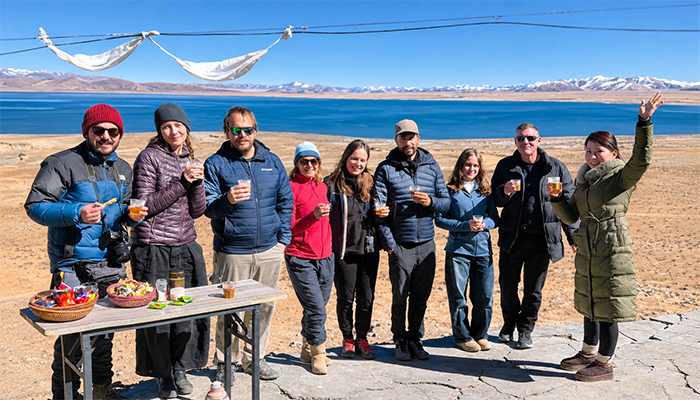 Even in winter, Tibet enjoys plenty of sunshine, making it ideal for daytime sightseeing.
Best Ways to Enjoy the Scenery in Tibet
Explore Tibet by Overland Tour
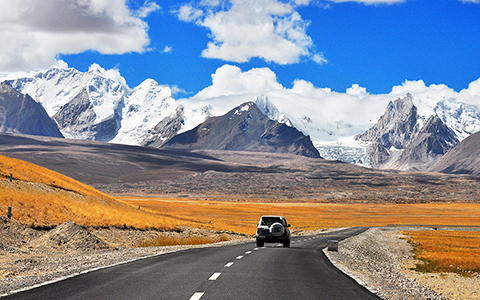
An overland tour is one of the best ways to experience Tibet's diverse scenery. Traveling by road allows you to stop at scenic viewpoints and enjoy the changing landscapes along the way.
On a journey from Lhasa to Everest Base Camp, you can admire Yamdrok Lake and Karola Glacier and explore the historic town of Gyantse. Traveling from Lhasa to Nyingchi offers a different experience, with lush forests, winding rivers, alpine lakes, and green valleys.
With a well-planned itinerary and an experienced local guide, you can enjoy the scenery at a comfortable pace while gaining a deeper understanding of Tibet's natural and cultural heritage.
Enjoy Scenic Views Along the Qinghai-Tibet Railway
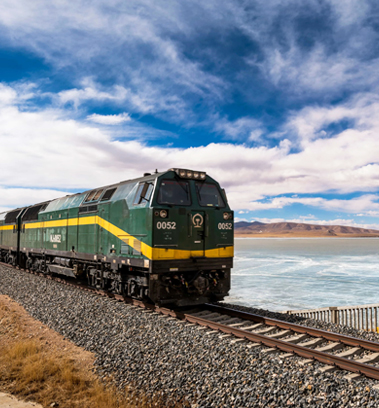
The Qinghai-Tibet Railway offers another memorable way to admire Tibet's natural scenery. As the train travels from Xining to Lhasa, you can watch the landscape change from rolling hills and open plains to vast high-altitude grasslands.
The railway offers scenic views of Qinghai Lake, the Kunlun Mountains, Hoh Xil, and the Tanggula Mountains. From your train window, you can admire snow-covered peaks, wetlands, and plateau lakes, and may even spot Tibetan antelopes and wild asses.
Discover Tibet's Natural Landscapes Through Trekking
Trekking allows you to experience Tibet's natural scenery up close and at a slower pace. Instead of viewing mountains and valleys from a vehicle, you can walk through alpine meadows, cross mountain passes, and explore remote landscapes.
Popular trekking routes include the Mount Kailash Kora, the Ganden to Samye Trek, and the Tsurphu to Yangpachen Trek, where you can enjoy mountain scenery, secluded valleys, and traditional Tibetan villages.
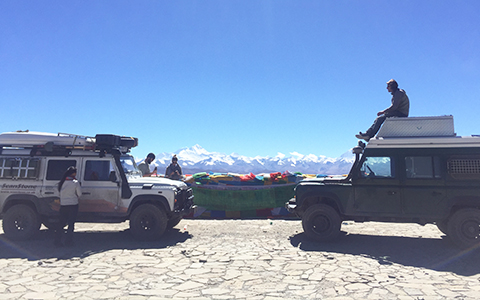
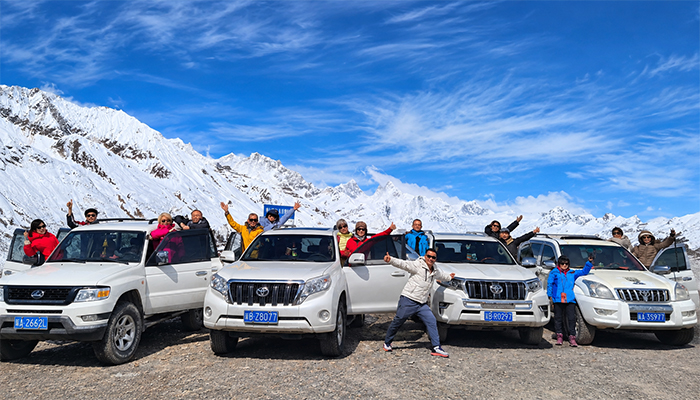 An overland tour is one of the classic ways to explore Tibet, allowing you to stop at scenic spots along the way.
Practical Tips for Enjoying the Scenery in Tibet
Allow Time to Acclimatize to the High Altitude
Many of Tibet's most scenic destinations are located above 4,000 meters. Allow yourself enough time to acclimatize after arriving in Lhasa, which sits at approximately 3,650 meters.
During your first few days, drink plenty of water, get enough rest, avoid strenuous activities, and follow your guide's advice. These precautions can help reduce the risk of altitude sickness and make your trip more comfortable.
Wear Layers and Prepare for Changing Temperatures
Temperatures in Tibet can vary greatly between day and night. Even in summer, mornings and evenings can be cold, especially around lakes, mountain passes, and high-altitude viewpoints.
Dress in layers, including breathable base layers, a fleece, and a warm jacket. Comfortable trousers and walking shoes are also recommended. This allows you to adjust your clothing easily as temperatures change.
Bring Sun Protection for High-Altitude Travel
UV rays are particularly strong on the Tibetan Plateau due to its high elevation, even on cloudy days. Wear sunglasses, a wide-brimmed hat, and long-sleeved clothing, and apply sunscreen with SPF 30 or higher regularly to protect your skin during outdoor sightseeing.
Respect Local Customs Around Sacred Destinations
Many mountains, lakes, and monasteries in Tibet hold deep religious significance. When visiting these sacred sites, respect local customs and follow your guide's advice.
Avoid touching religious objects without permission or interrupting pilgrims during worship. At monasteries, dress modestly, follow photography rules, and walk clockwise along Buddhist pilgrimage circuits.
Protect Tibet's Natural Landscapes and Avoid Littering
Tibet's high-altitude ecosystems are fragile and can take a long time to recover from environmental damage. Always put your rubbish in designated bins, avoid disturbing wildlife or picking alpine plants, and stay on marked trails.
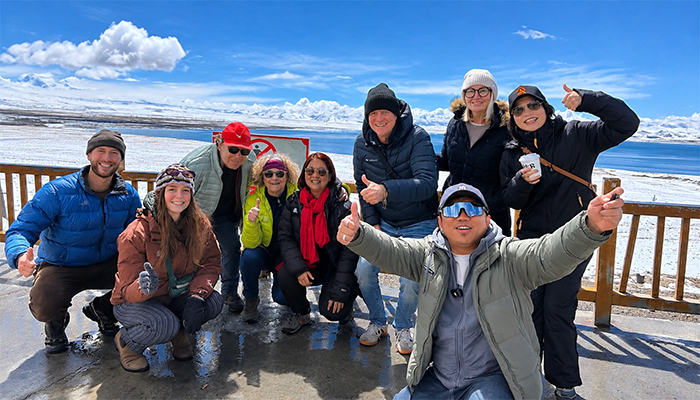 Pack warm layers and wear sunglasses to stay comfortable while exploring Tibet.
Quick Summary and FAQs About Tibet Scenery
Quick Summary
Tibet offers an extraordinary variety of landscapes, from the snow-capped peaks of Mount Everest and Mount Kailash to the turquoise waters of Yamdrok Lake and Namtso. Its glaciers, alpine forests, vast grasslands, and traditional monasteries reveal different sides of the Qinghai-Tibet Plateau.
The scenery also changes throughout the year. Spring is famous for Nyingchi's peach blossoms; summer brings green grasslands and alpine flowers; autumn offers golden forests and clear mountain views; and winter creates beautiful snow-covered landscapes.
You can explore Tibet's scenery through an overland tour, a journey on the Qinghai-Tibet Railway, or a trekking experience. With a suitable itinerary and enough time to acclimatize, you can enjoy the region's natural and cultural beauty at your own pace.
Q1: What is the most beautiful scenery in Tibet?
Tibet has many beautiful landscapes, so the best choice depends on your interests. Mount Everest offers spectacular Himalayan views, while Mount Kailash is famous for its distinctive shape and sacred significance.
Yamdrok Lake and Namtso Lake are known for their turquoise waters, and Nyingchi stands out for its forests, peach blossoms, and green valleys. Each destination offers a different experience of Tibet's scenery.
Q2: Where can you see the best natural scenery in Tibet?
Shigatse and Ngari are ideal for admiring towering mountains and sacred lakes, while Nyingchi and Chamdo are known for their forests, deep valleys, and glaciers. Northern Tibet offers vast grasslands, plateau lakes, and opportunities to observe wildlife.
Q3: What is the best month to see the scenery in Tibet?
May, June, September, and October are generally good months for enjoying Tibet's scenery. These periods often offer favorable conditions for viewing snow-capped mountains and exploring high-altitude destinations.
Q4: Can you enjoy the scenery in Tibet without trekking?
Yes, many of Tibet's most beautiful destinations are easily accessible by road, including Tibet Everest Base Camp, Yamdrok Lake, Karola Glacier, and Namtso Lake. You can enjoy spectacular scenery from roadside viewpoints without taking long or physically demanding treks.
Q5: Which Tibet tour offers the best scenery?
The classic Lhasa to Everest Base Camp tour is an excellent choice for first-time visitors, combining snow-capped mountains, turquoise lakes, glaciers, and historic monasteries.
If you prefer lush forests and green valleys, consider a Lhasa to Nyingchi tour, while a Mount Kailash tour is ideal for exploring the remote landscapes of western Tibet.
Q6: Can you see snow-capped mountains in Tibet all year round?
Yes. Many high mountains in Tibet remain snow-covered throughout the year, including Mount Everest, Mount Kailash, and Mount Namcha Barwa. However, spring and autumn generally offer better chances of clear mountain views, as summer clouds may obscure the summits.
Q7: How many days do you need to enjoy Tibet's scenery?
Around 7 to 8 days is recommended for experiencing Tibet's classic natural and cultural highlights, including Lhasa, Yamdrok Lake, Shigatse, and Everest Base Camp. If you want to explore Mount Kailash or the remote grasslands of northern Tibet, consider a longer itinerary of 10 to 15 days.
Q8: Are Tibet's scenic areas accessible in winter?
Many popular destinations, including Lhasa, Yamdrok Lake, and Tibet Everest Base Camp, are generally accessible in winter. Namtso Lake can also be visited in winter, depending on weather and road conditions. However, heavy snowfall and icy roads may lead to temporary closures.
Mount Kailash Scenic Area is closed throughout the winter and usually reopens in late April, depending on weather and trail conditions.
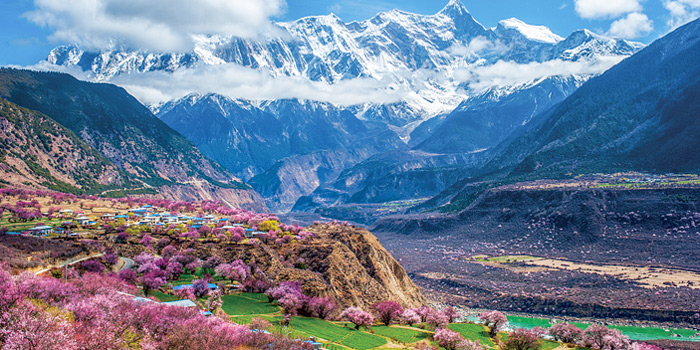
Experience Nyingchi's peach blossoms and enjoy the spectacular scenery of Mount Everest.
Conclusion
The true beauty of Tibet is best experienced in person. Standing beneath the world's highest peaks, listening to the sounds of prayer in ancient monasteries, and discovering the changing colors of the plateau are experiences that make a journey to Tibet truly special.
Whether this is your first visit or you are returning to discover somewhere new, there is always more to explore in Tibet. You don't need to visit every scenic destination in one trip. Focus on the places that inspire you most and leave time to appreciate the little moments along the way.
Ready to start planning your Tibet adventure? Feel free to contact us. Our local travel experts can help you choose the best scenic destinations and travel season, and design a personalized itinerary based on your interests, schedule, and budget.
 Facebook
 Tweet
 Linkedln
 Reddit


Ask a Quick Question